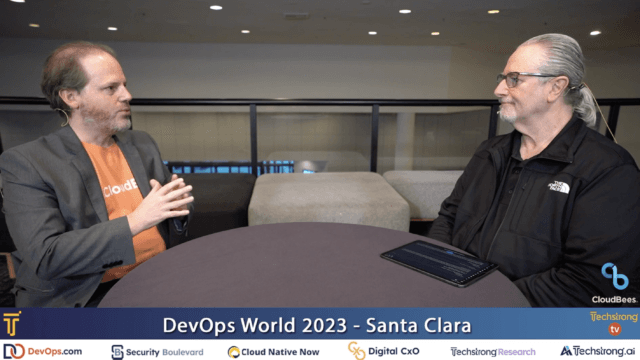
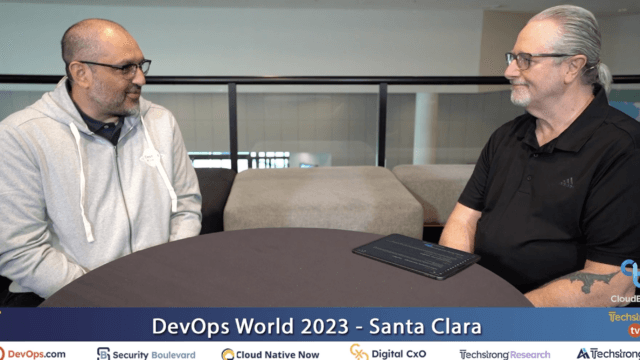
Harpreet Singh, Launchable | DevOps World 2023
Mitch Ashley speaks with Harpreet Singh, co-CEO of Launchable, about automated testing with AI/ML. They have defined the category! First to come to market.
Transcript
This is Techron tv. Hello everyone. Welcome back to DevOps World 2023 here in Santa Clara.
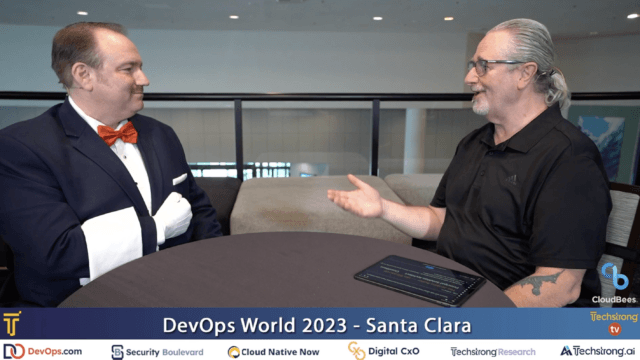
You know, we've been kind of throwing a few curve balls to get to talk to Jenkins, the Butler. Well, I have some one even better. We didn't even have 'em on the schedule.
And, uh, things worked out to, uh, have our Singh, who is co-founder, co CEO, with Launchable. Yes. Thank you for having me here.
Yeah, it's great to talk with you. So, launchable is relatively new. I have a ton of questions like what it's, what is it like, you know, launching a, uh, testing product in this age with AI and all that kind of capabilities.
But before I get into all my, my ni nitty gritty questions Yeah. Kinda set the stage about launchable. Alright.
So we are, um, an AI-based PLA product. Um, it's, uh, something called test intelligence, test failure intelligence and optimization. Um, so what we realized as we built the company was, well, you set up your ci cd, you're trying to get this infinity loop of delivering your software going, but there's like a big bottleneck there, which are tests and you can't get rid of them.
And the question that me and my co-founder asked ourselves is like, there's a lot of data here. Could we look at this data and do something smart about it? And that question became the genesis of launchable.
Yeah. It's, it's kind of the dawn of AI is all the data that we have available to us Right. These days.
Yeah. Interesting. It's quite interesting starting it, um, in the sense when we asked this question, it was four years ago, so AI wasn't, uh, non Azure as they they say it.
Mm-Hmm. Um, so it was interesting walking out and saying, we are an AI company. And of course today every, everything is an AI company.
I'm AI powered myself. Like that's how it is. Mm-Hmm.
So, uh, it's been quite a journey. Yeah. You were AI before AI was in Vogue, right?
Or the studio. Yeah. That seems to be That popularized.
Yeah. For the first few years, we would just say like, you know, don't worry about the ai. You know, we do something here.
And now when we say it's ai, then people are like, alright, I, I'm here to listen. It's a really good point because the perception of AI has changed so much because of generative ai. It's gone from, is that just a fancy case if else statement in your software?
Is it really AI to people believe it now? 'cause they can see, anyone can see it in action. You know, whether it's perfect or not, it'll get better, but they know it's real.
Yeah. They know it's real. And it's interesting the way I, we've seen it come up, right?
So, um, I was half joking earlier, but I've actually been on like customer conversations or prospect conversations where some guy a year ago would've said like, ai, I don't really believe in it. Or like, ai, you know, I could build this over the weekend. And if you are that person now on a call, everybody's gonna look at you and go say like, really?
Are you that? You know, uh, I'm not gonna kidding use the word. You kidding, right?
Yeah. Yeah. Are you that guy who's gonna say this is not real?
So things have definitely changed in the last year since generative AI has come in. I would think that also is gonna generate interest in, in what you're doing, the validity of generative ai. It does, it does.
Um, although I think today everything has to be generated ai, so no other ai right. Quota. What about, what about, Yeah.
Yeah. So I, I think in the long run it's going to be really good in the short run, it's gonna be everything is gen ai, so, but it'll settle down at some point. It's kind of taking the oxygen outta the room right now.
Yeah. It's taking the oxygen out Room for a, for ai. So how do you think about testing differently then?
I mean, how do you, so if you're gonna, you're gonna start a testing product. 10 years ago you would've had a different paradigm about how to do automated testing in the era of ai, in the era of, um, IDPs developer experience, you know, where DevOps is today and trying to really reduce friction to make things happen more fluidly in the process of creating software. How do you go about solving this in, in that kind of an environment?
Yeah, so when we started off with, we didn't really start off thinking that we would start a testing company. We just really went to the place where we saw the most friction. And the friction as we saw, was really in the testing process, right?
It's like, you know what Jenkins does? Fantastic. What Cloud visa's fantastic is help you build that pipeline and orchestrate that pipeline.
And there are gates along those pipelines, but guess what's passing through those gates? Those are tests, right? And so far we haven't talked to a team that thinks they have, they're testing enough or they have enough tests.
So a year over year you are riding more and more tests to test the same stuff. Mm-Hmm. And like, everybody's getting bogged down.
And what we saw people doing were like, they were rolling up their sleeves and like automating something here, automating something there just to move that along. And so when we saw that and I asked ourselves the question is like, with with ai could we do this different? What could we do differently?
Things just popped up Mm-Hmm. And, and we ended up with a solution that we launched three or four years ago. But with, with advancements in like gen AI and so on, there are questions that we couldn't solve earlier that we can now solve.
Yeah. And we are sort of building that as well. Right.
You know, one of the things that when I think about testing is as like engineering manager, I would always be concerned about how big of a, uh, kind of technical debt are we creating for ourselves as we automate more and more. 'cause those things have to be maintained or updated Yeah. As your application and, uh, other things change.
Is that something AI can be helpful with about evolving how you're testing and what you're testing? Uh, that's a great question. Um, I don't think in terms, the answer isn't on the lines that you asked.
So I'll zoom up a level. Okay. And so I'll, I'll start off with like what we build, right?
Uh, so imagine you have like a, you know, thousand tests they're running all the time. You've automated them, you're running them through Jenkins, but what you're essentially doing is running all the tests all the time and, and you know, that happens at every part of the pipeline. So our first sort of aim at this was to say like, can I look at the code changes and predict what tests are going to fail?
Right. If I can predict what tests are going to fail, I just need to run those to get that feedback back to the dev teams much faster. Right.
And what we found was like we could essentially predict to the extent of like, you, you just need to run 20 to 40% of the test to get like 90% of the failures, like within the, you know, the first 20, 30% Mm-Hmm. And that's essentially how you kind of deal with quote unquote technical debt of all these tests kind of hanging around. Well, it's sort of counterbalance to code coverage, right?
That's like, you know, how, how broad are we, are we in our test suite? That's a fantastic Yeah, that's a a fantastic insight there. Yes, it is a counterbalance to, you know, code coverage.
And in fact we go in and say like, yeah, you can now run code coverage, but at some point in the cycle you don't need to run them often. Right. Because you know what, we'll hone in on what's likely going to fail.
And that's, that's what we do it. Right. Talk about, you know, there's a lot of emphasis around developer experience.
Dev X has kind of become a term in and of itself. Has that influenced, uh, how you've, because I mean, you started, you launched it what, four years ago, but um, you know, you're, you're working in a development world, there's a lot more emphasis on that. Is that influencing how you're developing the product?
Ye uh, actually, um, yes, in a sense it's been our founding ethos. So my background has been with Atlassian Bitbucket and with CloudBees earlier, and developer productivity has been like a core focus and developer experience has been a core focus for me and my founders. So that's always been a part of the picture.
And we see some of the teams actually bringing us in because of dev experience. Right? Here you are.
Like, there's a, a customer case study on our website. It's a big automotive company out of Germany, and they're, you know, essentially you can't spin up, uh, cars in the cloud. And so you have like only limited hardware and devs are waiting for that hardware to run their test to get the feedback back.
And now we can actually, you know, improve that threefold. Right. Just because we can be very smart about what tests you need to run.
And that kind of comes back to the developer. They no longer need to wait for those few hours to get that feedback. So it essentially ties into the whole experience, which is like, I, I really need fast feedback.
Right? So that's one aspect. And as we've sort of spent time here, and we, we are about to announce this, it's, uh, in the next month or so, but it's on our website is as we started looking at this, we are like, okay, the reason why people are actually using us is that devs actually want to triage issues much, much faster.
Right. And so in that context with machine learning, we can come in, we have your data, and we can look at your test failures and do something much more smarter. Mm-hmm.
Right. Um, and in, in the sense, what we are looking at is like, okay, you had like these thousand failures. What's the first thing devs actually do?
Dev or QA? Is they look at it and they go, are these the same thousand? Yeah.
You know, is this the same issue under these thousand or these are thousand different issues. Exactly. And now we can use machine learning to actually classify these issues and say like, well, you know, there are 50 issues underneath it and if you fix these three issues that's going to resolve most of your, you know, problems.
And so that's how we kind of are thinking of coming in and improving that developer experience. Right. I I kind of knew the question to my own, uh, answer to my own question because you're a co-founder, KK Ko K Gucci, to the, to the Jenkins world, you know, he's infamous to a lot of people.
Yeah. And I've been on the other side clicking his pictures with people's sign. Yeah.
So I, he gets All the signatures and he gets all the attention. He is a great guy. And we, we have him on our, our on our events too, as speaking of which, you're joining us next Monday, right?
At, um, 11:00 AM Eastern. So we have a, uh, DevOps Unbound, one of the shows that we do. We're talking about AI and testing.
So be there, we'll talk more about this, but what's it like working with C Gate? Because I, you know, you, he's the developer's developer, right? I mean, I would think he would come to this only think, I mean, not only, but you know, rich thinking about the developer experience and what's the best way to approach this.
Yeah. So, um, I, I worked with him like for a dozen years. I don't know, uh, what it is, uh, working, uh, uh, so, uh, very thoughtful, uh, in terms of, um, how he thinks about the problem, how he approaches the problem, uh, can think at various altitudes, right?
Uh, at some point you're thinking just at the developer altitudes, but very easily shift to like what the manager would be thinking to what the VP is going to think about and what are the key concerns. So, um, think at all levels in terms of, you know, from a product management perspective and even from a development perspective, a developer as well. So, um, and then, you know, he has such a rich experience in terms of building Jenkins, right?
So, um, uh, I must say it's very hard to out debate him on, uh, some of the topics if, uh, we, we have like match different viewpoints. Uh, he's pretty, pretty convincing a little bit of exposure I've had to him on that front. So, last question sort of a little bit.
You know, and not about, uh, AI and testing, really curious 'cause you see it more often, co, CEO, what's, what's that setup like? How does that work? Is it, you guys have to like, you know, always agree on everything or you kind of divide how you think about the business?
How do you have it working? Uh, so at the moment we've focused on like sales and marketing kind of lands in my domain. Um, my background is product as well, so it's hard to keep me away from poking my nose in there.
Mm-Hmm. And, uh, Kosuke does engineering and product and vice versa. He keeps poking his nose in there.
That's the part of co CEO. Um, I think the CEO role is a very lonely role. Um, so often you can't discuss this problems with your team or wider.
Uh, so having a core CEO who's seeing the same problem is really good. You can confide in each other on what's going well, what's going wrong. Um, it makes for better decision making because, uh, I was just telling Heidi who was sitting behind the camera here, that we have like this, this culture of deis, which is decision frameworks.
So we have to write down, you know, what we are thinking in terms of like where we want to stake stuff. And normally if you are the CEO alone, you kind of write it and you, you know, you execute on things. And now I have to convince koske and he has to convince me.
So it makes for better decision making process. Uh, it gets a little slower, but we kind of know, like we, you know, hammered at it before, uh, we started on like, working on something versus kind of coming back a few months later and seeing like we wasted a few months time. So in all, in all, I think it works very well.
It's, uh, it's a model that I saw working very well at Atlassian. The, the founders do it that's right there. Yeah.
They have for a long time, but they don't do it this way, the way we've done it. Um, but they also keep experimenting, so we tend to keep experimenting. And then the, the last bit here is there's some, some jobs of ACEO that you don't just don't want to deal with.
Mm-Hmm. Um, like, uh, I not a big accounting person. He loves doing that.
Uh, he doesn't like the legal stuff. I, I can pick that up so we can kind of take that, uh, load off each other as well. That's Interesting.
Very nice. I totally get the lonely at the top, meaning people, you know, oh, CEO cry for the CEO. It, it is, it is very lonely, right.
And it's, it's tough to know whether you're doing the right thing Yeah. Because you can't get the kind of feedback you'd always like, but it seems like one of the things that creates a rich environment for a co CEO is there has to be kind of a friendship and a bond. The fact that you will, you've worked together Yeah.
And had a relationship over that period of time. It's not like just forcing two people together. Right.
You gotta figure out how to work. It's like, no, we, we know each other. You know, their faults, they know your strengths.
And it's, I think it's much easier to, it's kind of in the situation. I'm not co CEO, but you know, my business partner we've worked for together off and on 23 years. Right.
So we know each other. Right. And we always tell, like, I I know.
Don't worry about it. I know that about you. You're good.
Right, right. It's all good. Exactly.
So this may be the right time to ask for the co CO role. Okay. All Right.
I, I'll tell him that you proposed today, Alan. I'm coming your way Co. CEO here, buddy.
It's coming. It's his f*****g, I I take the blame. Yes.
Okay. Well, hey, uh, can con congrats on the, you know, good success with the company so far, and, uh, look forward to having you on DevOps Unbound next week. Alright.
I'm so glad we got a chance to just spend some time together. You and I and a couple million people watching This is diving, but alright. If you asking people watching this live here.
So we look forward to getting together again. Alright, Thank you very much. Alright.
Harpreet Singh, co. CEO Co-founder with Launchable. We'll be back.
We've got more great interviews. Hang tight.