Navigating Enterprise Innovation with Red Hat’s Stu Miniman | AWS re:Invent 2023
Transcript
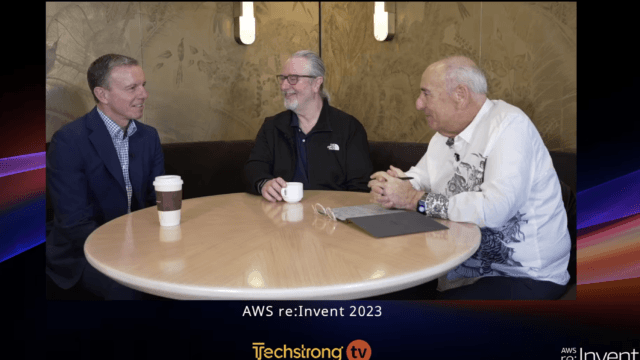
This is Textron tv. Hey, everyone. I'm here without my sports jacket, but, uh, I'm glad you're joining us at Amulet Techstrong tv.
And we're continuing. This is our day three coverage for AWS Reinvent here in Las Vegas. We're at our studio in the Wynn, which is kind of next door to the Venetian Palazzo, where the, uh, uh, event floor is.
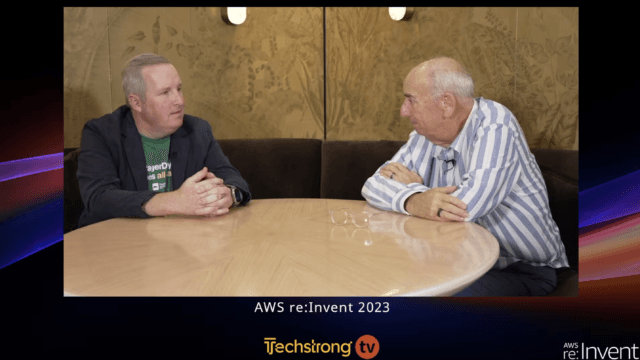
And so we're out of the way of the 60,000 odd people or whatever that's supposed to be here. Um, I'm really happy to be joined by a friend of mine who I, I know from the media world, but now he's an official Red Hat guy. Is it been about two years, Steve?
Right? Three years. Alan, if you believe that.
Yeah. Yep. If you follow tech media, you may have seen him over the years on the Cube in Silicon Angle.
He's my friend, Stu Miniman. Stu Miniman. Stu, welcome.
Thank you, Alan. And, uh, hey, uh, you know, when you're talking to Red Hat, you know you don't need the blazer. It's funny, when I used to go to the Red Hat shows, you know, I actually had a couple times, like, I had a lovely, like, it was a tie that had these little penguins all over it, Uhhuh.
And I'm like, for Linux and everything. And the CEO e at the time, you know, Jim Whitehurst was like, why are you wearing a tie at our event? I'm like, but, but it's Lin's because it's penguins.
I'm, I'm, I'm doing it and everything. They don't good ties. So like, you know, I've been at Red Hat three years now, you know, the only time I ever wear a blazer is like, oh, I'm doing a meeting at like an IBM facility.
Right. Or corporate Thing, or, you know, or I'm doing a thing with, you know, the Germans, the Japanese, or things like that. No, the Government still, but even Though the US government, like, I've done lots of stuff, you know, DOD, Lockheed Martin, things like that.
Nah. You know, I'm the tech guy. I show up, it's like, you know, I just wear some nice red Sneakers and stuff.
I'll tell you something, I've, I've, I've observed and I observed at a Q Con last month, and we were at a, a DigiCert conference. We covered almost about a month here in Vegas, about a month and a half ago. I'm seeing more people dress up a little bit.
Yeah. Not t-shirts. Maybe they're not wearing a, a blazer.
Yeah. But they're wearing at least a college shirt. Yeah.
Not a t-shirt. Um, it, it goes, you know, I, I think someone should do a correlation of this as the economy goes. Yeah.
People tend to dress up more, right? Yeah. Yeah.
Because you, you gotta be on your game. I, I also see another manifestation of that, of companies hiring more traditional salespeople. Yeah.
And less of the, the dev re evangelists with different color hair and, and the hats and all of that stuff. Yeah. I, I mean, it's a mix, you know?
Yeah. We definitely an ebb and flow of some of the things there, but I think it's correlated to interesting Economy. Um, you know, we always wanna make sure at Red Hat, you never wanna confuse our attire and think that, you know, we're working for IBM even though why they are a parent company.
So Yes. You're, I think I do, I do have a blue shirt underneath there, but, uh, all Right. Well, it's supposed to be the white shirt anyway, with Red Blue tie And everything there, But you guys always wear Red Hats.
It's easy to pick you up. Yeah, we actually, uh, that we were given out in the booth, they, they were given the fed doors. I They always do it.
No, we, we do it in Europe. This is the first time I've seen it in North America. Oh, really?
Because you go to the Cube con shows. Yeah, that's what it is. We Did in Barcelona.
We did it in Amsterdam. Um, so Paris Coming up March. Of course.
I I sure hope to be there. So I, We just confirmed it up today. I'll be, we'll be there.
Yeah. Um, we digressed you, we go off the tracks here. Come on, Alan.
It's like, this is my 10th year doing Rein band, so we have some longer conversations. We go a lot of different ways. Absolutely.
And we'll do like Amazon, Alan is, we'll spend a couple of minutes, uh, going through some things, and then we can spend the rest of our time talking about ai, uh, like everybody Else. So, okay. So we did our, we did our, hi, how are ya?
So Stu, you are with Red Hat. Yeah. You should tell people what, what's your role at Red Hat these days?
Yeah, so, uh, I'm, I'm a senior director at Red Hat. I'm in, uh, basically the, the OpenShift product group. We call it hybrid platforms.
Mm-Hmm. Um, and what's really interesting is, you know, red Hat been talking about hybrid for a decade, uh, now. And, uh, it's this really nice confluence.
We talk about the economy. Everybody's talked about cloud optimization. What am I putting?
Does cloud cost make sense? Do I put in my data center edge is changing a lot. So the conversation in general has come very much to hybrid, and oh my God, Alan AI is the gift that keeps on giving when it comes to that.
'cause we all know, like ai, where am I gonna train stuff somewhere where I have all my GPUs and I have lots of computes. So it's either gonna be a data center, it's gonna be cloud, but where do I have to do my inferencing, where the data starts? Wherever it Is.
That's some edge collection. You know, we, we've got, you know, our stuff running on satellites, we've got our stuff, you know, it'll be going to Mars soon and it'll Be going all. Look, the fact of the matter is, it's like the movie that won the Oscars, Everything everywhere, all at once.
Yes. Yeah. Right.
I didn't quite get the movie, to tell you the truth. I watched it three times. I still don't understand the whole thing, but, um, I loved it.
It was, did you? Um, My wife loved it. It's like, uh, like the inception.
It's one of those movies that kind of makes you think, and you don't need to kind of get all of it, but it was weird and quirky and different uhhuh. Um, it was like, uh, it was what the Marvel multiverse should have been been. Maybe that's what it is.
'cause the a DD and me kept trying to figure out every kind of nuance in Oh, yeah. I mean, there's some weird stuff in there that are like, what are they doing? I hear you.
You know, you just gotta, uh, Alan, it's like open source. Some of it'll stick and some of it'll, it won't. Right.
9,600, the people just use it or watch it. Yeah. But in any event, you're right.
That is the world, you know, I think to be fair, COVID sort of hearkened this environment of do everything anywhere all at once. Yeah. We work from anywhere.
We data from anywhere we compute from anywhere and everywhere. And, you know, sometimes we forget that somehow this all has to be orchestrated. Yeah.
Yeah. I, I mean, Alan, you remember coming to the show for how many years, and it was like, you know, in the, as time goes on, everything will eventually be in Amazon. Right.
And we were all like, come on. Mm-Hmm. Amazon's still got lots of growth ahead of 'em.
They're doing phenomenally well. Absolutely. They're always an impressive, they're a phenomenal, uh, partner of ours.
The customers keep showing out. The show keeps growing and everything, but at the end of time, will all data be in Amazon in the cloud? No.
And it won't just be, and if it's in the cloud, it won't just be in Amazon cloud. There are, sure, there are real alternatives and not beyond Google and, and Azure. There are, there are other real cloud alternatives that are, that are coming out here.
Um, here, here's another interesting thing though too. You mentioned ai, right? And of course, you can't swing a chicken over your head without walking into something about AI over here.
Um, but it, it kind of changes things a little bit in, in how we view what we do in the cloud, what we use in the cloud, what we do somewhere else, and, and how we're going to interact with all this. Now, if you want to jump into that now. Yeah, I, I, I'd love to.
So first, first of all, Alan, it is one of those things, you know, back when I was an analyst, it's like, okay, what's the hype cycle? Uh, what's going to be real certain technologies? The last time that I remember technology that I think will be as broadly important as AI is The internet itself Is the cloud.
It's the internet itself. Just for the reason that I agree with you. I, I, I mean, it is something that everybody will use when I'm talking, I was talking to some AI startups here at the show, and it's not, yeah, yeah.
They'll run on Amazon and everything, but it's going into the Apple and Google app store. When I get together with family members, I can talk to my niece about, you know, generative ai. No, you gotta talk Kids in high older relatives too, because they think it's magic.
Yeah. Here, here's how I explain it, Stu and, and you and I, we, you know, we have no hair. Yeah.
We've been around a long time. There are certain technologies that change our tech world. Yeah.
And we're geeks at heart, and we have a lot of, the cloud was one of them. To us, the cloud was, wow, no more data center, don't have to rack servers. Everything's virtualized, it's scalable, it's elastic, blah, blah, blah.
Everything we've said about the cloud. But to grandma at home or to your niece, the cloud was, oh, yeah. That's where I store my pictures up there.
It, it wasn't, it wasn't civilization changing. The internet changed civilization. Yeah.
The cell phone has changed civilization. Absolutely. I would say in our lifetime, those are the, well, not in our lifetime, but let's say in our working careers, those are probably the two biggest civilization changing technologies that we, we've seen.
Yeah. This is the third. This transcends technology for technology's Sake.
Yeah. And just to harken back, I remember in some of the early days of, of the internet, it was one of those, this is going to change everything. Well, what are the killer use cases?
I'm not sure yet. But in the next two to five years, we will really find out we're in those early days for ai. Oh, absolutely.
Are there certain things, um, you know, I love, we talk a lot about what'll this, you know, developers and builders and, you know, artists and things like that. But like today, like one of our first use cases is, you know, IT ops. So yeah.
How do I help, uh, you know, in our Ansible product line, how do I help create playbooks? Uh, we have Ansible, Lightspeed, uh, that, that runs that to suggest, Hey, hey, how can I get in? And some of the basic things, I can ask questions.
So instead of me having to Google it and go to Stack Overflow, do all these things, I can ask you questions. Amazon had a nice looking demo of their like queue, uh, They called it. No, I've seen it.
Uh, I mean, look, the fact of the matter is Stack Overflow has done it now too. Sure. Stack Overflow took all of their material and, and jumped, dumped it into an LLM.
Yeah. And it kind of sits, that's the, let's call it the short term memory on top of a larger Yeah. You know, the LLMI think that is the future of things.
And, and I'll be really, you know, I'm not a Microsoft fanboy. I never was. Yeah.
But I, I gotta give them credit what they've done with Copilot. Yeah. In GitHub.
Yeah. And what, and it's even being, you know, it's built into Microsoft 365, it, Microsoft Office, whatever. It's, God, it feels like, you know, it was funny.
I just went on LinkedIn of course this week and checking on something and there was a, Hey, AI is doing this, and do you wanna learn more and sign up for premium? And we can help you some of, so everything will, um, the news we have this week actually is, you know, so actually we talked about IBM and Red Hat, well, some of the areas that actually we work really well together. Um, a couple years ago, IBM had said, Hey, all of our software will run on AWS and the way they actually enable that is, it's the Red Hat OpenShift on AWS means We are the underpinnings for that.
Well, same thing. Uh, IBM has said watsonx, which is their, you know, their AI platform AI is going to run also in AWS Really what we're announcing at the show this week is that that's also going to run on redhead OpenShift on AWS. So we are the underpinning for a lot of what IBM's doing.
And we've had, And look people Yeah. You know, Watson, I know a lot of, a lot of the cool kids will say, ah, Watson. Right.
It's nonsense. No. Yeah.
I mean, the Jeopardy thing was awesome, but, And the, and the chess thing and all of that, but it's Alan Cutting edge. I was one that was like, Hey, it had its time and it's kind of old. It's like part of me wishes that it wasn't called Watson X, that it was something new, Right.
That they picked. So, but It's a totally new generation. It's, everything else is Different.
New here. The modern underlying technology is built on foundations that are decades old. Yeah.
It's, it's going to be great. Yeah. Well, Al I just heard, I was listening to Swami's keynote and he's like, we've been doing AI at Amazon for 25 years.
Most Most of these companies have been, this didn't pop up last November when Open AI decided to release this. Yeah. Well, and that's, that's one of those things that you gotta be, you say some people think it's magic.
Um, you, you might appreciate this. Uh, um, Adamski in his keynote, he's like, oh, foundational models. Then he called them fms.
And I was like, no, no. I was told, you know, we have no fm uh, right. You know, in tech, it's, uh, which, uh, you know, I'll keep it clean.
There's no FM magic. Right. Uh, you know, in this technology.
And that's something, you know, I, I, I hearken back, you know, ADA Lovelace 150 years said, if it's in code, and I can describe it, it's not artificial judging. It's augmented. It's something like that.
So that's where just the caution I think a lot of us have is, Hey, we wanna use this stuff. Understand, you know, the bias, the security, the, you know, what are you getting? Are you getting hallucinations?
We've all seen things. It was like, I played with Google Bard when it first came out, and it was like, oh yeah, terrible. Stew Miniman is really well known in the cloud thing and Has a PhD, molecular biology.
I had a bestselling book I, those Computing, we all had all These things. And I was like, cool. Can you gimme the link to the book?
Uh, no, I can't. And it was like, I was like, wait, wait. You're Google.
You have all these webs and everything you couldn't get, Where did they pull it from? I, I I, I, I, I stole a quote from somebody. I said, the most human things about all of these AI is they don't admit when they're wrong.
Wrong. Right. And they are more confident, um, with their knowledge That they should be.
Well, the more you tell the lie, the bigger. Right. But I'll tell you something.
We do, we did an interview with some of the folks at Salesforce yesterday. Yeah. And they're, they're, they're building, I'm going to mess up their words, but let's call it a trust layer.
Yeah. Between the ai, here's Salesforce with their trust layer and the Salesforce customer, and they're claiming that this trust layer is taking out the toxicity, the, the poisoning, the hallucinations. Now, is it working today perfectly?
Probably not. I, I didn't see it myself, so I can't tell you I didn't play with it. But this is, they, they keyed right in on that, that to them, this is the, the open door.
Right. Once they could put that truss layer in, now we can start Using it. Well, I, I, I, I mean, Alan, this is where I have to say, we know what the best disinfectant is for that kind of stuff.
It is sunlight. And therefore Let the market use open source. The market will tell open, open Source is where we are going to a big opportunity for all of this.
Because we want it to secure. We want it to be unbiased. We want all of these things.
Open source Is you gotta open the Default deployment, you know, development model for software and absolutely. Will be a huge piece of, uh, What happens in The AI piece. I, I don't Disagree.
That is an area where, You know, I think we're still seeing that happen. Yeah. You know, I, I wanted to return something you said about, uh, IBM and Red Hat.
Yeah. Right. Running their, the Watson X Sure.
On AWS Now, look, one of the kind of things we're all hearing about is that to do the, the ai right? You need, you know, the Nvidia chips, you need these GPUs. Yeah.
Is it, and it's interesting, Salesforce had a similar story. They're moving off of their own private Salesforce cloud onto public cloud Yeah. AWS today, but they're not married.
You know, just to AWS Sure. I think that's another revelation that AI is helping to drive Stew, is that if maintaining a cloud infrastructure, that that physical infrastructure is not core and critical to your business, why wouldn't you spread it around at these, you know, hyperscale cloud providers? Yeah.
Um, and well, yes, I agree. There's still, there's some customers I've talked to that were like, what? Hey, I need my own.
I Actually, I can't get enough GPUs or the prices, or I'm gonna use it all the time. So it's always the, you know, the rent versus buy discussion. Yeah.
And if I have certain things, like, you know, I loved one of the early use cases for Amazon was, I really need to do a supercomputer, but I only need to do it for weeks. Yeah. So do I spend 18 months building it and spend millions of dollars, or it was psycho computing who Amazon actually bought, um, later.
And it was one of those, like that's where it's phenomenal. Those are the, the no-brainers to do it in the cloud is, of course, I need to do it fast. I need to do it shorter periods of time, or very variable as opposed to the, you know, I'm a gaming company and I have this much thing that I'm going to do always and ever.
Mm-Hmm. And, you know, Hey, public cloud, you were too expensive. Then I moved it back to my data center because I could do that.
Well, no, we saw that, right. We saw there was a migration of cloud and then some people said, we outgrew the cloud. Yeah.
And it's, and It's cheaper to do. Uh, and, but I'm wondering if, if the GPU AI stuff has not kind of changed that equation fundamentally. So we'll see.
Nvidia is in a great position right now. Hell yeah. Jensen on stage got, you know, a big applause.
And the funny thing of course is he's at every show, he's at the Microsoft show. He is There. Well, because he's, they're the only, they're not the only game in town, but they are the game in town right now.
They are the game in town. But there are company, I'm seeing a ton of startups Sure. That are designing NextGen AI chips, let's call that.
Absolutely. You know? Yeah.
And all the cloud providers have their own chips and are looking at that, that model. They, they're not quite there yet, but they, when they look at their overall cost, yeah. I mean, you know, for years it was Intel here at all the shows and now Nvidia is the darling and they've got a few years to do Phenomenal.
But everybody will be done in IT form. Right. There's a lot of people nip into those seals.
And I tell you, one of the things I've seen from our standpoint, we've talked for years about its consistency and be across all those environments. We've done a lot to make sure you can live across multi architecture. 'cause our customers, do they still have a mainframe sitting somewhere?
You better believe they do. They got power, they've got X 86, they've got arm, you know, the cloud edge, all those Things. No, this is part of everything everywhere.
All at Once. That's the 30 year experience that we have at Red Hat is living in all those environments. Yeah.
Because, you know, we partner with them on like their hybrid environment and living in a customer's environment is difficult. We all know the infrastructure people here, it's like, oh my God. Everybody builds their own like bespoke things there and getting that to work.
You know, is, I, I had a conversation with this yesterday. Mitchell Ashley, our CTO, you know, him and I co-founded still security together. So back in the day, we came up with this great idea that we were going to sell security on an appliance.
Yeah. It was a Dell box. Yeah.
Yeah. And then, you know, people didn't want the Dell box. They said, can't we just buy the software?
We said, sure. Buy the software. But then you had to support every IO controller, every hard drive controller, every graphics card, every different kind of disc.
It was a nightmare. Yep. You have to standardize.
Yep. Like who wants to be in that business. Yeah.
Yeah. Luckily, um, you know, I love being on the OpenShift side. Um, I've got Red Hat Enterprise Linux sitting there.
Mm-Hmm. And that runs pretty much everywhere and most applications are certified on it and everything like that. Sure.
So we just ride that, you know, Technology. I got question about please. Right.
Difficult question 'cause I know you're an open source advocate through and through. Yep. I've been involved in open source myself for 25 years.
Sure. We're seeing Red Hat Kind change the licensing a little bit with re has she changed their license? Crazy.
Yeah. Yeah. I mean this was, you know, Alan, I've been talked to a bunch of friends in the open source community this week here, and it was a rough year for open source.
So number one, I think some of the headlines overblow A little bit misleading. Yeah. 'cause you know, hey look, is open source dead?
Nope. Strong. It's not dead.
Phenomenal. It, It's open source. The problem is long live.
The, the king is, is dead long. Live the king. So, I mean, Alan, I used to talk to Amazon for, I've talked to Red Hat for years about this and like when we had all the databases and they went through all of their changes and everything and you know, red Hat was like real simple on this.
They say, Hey, look, open source has never been our business model. Open source is a development model. Okay.
We're a software company. Right. So we, uh, have, have to do that.
So, you know, absolutely. Did we make some changes as to, you know, everything we do still is a hundred percent upstream. It's there.
Absolutely. But you know, how do we, I mean, you go to the CubeCon show, one of the biggest challenges we have in like core Kubernetes is everybody's like, Hey, it's there and it's really good and everything and maybe we don't need hard to contribute. It's hard to, it's like, no, no, no, we need more contributors to come help.
You know, we didn't create it. We're There. That's been The problem.
So, and you know, the Linux community is vibrant and doing well, but Mm-Hmm. You know, we had to make some, where is the value stream of activities in the community and what we do? Everything.
So you preaching to the choir, it, it was the, you Know, I come from security Background, the West, well, a piece was, um, I I, I I think could have been communicated a lot better. Um, and clearer and, you know, hopefully people understand that, you know, community and open source. Absolutely.
I mean, you know that it's core to Red Hat, red Hatters. That's all we Do. So I view it as another thing.
I I view it as it just took three years or five years for Red Hat to figure out the cento ster rail Yeah. Kind of thing. And in the meantime, you had things like Rocky Linux and some of these other Linux discharge that are kind of, kind of nature of pos of vacuum.
Sure. Filling the vacuum. But we also gotta remember the, we, we are in a golden age of open source software.
Yeah. The Linux Foundation has done a, a tremendous job. I was at the CNCF event last night.
Um, it's crazy. We shouldn't, you know, there's always looking, there's always people looking to throw stones. Yeah.
Yeah. But generally those are the people on the edge of the audience. Right.
And, and you gotta look at the bulk, the the body of work. Sure. And, and that's where it is.
Anyway, we've gotta grunt 'cause we've got another interview we probably run over. I can't help it still. I, you know, we should schedule you for an hour next time.
But, um, anything last thoughts, ideas, advice for our audience regarding weather? Yeah, So, so it it, it's funny, um, we actually have, like you, you know, you walk around the strip or you go in like the, the, the Ubers and everything and they have the ads. Um, and we've got one, uh, you know, we had like, you know, I'm on the OpenShift side, you know, we had like the finally had a Gartner magic quadrant that talked about the container space.
And we were happy to be a leader in that space. Mm-Hmm. It's like us and the three cloud main cloud providers were there.
You in the farthest top right there. Sure. And the ad was let us reintroduce ourselves because, and I had one of my guys on my team was like, Hey, I don't understand.
What do you mean? And I'm like, look, Alan, you know, if you walk up to most people in the show and say, Hey, do you know Red Hat? And they're like, yeah.
And I wanted to grab a hat and Absolutely. And let me tell you my Linux stuff, and a good percentage of them know that we do containers and Kubernetes stuff. But the toughest thing any company or any person has is when I learn about you first, I don't think that how much change you've gone through.
So like, well would you, the Kubernetes world that we live in, if you look at today versus two years ago, it's totally different. So are there still some things we need to work at to make it easier and things like that? Of course.
Yes. But it's just like, hey, used to be like, oh yeah, if I haven't looked at in five years and need to update now, it's like, if you haven't looked at something in a year, it's six months. It's totally different.
And oh my God. You know, it's like, come on. I asked my chat GPT thing.
I'm like, I don't know anything past 2021. Yeah. So it's like, wait, if you don't know 20, 21, half the people I know have changed jobs since then.
It's crazy. I see this at Q Card. I mean, but I don't know.
Maybe 'cause I live in that bubble. Yeah. It, it would be an interesting, you should do this because this's your job, but you should do a survey of what's the first thing you think of when Red Hat.
Yeah. How many people say Rell or Linux? Yes.
Versus how many people say OpenShift or Coop? Yeah. Oh, it, it's, it's still re and Linux.
Yeah, absolutely. We, we, we, we, But I don't, I think of it as open source queue. Well, you, Because I live in that bubble.
You Live in the cloud native world and absolutely there. So, so it is, so it it is, again, it's like, especially here at Amazon, like we've had a first party offering, first party Incon offering for OpenShift for three years now. And we're still introducing people to that a lot because there's hundreds of services.
Well, there's work, work that assist me. There's work to be done. Yeah.
So it, it, it's good. I'm glad I'm, I'm not ready to retire for a while. And, uh, happy to, we Got, we got a job for you.
Meet with lots of customers. Thanks. Alan's Stew minimum.
Stew minimum here from Red, red Hat Linux. Uh, happy to have him here at AWS Reinvent. We're gonna take a break.
We're gonna be back on in just a minute or two with our next guest. I think Shera Rubinoff is going to be hosting and stay tuned.