Fueling Digital Transformation with Dynatrace’s Michael Allen | AWS re:Invent 2023
In this interview, Michael discusses Dynatrace and AWS’ strategic partnership and how Dynatrace works with AWS to deliver more secure software faster. The massive explosion of data created by the proliferation of the cloud has moved beyond human ability to manage. Together, Dynatrace and AWS are fueling digital transformation, helping customers monitor their complex cloud environments through the power of real-time observability and security.
Transcript
This is Textron tv. Hey, everyone. Good morning.
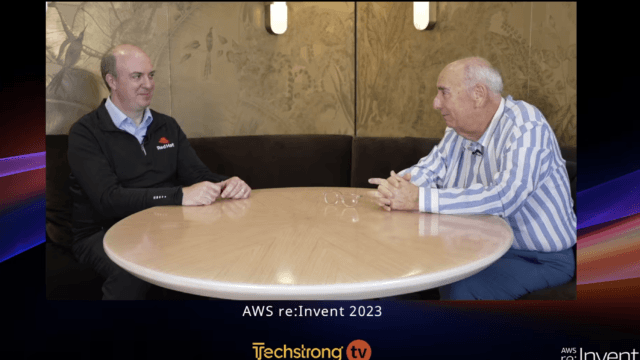
Well, maybe it's afternoon or evening, depending where you are, but it's morning here in Las Vegas. It's day two of AWS reinvent, and we're continuing our live coverage from our video suite here at the Win Resort in, in Las Vegas. Um, our very first guest this morning is Michael Allen.
Michael is a, uh, with Dynatrace. I'm sure most of you know Dynatrace, but we'll jump into it in a minute and delve further. Michael is VP of, of, uh, sales channel with Dynatrace, and he joined, he's from the uk, made the trek out here to Vegas, and he doesn't think it's too cold.
I, I thought it was cold, but, um, he's from London, you know? Hey. But, uh, anyway, Michael, welcome, welcome to Text Junk tv, and thanks for joining us here at Reinvent.
Thanks. Thanks, Ellen. Thanks Mitch for, for having me here.
Absolutely. It's a beautiful day. Great to It.
Well, it is sunny, that's for sure. And it's dry. It's dry.
Always say it's a dry cold instead of a dry heat. Exactly. It's what they tell you.
If you've ever been here in the summer. I don't know if you've had the pleasure of being here in the summer. It's hot.
It's A drought. Yeah, it's about three degrees cooler than the sun. No, but um, yeah, the wind is, is warm here in the summer.
But anyway, Michael, I, I mentioned Dynatrace and I said most of our audience probably knows Dynatrace. I think most of our audience have certainly heard of Dynatrace. Mm-Hmm.
I don't know if they really know the full gamut of, of the Dynatrace footprint, if you will, because, you know, over the years between acquisitions and organic growth, you guys have added a lot to the mix, right? They're, I know people out there who say, oh, yeah, I know Dynatrace. They're mainframe company, right?
Oh boy. That's back in the day. So why don't we start there?
Well, how would you explain Dynatrace to the audience? Well, I've, I've been at Dynatrace and seen all of those iterations. Oh, okay.
The journey. So it's been, uh, 25 years for me with the, with the organization. Um, we, we are today sitting in a category of observability and security.
It's, um, it's a market category. We, we see as being probably greater than 50 billion, uh, total addressable market. And, you know, this is, this is this observability category in the past was kind of monitoring, but it's now, you know, with the advent of, of cloud and cloud native environments is, um, this category of observability is kind of spun up.
And it's all what we do at Dynatrace is we, from data really deliver answers and intelligent automation, uh, to really help, uh, our customers. And we've got about, uh, 4,000 of the world's biggest enterprises depend on Dynatrace to run their applications, their infrastructure, and make sure they're secure and run flawlessly. Every digital interaction runs flawlessly.
And we, we are trying to really help our customers get to a world where their software just runs perfectly. Sure. You're right, observability.
Look, if you had gone to sleep for 10 years when you went to sleep, observability wasn't a word. No, it was a PM or Yeah, there was application performance monitoring and management. There was, you know, there was log management.
Mm-Hmm. Uh, you know, observability. I, I guess it kind of burst on the scene for me maybe three or four years ago.
And a lot of it is driven, you are right by open source, by, uh, things like, uh, open Telemetry and Prometheus and Mm-Hmm. So it's a big sort of open source base that supports this whole observability, as you said, a $50 billion market. Now what I've seen though, is some companies Who had legacy prior to the observability, solu, you know, revolution, um, they resisted embracing the open source.
They said, yeah, that's great for the open source crowd, but we we're an enterprise company and we've been doing this a long time. We just didn't call it observability. And so they, they kinda resisted, other, other companies, especially some of the newer companies in this market, embraced the open source saying, Hey, that's the tide that lifts us all to a certain level.
And then we, that's that. And that's where we start our competition, right? We start competing on top of that.
What do we build on top of the open source? What do you think the Dynatrace model there is? Is it a little of both or It's, it's a, it is a bit of both actually.
Mm-Hmm. If you, if you take the name Dynatrace Mm-Hmm. Where Dynatrace is the company where Dynatrace, the product, right?
Yeah. We only have one platform, uh, and it stands for dynamic tracing, right? Because that's really what we set about originally to do, is to be able to dynamically trace every tap, click and swipe from a user's device browser through the internet, through the web tier app tier middleware into the mainframes as well.
Sure. And, and, and into the various, uh, different data lakehouse, we do that dynamic tracing. It's been at the heart of our product.
And that's what generates really the, the heart of our AI engine, which is our causal, um, um, dependency model, which we call smartscape, which our AI engine Davis kind of sits, uh, on top of that. But when you think about open source, uh, in the open, in the open source market, there's open telemetry, right? So, uh, for some customers who, uh, just want to drop an agent on their application infrastructure and allow it to automatically instrument, that's what the Dynatrace agent technology does.
But at the same time, we bring in open telemetry. We've been in one of the forerunners of that community and that movement to bring it in that data in as a first class citizen into Dynatrace and other data sources, uh, such as Prometheus and, and especially in the, in, in the cloud, as we're here at AWS reinvent, you know, there's a lot of metrics that you get out of CloudWatch on AWS that we, we ingest. And, and that's at the heart of observability, it's metrics, it's events, it's traces, it's logs all brought together, um, you know, in a single platform.
One thing just happened within, I know you have an announcement in this area, but, you know, we thought of observability as an extension of VPM market monitoring, but it's really kinda crossed over and expanded to be a security platform as well as an operational platform for applications and infrastructure. Tell us a little bit about what's happening in security and what your announcement is around that. Yeah, indeed.
I mean, it, it's, the age old thing around observability is if you can't observe it, you can't manage it. The big challenge was historically with the world of monitoring is you're just putting more and more data on glass, which becomes impossible, especially with the so moving pieces, the variety of data, velocity of transactions that you need. You really need an AI engine to, to augment that, not only for the monitoring, but also for the sec for the security as well, to do automatic vulnerability detection and automatic runtime application protection.
Because the old world of putting perimeters, you know, around your, your components is really difficult when it's, you know, hybrid, hybrid, multi-cloud Environment. I'm sure what the perimeter is anymore. Exactly.
So you kind of almost need to, I mean, all of that still exists, but it's also about protecting from within block blocking those injection attacks or j and DI attacks or command attacks that may be out there, which would, you know, never anticipated as a vulnerability. So yeah, today we're, I'm actually really pleased to announce Dynatrace has, uh, just achieved its seventh competency AWS competency, and that's one for security. Um, That's amazing.
Seven competencies. That's fantastic. Yeah.
You know, for those of you at home who maybe aren't familiar with how the AWS partner and A-W-S-A-W-S marketplace kind of dynamics work, any partner at a WSI guess you don't have to have a competency, but if you want to do business, you, you, the AWS channel apparatus has to know sort of what bucket you're in, right? Right. And so most AWS partners, they have at least one competency.
Some of the better ones will be maybe two or three competencies. If you have three competencies, you're a, well-rounded AWS partner to have seven competencies is, you are the first ones I know of that have seven competencies. In all honesty.
I haven't heard of one before. I don't wanna put you on the spot, but security's the newest one, but what's the other six? So we've got, um, the government competency Mm-Hmm.
We've got, um, modernization, migration competency. Mm-Hmm. We've got a containers competency.
We've got a cloud operations competency. Uh, we've got a DevOps competency. And the one that actually I'm really, really proud of is, um, is the, um, ML and, uh, applied AI one, because as far as I know, we're the only solution provider in the market to have that competency, which is real, real recognition that, you know, that's why, you know, Dynatrace has been very disruptive in this observability market because we think you can only do it right in the cloud at scale with the largest enterprises with AI built in, not bolted on.
And that's, uh, that's heart of our platform. A absolutely, and, and really that really is the key to modern observability scale, right? Because you need a certain scale of data, and then the ability to analyze that data and, and draw patterns and conclusions in order for it to be effective.
You know, with, with that down too, wanna mention, it's it's scale and it's also kind the ability to adapt to change, right? Because you're talking about large enterprises, constant m and a activity, right? Mm-Hmm.
Wells reorganization things happening. And all of a sudden now we have three more companies we've acquired in the last 30 days. There's 90 days we've gotta embrace within this whole architecture platform.
And it seems like that's one of the advantage of, of Dynatrace has is that as a platform, if I can use that term, you know, you're extending what you do into other environments, and it's not like you have to go Borg and encompass it. Right? You can use open telemetry or other ways to bring that data in.
Exactly. Yeah. And I think, um, part, part of the secret source is, is the, to, to your point, as you acquire or more applications get modernized or, uh, moved to the cloud, the ability to just throw, throw the instrumentation out there with kind of no pre-configuration and that it discover auto instrument, what it discovers auto, you know, instrument, the log files, the applications, auto baseline, and then when things go adrift from the normal, automatically troubleshoot with precise root cause answers that then allow automation to remediate the problem to the world where you get to that kind of autonomous cloud operations.
I wanna mention something else. Look, you know, we spent yesterday going over some of the pre announcements that AWS made and, and some of the news that broke yesterday. So much of it is around generative ai.
Mm-Hmm. Generative ai, this generative ai that, but when we talk about observability, observability in my mind is probably the, the best example of where ml, some people call it ML ops, AI ops, uh, applied to ml mm-Hmm. Or applied ai.
So it's not that generative chatbot, AI ops kind of thing, but it's more AI with a, you know, machine learning, recognizing patterns and making decisions based upon past mm-Hmm. Events. And, and really that's Dynatrace's forte here is is that ML ops or ML AI type of expertise.
But I would imagine, like everyone else, you're building some generator of AI on top of that, co Co. Correct. We, we, we've got a multi or hyper modal AI system within, uh, within Davis.
That's the name we call our AI engine. The, the heart of it is, is cordial ai. Uh, so because we dynamically through our dynamic tracing, build up a model of precisely in real time, you know, the dependencies of every container and every pod connected to every bit of infrastructure, 'cause we see all the transactions flowing through, we know precisely when something goes wrong, causally what was dependent on it.
I think a lot of the world of monitoring in the past has been kind of accused of being correlation. You know, if something happens, for example, if I went out in Vegas today and it started raining and I put my umbrella up, um, you know, that would be a normal reaction to rain coming down. But if I walk out today, it's obviously not raining, and I put my umbrella up, does, does, does rain come down?
Very unlikely. And that's where correlation gets it wrong. So we have, um, our causal, uh, ai, which is precise based answers on, on what's happened.
And then we couple that exactly as you mentioned, Alan, with machine learning and predict, which is our predictive AI piece, to see what we've seen in the past, is that gonna generate a problem in the near or certain future? And then the big challenge I think, around generative AI is if it's garbage in, there's a risk of it being garbage out. And that's why we feel with our Davis copilot, which is our generative ai, our productive assistant to help our customers, because we're sitting on the most precise, um, set of observability data.
We believe that that generative AI engine and Davis co-pilot, uh, can be, can be real game changer for our customers in terms of productivity gains. I, I agree. I I don't know if you know it, again, I don't, I hate to ask a question that we don't know the answer for.
I went to law school. Um, it's the first thing they teach. You never ask a question.
You don't know the answer to take it till you make it. But yeah, if you don't answer As long, there's not a law, then I'll, I'll give it a go. Where, where's Davis come from?
You think? The, the name Davis? Yeah.
Um, it, it is interesting. There is a history, there is a History to this. I figured there's gotta be a story.
And, and we very early on in, in the, the, the current Dynatrace, we added in, uh, an Alexa assistant to Dynatrace. So you could actually have a conversation with Dynatrace, and it was Alexa skill, and we gave that skill a name, and we gave it a name, Davis. And there's been a few definitions.
What does d you know, D for Dynatrace is, you know, you've got, uh, a is ai, so it could, because basically the human is talking, uh, to Davis and talking to the, you know, have there been any problems today? And she'll, she'll list the problems. It's a female voice, then you can, and she'll say, do you want any more information?
You say, yeah, I want information on that, that incident on that problem. And Davis will then answer you back with the precise root cause the business impact and, you know, offer up. Do you want, do you want me to fix it and do some mort over remediation?
Um, so That's the name. And it's a female That drew me a loop too. I Did not know that.
It's something like AI virtual assistant or something like that, that, uh, yeah. I, I'm, I'm looking, I'm curious about is AWS we'll reinvent here. What is it about, um, Dynatrace in the cloud, Dynatrace and in a AWS environment that, uh, kind of brings out additional capabilities or unique capabilities when you're operating in a specific cloud environment?
Like a WSI Think, I think, um, this, this is kind of ties back to what we were chatting about earlier, where if you went to sleep and woke up, you know, monitoring all, all of a sudden turned into observability. And that's really where I think the, the previous generation of technology kind of hit a brick wall with cloud native environments, where you've got very dynamic platforms like Cloud Foundry and then Kubernetes, where, um, things are spinning up and spinning down the life of a container might be, you know, only about a second or two seconds in, in duration. And, you know, there, if, if there's a problem with any of those or workloads are being shifted, you need to understand the business impact of that.
'cause really, a PM the promise of a PM was, do you want to know when you've got a problem? Most people say, yeah, do you wanna know how big a problem that is? You know, how many users are affected?
Yeah, I need to know that to prioritize. And do you wanna know exactly what precisely caused the root cause? Okay, yeah, I need to know that and I need to do that in minutes, not, you know, tens of minutes or hours.
And that's really where Dynatrace in that cloud environment has thrived going to this single one agent that as the cloud scales up and workloads move Dynatrace just automatically, uh, instruments that, that technology and then that can result obviously in a, a large volumes of data brought back into the platform. And that's where the AI system on top is. You, you know, we have dashboards in Dynatrace, but the thesis of how we designed it was, could this be the next level of observability where you don't even need dashboards?
The answers are so precise, you could either automate off or just open up a ticket into the ITSM platform. So yeah, I think, I think that that's one. The other piece is we, you know, di Dynatrace is, you know, comes at two flavors, Dynatrace SaaS, and we run it on AWS and we have Dynatrace managed, which is like the comfort of SaaS, but the confidence on premise for those customers who Don't, still don't trust the cloud, don't want, or there's compliance issues, all Compliance issues.
And I think that's, that's been another key area, Mitch, where, you know, we run on AWS where we run in multiple regions around, around the world, so the platform's exactly where the customers can be compliant or, you know, in line with regulations. Um, and then we've, you know, one of the, about a year ago we announced, uh, grail, uh, which is our, you know, um, is powered by the cloud. It's our massive parallel processing data Lakehouse purposely built for observability, and that was brought to the world first on AWS, so we have hundred, we support hundreds and hundreds of AWS services natively in, in Dynatrace from Dyna from the first day we launched Dynatrace.
We've run it on a AWS as a SaaS platform. And that is about bringing that, uh, that capability to the fingertips of our mutual AWS customers. This is all available in the AWS marketplace as well, Correct?
Through both public offers and, and private offers. If you don't mind, I, I want to, you know, talk a little bit about your role, right? We said earlier you were VP sales channel, so are you responsible for the AWS relationship with Dynatrace, I assume, and then what about other sales channels from Dynatrace?
Yeah, so it's, um, it's, it's Dynatrace is becoming, you know, a highly predominant, um, partner led organization. More than two thirds of our business is, is with our, with our partners both in the hyperscalers and also Strat, you know, global and regional strategic sys system integrators, which I'm responsible worldwide for, for, for both of those. Mm-Hmm.
Um, which is kind of why I come to this event because it's a fantastic place. I see the, there's a real, um, tri-party movement in the customers. The customers are modernizing on the hyperscaler with AWS and with a large, a global or regional system integrator, see that too.
Who are our partners, and this is a great place to meet those parties. Yeah, No, it comes together nicely. Comes Together really, really nice.
Yeah. I, I, you know, I look doing what we do, we go to a lot of conferences, and I've been to some of the other cloud provider. There's only three of them, uh, but some of the other big cloud public cloud provider conferences, and all three of them do that well, right?
They, they manage or they marry the, the big technology provider like a Dynatrace running it on that cloud platform. And then at that same conference are the integrators we used call 'em VARs and back in the days. Right.
Sis. And it, and it's a great place to gather and, and bring that whole ecosystem together with end users too. Absolutely.
You know, so it, it's a great thing for people who want to get more information about, maybe about this latest competency around security and more about Dynatrace working with, uh, on the AWS uh, platform. Where, where would you suggest they go, Michael? com, which is, uh, a good, always a great place to start, especially if you want to become a partner or find out about, uh, our partner business.
Uh, obviously we're here at AWS reinvent. We're booth, uh, 6, 6 0 6 If you're watching this live end in Vegas. That's not 4 0 4, that's 6 0 6, right?
Easy one to remember, right? And, uh, you know, we got, we got, it's manned by our, you know, expert team running demonstrations. You can come and see that live.
We've also got a couple of breakout sessions tomorrow, uh, one's on a topic of, um, applications running on Kubernetes and how to maximize, you know, uh, um, maximize, uh, innovation on Kubernetes for your applications. And then we've got another one about how do you get more, another breakout on, on DevSecOps. So it's really speeding up, accelerating its innovation, more change from the Pipeline.
Those are right in our, actually real, those are right in our sweet spot, actually. I think we saw the Dynatrace Kubernetes when we were in Chicago Mm-Hmm. A couple weeks ago at CubeCon, right?
Q coupon Cloud Native Con, and Dynatrace was there doing that. Um, and of course, well, DevSecOps is what we do almost every day, but it's, it's excellent. Um, I should mention, I I, if I'm not mistaken, people are doing our reinvent virtual, right?
You could log on virtually Mm-Hmm. So even if you're not here in Vegas, but you want to see maybe these breakout sessions, I think they are available in the virtual, uh, aspect of reinvent and check that out. Anyway, Michael, thanks for stopping up and, and, and congratulations on seven.
Lucky Seven, you're in the right place for Lucky seven Competent. Hopefully next time I'm gonna, I was just gonna, are there plans for any more? I don't know, Maybe next year I'm back here.
We, we are gonna hit the magic number of 10. Hey, 10 would be three in a year would be a good year. Yeah.
Congratulations now. Yeah. Thanks.
Pleasure. Thanks, Alan. Thanks Mitch.
Michael Allen, VP of Sales channel here at, uh, for Dynatrace, here at AWS Reinvent.