Enhancing Cloud Protection with HYCU’s Simon Taylor | AWS re:Invent 2023
HYCU has expanded its R-Cloud Platform to deliver a fully managed backup and recovery service that delivers granular, item-level restore and cross-regional recovery for core compute and storage services. Along with Atlassian, Okta, and now AWS, HYCU provides protection for these mission-critical applications. Mitch Ashley and Simon Taylor discuss why this is so important.
Transcript
This is Textron tv. Hey, welcome back. Alan stepped away from the camera.
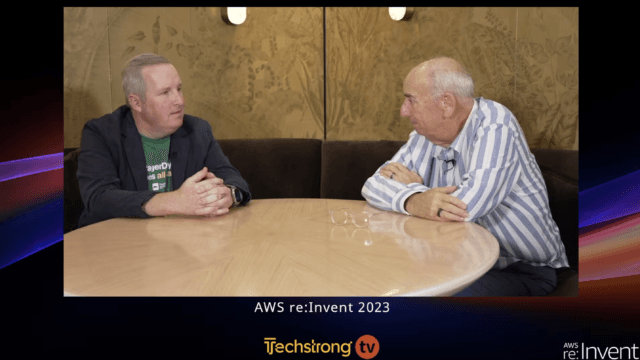
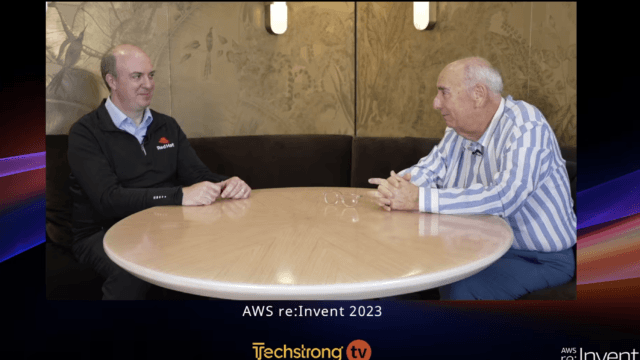
So guess who took over? Mitch Ashley stepping in here at, uh, at, uh, the win our studio at eight of us Reinvent and talking with some fantastic people. We've got another great guest, uh, Simon Taylor, who is CEO and founder of Iku.
Welcome It. Great to have you. Great to be here.
Thank you. Having me On. I'm glad we caught you before your voice went, so I Know it's, I'll tell you these big conferences in Las Vegas, you forget what it does to your voice, but I'll be a little gravelly today if that's okay.
It does, it does. You just have to stay away from the gaming tale because that's, that's when I'll definitely not our thing. Stay away from that.
Well, tell us, for folks that don't know haiku other than the, the Japanese home Sure. But tell us a little bit about Haiku and Yeah. So Haiku is actually the world's fastest growing data protection as a service company.
Uh, we've got over 4,000 customers in 78 countries, and what we do is we bring together observability and data protection. Mm-Hmm. You know, I think, you know, we started the company about five years ago with a very simple idea, which is that the rate at which data silos was growing was explosive.
You know, I think when we started the company in 2018, the average company had their data in about 15 different data silos on-Prem, public Cloud, a little SaaS. Today, that number is two hundred and twelve, two hundred twelve different silos. Because of SaaS people, people are putting their data everywhere And their own use of cloud as well as SaaS.
That's it. And we said there's gotta be a simpler way. You can't have a different backup company for every single silo.
Mm-Hmm. You know, if, imagine if you had 200 different apps and you had two, 200 different backup vendors, it'd be outta control. So we created the world's first low code development platform for data protection, which means that anybody now who's got a SaaS service and wants to back it up can write to our platform.
Um, we launched this in about a year ago. Um, we've now got 50 different SaaS services that we protect that's 10 times more than any other data protection vendor in the world. Uh, we're backed by Bain Capital Ventures and, uh, we've got a 91 NPS score, the highest in the industry.
Anything above 50 is great. You're happy, you're doing well. Thank you.
So, so talk about the integrations. I mean, that, that's obviously a big part of the Sure. Solution of the game, if you will.
Yeah. You know, pre integrating as much as possible with all the services that customers potentially want to do that. How much of that is already done?
What do customers need to do their own kind of low code, no code development to finish that part of it? It's a great question. You know, I think when we started this thing out, we sort of thought to ourselves, you know, if you look at the history of data protection, there were legacy vendors that I won't name, but they were built to do specific things.
There was a backup vendor that was great at backing up Unix, another one for Windows, another one for VMware. And we sort of said, okay, so if this, this continues as, as it's going, you know, you're literally gonna have a different backup vendor for everybody. Every layer.
It would Be insane, horizontal, analytical. Okay. And, and so then we said, okay, so why are data silos really exploding?
And we broke it down into three categories. You know, one is you have your traditional on-prem. Mm-Hmm.
Two, you know, we're sitting here at AWS reinventing, as we were just talking off camera, people think about a cloud as a static beast. But in reality, look at AWS today, AWS represents over 200 different services, 200 mm-Hmm. And if you think about the way people think about data protection, they go and they back up their S3 buckets and they call it a day.
You know, what we wanted to do was different. We said, look, what if we could set this up so that partners and SaaS vendors could actually develop native integrations into every one of those services? Um, and so it's really not a question of the end customer having to build any integrations.
It's a lot of SaaS vendors are calling us up and they're saying, Hey, we don't actually offer end user data protection to our customers. We've always used the shared responsibility model, but it's not good enough anymore. Mm-Hmm.
Because customers, as they expand into the enterprise, they want NIST compliance, they want SOC two compliance. They have to be able to tell their customers where exactly they can protect their data. And I think that's, that's why they're coming to Haiku.
Interesting. Um, so when you talk about providing that data protection, is it for primarily the clouds services or is it also third party, other, other technology vendors that are part of the ecosystem at this is one of the conversations we had this week is, yeah. Is something really the cloud anymore or is it about the end users?
Or is it that really it's an entire ecosystem, right? Kind of. You need to be there to be part of, you know, the technology stack that we're working Today.
Well, you know, we call it build to run because I think what, what's happened is if you look at a diagram of what it used to take to build an application, you know, you'd see some virtual machines maybe sitting on some physical servers. That's about it. If you look at how DevOps and developers are building apps today, they're using hundreds of different services.
And so, you know, when haiku's approach to this was, let's look at AWS since we're here reinvent. You know, think about things like Lambda. Think about, I am, think about keys key management, think about RDS.
All these are individual pieces of the application development puzzle. So what Haiku's approach has been is how do we get a developer from, I'm building an application to I'm running it. What are all of the services that they are dependent on to make sure that application actually works?
And those are all the things that we now protect. Mm-Hmm. You know, but I think there's a second piece to this, which is, it's not just about the cloud.
You know, this is about SaaS. In fact, you know, we were just speaking about this, but I wrote a book called averting the SAS Data Apocalypse, and I call it an apocalypse, Mitch, because actually what's happening is this, there is so much data in so many different data silos, and everybody's lost control. It's hard to get your data out of, it's not impossible.
Or, you know, you can, you can take 15,000 records and you're done. That's it. That, but I've got 2 million in the, in the SaaS service.
Hey, I live with that issue every day. Well, we invented a product called R Graph for this problem. And what our graph does is it sits on top of your single sign-on it discovers your environment and it builds, I call it the Beautiful Tree.
And what it does is it, it illustrates for you every department in your entire company, organization, and it tells you every workload you're running on-prem, public cloud and SaaS. You'd be shocked. You'll pull it up and you'll actually see the hundreds of different data silos you have and how out of compliance you probably are.
Yeah, That's true. You know, sometimes knowledge is okay, now we know, so we gotta do something. That's Right.
And that's absolutely right. Okay. So it happens, right?
Yeah. You, you do that and you say, oh my God, look what I've got. And some things I can say, I can take care of that I could stop doing this or Yeah.
Or replace it with what we're doing. Sure. Um, what is the apocalypse and how we stop?
So let's just jump to the last 20 minutes of the movie. Averting the sat. What apocalyp, what's all the buildings are leveled, so, Well, I'm gonna quote Charlton asked, standing there on top of the heat, you know, it's people, no, whatever, You know, it is, it is a dramatic word.
Right? You know, the apocalypse. But I'll tell you what the apocalypse is.
The apocalypse is that we live in a society that is such a digital economy today. You know, when there's a ransomware attack, let's take the city of Oakland. Right?
City of Oakland goes down. They didn't go down for a day, they didn't go down for a week. They went down for 96 days.
Mm-Hmm. Now, what does it mean when a city goes down? It means that everything is offline.
You can't get paid. There's no paychecks going out. Kids can't go to school.
You know, all of the basic services that we use to live our life, operate, Operate. They stop. My point is this, 52% of ransomware attacks occur through SaaS, and a majority of them are successful.
So the apocalypse is simply that we don't know where our data is anymore. We've ceded control to the SaaS vendors. And as a result of that, we've stopped thinking the same way we have for 40 years, which has been, okay, you know, what's my RTO?
What's my RTO or my RPO, what's my data retention policy? Where is my data? Mm-Hmm Enough.
I don't control it. I can't, I don't know where it is. And so we rely more and more on third parties.
What we're saying is, let's take that control and how do we take that back control? We apply the same principles and policies that we've used for 30 or 40 years on-Prem with cloud and with SaaS, because the shared responsibility model, while very, very simple to understand, which simply means, you know, the cloud is gonna provide you with a service, but the data is yours to manage. You know, but that's a lot of risk for all of us as customers to bear Mm-Hmm.
And so what we're saying is, let's take that control, let's fix that problem, and by doing so, we can fight back against the scourge of ransomware and stay up and running. It seems like one of the, the layer of complexity that weaves between all of those providers and our data is, and they're also in how you get access to it. Yeah.
And how is represented what it is. Do you even know what you've Got? That's Right.
You're a CRM vendor versus, you know, your, your ERP vendor. Yeah. All the myriad of things that you've got.
I don't think we even understand what our data is No. In the format of it and, and how we would potentially use it if we could get access to just the data. You know, I, I think it's a really important point, and I think it goes back to this build to run, right?
I think it starts with our amazing developer community. It's the DevOps folks. It's the folks who are building these applications who once they understand that their source code is actually at risk, right?
You're putting your source code in SaaS vendors and you're not backing it up, you have no way to recover it. Right? If we can natively integrate every aspect of the development life cycle into a data protection vendor like Haiku with very, very limited cost, time, money, or resources, we're gonna set a precedent where we're gonna say, you know what, why would I not have the insurance policy when I'm building this code?
And I think that's what Haiku is all about. We are very, very focused on giving the developer community a very simple means of employ, deploying true enterprise data protection inside of every application and database they build and run. If you were, if you were gonna be a SaaS company Yeah.
And knowing that Haiku is here and Simon and team are here, what advice would you give them? What advice you would you give to the providers to help you, help your customers make it easier on all of this? Sure.
What's the thing they aren't doing? Yeah. I, I think here's what typically happens, and, and I, and without naming any names, we'll protect the, uh, innocent here.
But almost every SaaS vendor has something on their roadmap called backup. And it sits on the back burner for a very simple reason. If I am running a project management SaaS app, let's just use an example, and I go to my board and I say, you know what?
I'm gonna divert 25% of my time, money, and resources to protecting end customer data. They're gonna say, why would you do that? We want you to build features that focus on what you do.
Now, the problem is this is the chicken and the egg. If those same SaaS vendors reach out to a Gartner Magic Quadrant data protection vendor for as an example, and they say, would you please build US data protection integration? Those, all these vendors are gonna say, no, your TAM is not big enough.
Your market's not big enough. So they're stuck. Mm-Hmm.
It's not that they want to hurt their customers, it's that they're investors, board Members. So be a solution for every Customer. Exactly.
It would be very, very hard. So what we tell folks is reach out, use the low-code development platform. When you're developing your SaaS service, it takes as little as three days to offer end user data protection.
And all you have to do is offer that as a, as a, as a service inside of your app. And you never have to worry about it. There's zero liability.
You put it all on us, and I think you get the benefit of an enterprise data protection vendor without the time, money, and resource risk. We, we may have already talked about this, but have you made some announcements here at AWS? We have.
What's happening for you? You know, I think, I think the biggest thing again, is when we talked before about the fact that AWS is really comprised of about 200 different services, we looked at that and we said, what is the true end-to-end pathway for a developer who wants to build an app on AWS? We mapped down every point at which somebody could theoretically steal your data.
Somebody could theoretically put you outta business, shut you down, or compromise you. And we protected it. We added a native data protection integration, all of which is available in the AWS marketplace under HYCU Haiku.
So now when you're developing on AWS, you can protect all of that hard work, time, money, and resource in a very, very simple marketplace offering. Yeah. It's part of being part of that ecosystem.
That's it. It's one of the key enablers. Um, so if you could find, find you in the, in the marketplace Mm-Hmm.
I would imagine also you can go directly to HYCU and find out more about what you Do. That's it. And you know, I love what you said.
HYCU, it's haiku, and I'll tell you why. Okay. We were thinking about a name and when we came up with the company, we've been around for about five years now.
4,000 customers, 78 countries. We were thinking about how do you take all the data in the world and collapse and into a small, elegant package. And I thought about a Japanese haiku home.
Mm-Hmm. And then I said, I'm never gonna get haiku. The URL.
So how about HYCU hybrid cloud uptime, HYCU Haiku. Okay. Alright.
So there there is, there's a, there's the time acronym behind it. That's it. Okay.
Well, good. So, one parting question and one you may not be expecting. Sure.
I don't know if you've sold the movie rights to your book yet. Not Yet. What actor would you like to play Simon Taylor in, in the movie?
So, so, you know what's terrible when I don't have this raspy voice, people often tell me, I sound like Jonah Hill, You know? Okay. I could, I could.
So my wife saw tell, yeah, You do actually, You know, so I get back quite a, a lot. You, you know, a little bit. Not right now.
Not that when it's so gravel, but once in a while, Hey, shoot high. It's great talking with you. Great to meet you, Simon.
Thank you so much. Congrats on the announcements with the AWS marketplace. Thank you.
Look forward to seeing more great things from me. Wonderful to be here. Great.
Thanks for joining us here today. Uh, we've had a great time bringing some really fantastic interviews, uh, for you here at AWS reinvent. We of course, will have these interviews up on Textron TV in the next week.
And just keep hanging tight for more. Got a lot of great content here on all of our sites. com, security Boulevard, cloud native.
Now Techs strong, research techs, strong ai, digital, CXO, et cetera, et cetera. There's always a new property every week, I think. Not quite.
But we've enjoyed, uh, bringing this to you and look forward to our next interview. Alright, take care. Thank you.