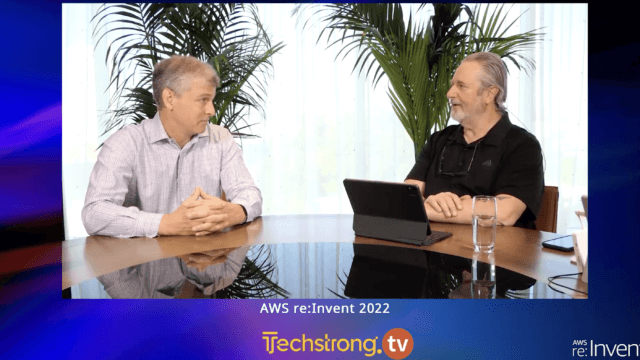
Joe Duffy, Pulumi | AWS re:Invent 2022
Joe Duffy, CEO of Pulumi, joins Alan Shimel at AWS re:Invent to discuss the state of as well as the current state of the IAC market.
Transcript
This is texturong TV. Hey everyone. We're back here at AWS reinvent with our coverage from the wind tech strung TV Suite happy to be joined by my friend Joe Duffy from palumi.
I haven't seen Joe in person since before covid. We've spoken but it's been a long. It's great to see you in person Joe.
I hope all is well. Yeah, thanks for having me. So Joe.
look, I palumi is a brand and a product and a open source project and it's You know an hour the bubble I live in. It's a known entity, but maybe some people out here aren't. It's possible, right?
Yeah, let's talk about palumi with them. Yeah, for sure. So, you know unbelievably we hit our five-year anniversary starting as a company this year earlier in March and so plume is a infrastructure's code technology.
It's an open source project got a great commercial SAS to help teams adopted at scale, but it's really infrastructure's code meant for infrastructure teams and developers and helps them work more closely together. I think the difference between our approach for infrastructures code and the typical approach is we've really embraced languages every language. So JavaScript python go see Sharp Java actually had a yaml support the Ln yaml stands for language blue people's minds because they think of us as like, you know general purpose languages, but the Indians just a really bring everything.
We love about programming languages and blend that everything we know about infrastructure's code or just really help people really get more stuff done in the cloud. Absolutely. You know, Joe we were talking off camera.
We had a chance to catch up. com Chef puppet ansible. Right.
These are all at the at some level infrastructure is code place now. They've gone in different directions over since then and in different places and different levels of success. There's been other, you know products that have come in pullumi being one of them, but let's let's think about let's take a look at the the palumi customer Journey if you will.
If you can share with our audience, what is the average kind of experience Journey? Where you know all roads lead to palumi kind of thing. Yeah, I think honestly there's there's maybe three different Journeys one is large companies that have been around for long enough to have used a lot of the early infrastructures code tools like ansible Chef puppet and you know, the world is sort of evolved from what I call the two virtual machines and a database World which is you know, things are simple 15 years ago 10 years ago where you know, you had a simple two-tier web application, you need a database and things, you know, you shipped new code every quarter every month maybe but these days, you know, there's so many moving pieces with the modern Cloud so many of these large customers have to do hybrid and so a lot of those old tools are so great.
They still work for the virtual machines and configuration, but At that level of scale and complexity. We find that a lot of people are sort of hitting the wall on the prior generation of infrastructures code and that's where having a full loan language helps. You tame some of that complexity.
So that's sort of one Journey. The second is you know customers are fortunate enough to be born today born in the cloud. Right?
It's a very different Journey for them because they don't have a lot of this Legacy to deal with they might be their first time picking an infrastructure as code tool and so plume is the obvious choice and I say the third category is maybe companies that start five years ago seven years ago think of folks like snowflake. They had the fortune of being born sort of in the modern Cloud era, but they're still trying to modernize a bit more and they might already have bet on. A different infrastructures code tool and have have to figure out okay.
How do I evolve from that world to the new world? you know listen look this is not a new fact pattern we've substituted cloud in maybe for something else but over my time. I've seen the compute stack change not a lot but a couple of times and so when I look at this I think to myself What makes me think it's finished now, right?
It's not it's not. And you know one of the things as a CEO, right? I always tell my people is it gonna work is it just tell me it's going to work and is it gonna work tomorrow?
Right, right because I I hate paying for things that only work for a day. So to speak. What do you what do you see tomorrow?
What do you see? You know, what do you how are we future proofing with balumi? Yeah.
It's a great question. You know my background interestingly the way we came up with bulimia is I spend a lot of time on developer platforms before coming in. I started my career in it.
I worked at EMC worked on, you know, storage stacks and I had a you know symmetrics on my in my in my office Hopkinton Hopkins Mass. Yeah, actually we're headquarters. Thank you to briefing Center Joe Tucci requires that I wear a suit while I was programming which really, yeah.
I remember those days. Yeah, but I so I had a taste of infrastructure back then but you know, I went off and developer land I came back but as you point out like a lot of the patterns are similar, you know in developer land it was okay. We move from Doss to Windows and then Linux came along and we see the evolution there.
You see the Evolution for databases, you know, like Oracle side-based sequel server. That I think the one constant in this industry is things are going to change. Yeah, and you need to future-proof yourself for that sort of change.
And when we started plume we said, okay, we can go create our own programming language. We can go create our own DSL or something or we could tap into Decades of experience that we already have with tried inter programming languages that people already know and love let's do that. We don't have to recreate the wheel and I think because of that we're able to adapt much more quickly to the changing landscape.
I agree but, you know a couple of things physical I don't think the world needs another language another computer language. Secondly, there is a level of comfort dealing in the languages, you know. Yes rather than having to learn just a whole new.
It's like changing offensive coordinators in football. Right? It's really hard.
It's a one to two year. Idiot tax. You got to pay right?
but nevertheless a lot of your customers I know. Come from using other infrastructure as code type of tools. and is it just the the comfort of being able to use the language, you know, or is there another more inherent advantages in Blooming?
The two things we see very commonly in being here at reinvent, you know talking people at the booth. I would say 60% of the people that we talk to have these challenges today with current infrastructures tools that you know are not plummy the two challenges. We see are one complexity at scale.
We went from two virtual machines in a database to you know, a handful of resources to now a single project you've got I am roles and you've got lambdas and API gateways and you've got containers and container Registries and kubernetes clusters and it goes on and on and at that level scale. The existing infrastructure is code tools start to break down. The programming languages were built to deal with complexity you have abstraction you have encapsulation you you have a real notion of sharing and reuse.
So you're not copy and pasting scripts all over the place. And if you copy and paste scripts here, that's a recipe for disasters security, you know mistakes hard to evolve hard diversion. We've just tapped into Decades of software engineering so we can solve this problem.
So that's the first thing we hear the second is we want to put our developers more in the driver's seat and putting a development in the driver's seat means, you know, not just giving them the keys to the kingdom but empowering them to get some things done right with guardrails. And so oftentimes we work the infrastructure platform team and they want to do this and maybe they tried with infrastructures code tools and developers say, yeah. I know python.
I don't want to touch that domain specific language like no thank you. It's what they find is empowering developers. They have projects and just fails and that's that's tough.
And so But we find people that console those problems way more productive. Like we have one customer they came and spoke at our team meeting a few weeks ago. They said our company thinks pulumi's magic pixie dust.
You just sprinkle it on the team and suddenly six times more stuff comes always evolio is true, right that easy. Yeah, but but it's nice. I mean, that's a really nice thing to hear from a customer.
Absolutely. Yeah, really is Hey Joe when we were talking off camera you gave me some metrics. I don't know if you don't want to divulge him don't but you know in terms of you guys have had a solid in spite of macroeconomic conditions.
You guys have had a solid couple of months Quarters here and some real Milestones reached I've whatever you're comfortable with if you want to share with the audience, yes, a plume is open source. So for us everything starts with community and we recently surpassed 100,000 community members beautiful, which is amazing and we recently passed 1500 paid paying customers as well. And that's that's up, you know between four to five x year over year.
So that's that's beautiful growing great. And and yeah, we also have some interesting statistics around productivity of people that have adopted palumi, but no it's going it's going great. I love it, man.
So I think we've done a good job of laying that whole table Joe. How do we get started with palumi? So plummies free and open source.
It's gonna flew me calm. You'll see you spell it for us. Oh p u l u m i easy.
In fact the top 10 search phrases hitting our homepage include five misspellings of blue. I would imagine so even if you misspell it, you'll find oh, yeah anyway, but it is p u l u m. I, that's correct.
And then there's a little button get started click that download the Open Source super easy. In fact, we hear from people all the time easiest way to get started with the cloud that they've experienced, you know, running and two minutes. And if we haven't mentioned I want to mention it you could use the free palumi open source.
Join a hundred thousand other people who are and then you guys offer kind of pulumi as a service if you will hosted version. Yep Plumbing, you know really is a SAS first company. And so most of our major customers will use our online version It's just super easy.
It's similar to how get works with GitHub use the plumy open source use the plume service easy to collaborate security built-in reliability compliance. All the good all the reasons. Why you go for stats totally Joe man, it's great seeing you.
I hope it doesn't take three years together person man. Good luck you doing thank you great company check them out. It's like magic pixie dust.
We're going to take a break here at Tech struggle. We'll be back in just a moment.