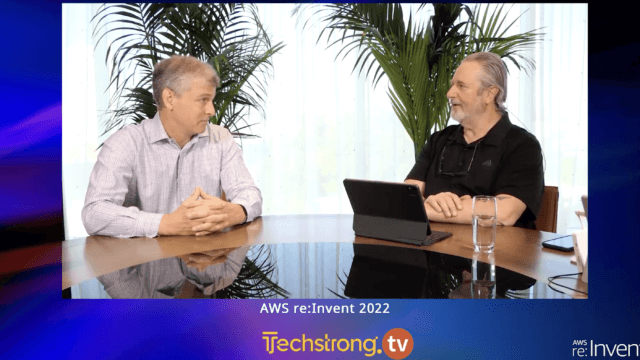
Anjan Kundavaram, Precisely | AWS re:Invent 2022
Anjan Kundavaram, Chief Product Office of Precisely, joins Mike Rothman at AWS re:Invent to talk about DataOps as a whole and Precisely, a data integrity solution that works towards developing accessible and trustworthy data.
Transcript
This is texturong TV. Hi, this is Mike Rothman again live from AWS re:invent. Well, not actually live but you know kind of it's pseudo live had reinvent 2022 from the tech strong TV studio here at the win.
I am here with Arjun from precisely. I got it, you know almost there manager for precisely where we're gonna talk a little bit about data Ops today and you know again, I'm a security guy by trade so I'm learning stuff. We'll see about data today.
That's what I'm focused on right? Yeah. I'm here to learn about data Ops and a sense of you know, kind of the importance of contrast with devops.
Yeah and really kind of thinking about data observability we chatted about yeah lots lots to discuss so but first, let me introduce yourself a little bit to our audience and yeah, I'll tell you a little bit about the company, right? Yeah, I'd love to so on June on the CEO precisely so precisely we're company in data integrity and that's like three problems customers can access their data. If they somehow figure how to do that, they can't trust their data and they figure out how to do that.
Like they don't have the right data like the external data in the right context. So we've got about 12,000 customers. We serve 99 of the top Fortune 100 customers in the space called Data Integrity.
Okay, so you obviously came from a number of different companies to come together to become precisely. So yeah, so our history is like so we've grown pretty rapidly we started out seeing sort and we had a strategy to go data Integrity is a thing all the way from data integration to Quality enrichment and we've kind of look like we're gonna go organically but we're gonna look at companies that fit our strategy and our eat those to win in this space. So we've kinda over time acquired data governance in for Jakes and and MDM with Anna works and so on that's being part of our strategy.
Okay. So if we kind of just take a step back and get a sense of you know, kind of the full life cycle. Yeah data, right and We're here at AWS.
Right? So yeah focused on S3. And yeah, maybe yes, that's what you know, the reality is data is kind of everywhere.
Right? Yeah, and and, you know can be down at the end points right on specific devices on specific servers and associated with the you know, kind of disordered. Focused and connected they're attached to those instances.
And obviously we've got you know kind of a variety of other, you know, different objects stores all over the place. So how do we first start to get our arms around, you know kind of where all this data is how important it is it to the organization and and really start to build a process around now, it's super important. Right?
Like I think you've got like you pointed out data is like everywhere. It's in silos and multiple clouds. It's like Azure AWS even in AWS like we heard in the keynote today, there's like nine different databases and you've got well not least nine important ones, right?
You got structure see me structure what happens then is like how does a company know what's important right like you got how do I buy? It's a data and like what's running your business like what matters like so if you're the CEO of a company and you got a dashboard you run your business on daily and like how's that data? If that goes down like if your customer portal goes down, do you know where that data is like and who's touching that data like do you have White card drills, so now you've got like you talked about S3 to EBS host that data going from S3 to Aurora to redship what happens when that data goes to when the dashboard goes down like the monitoring tool.
So in the observable layer, they're going to tell you. Oh like it went down. Or it might be up and here see I might be like, well, it's not working something happened like someone changed the schema and the data is like not coming up.
Right? So I think that sort of data absolutely they talked about so I think the principles of observability and sort of devops and you kind of apply them to date it's great. Like I would great infrastructure if I'm not getting the return on data like what like it's great.
But like I need to go make my decisions I kind of give you a parallel in the in the devops space, right? It used to be that it would take like months to ship code like today if you don't ship go daily. Something's wrong with you.
Right? Like that's the same Paradigm. You want to apply data?
Why does it like like you kind of have these wall Gardens? Like I can't access my data. I don't trust my data and like, oh you go.
You got to go wait. We want to get the date. I need like why is that well because it's like it's not secure.
You gotta go to go to the policies. Now, if you truly map your data if you can truly have the guardrails if you trust your data and you kind of have built a data off. Pipeline so we have products around that then you can Empower your users.
They can then go like don't have to wait three months then go. Oh, I need that data. I'm gonna do that analysis.
I'm gonna go and press my boss or I'm going to impress my customers. I'm gonna go and like you have empowered your users to go drive that so you guys support a number of different tools on the front end from an access standpoint. So how is that?
Yeah. So our core apps are we support a data integration now, which is like getting information from Silo systems to an EBS and Aurora and one of the announcements we we do today jointly with AWS is we're helping AWS get information out of complex systems like Mainframe and ibmi to Aurora and and the AWS systems. The second app we do is on data governance and catalog the problem that I talk to you about is like how do you go and map this information and really figure out well, there's some piece of information you don't want anyone touching there's other pieces of information that are critical and so on.
Up on date observability and this is like so we've seen observability so being around for 10 years, but why can't you get that for your data? Like I'll give you a simple example. You might have but you might have a column of data, right and you're used to kind of seeing so let's say 50/50 male female on the distribution side and all of a sudden something changed.
It's like a hundred male and one thing so that's clearly out. The observability system is not going to cast that right, right, but the data's early system is going to be like proactively some things going on with your system like infrastructure team's not gonna tell you that the data team now is empowered to go. Oh something going on.
Let me go investigate that and then quality and enrichment are the two other apps that we have on the quality side. Like you see, I mean we're on the age of AI there is a ton of investment that's going into building models. But if you don't go speak your data quality like that model is not going to do you a whole lot good to companies are investing in data quality and really building resilience around that and then finally, I think this is the last frontier for companies is data enrichment.
It's not enough like you think it's better by the data, but you're often missing the Third. Party context right like you might be looking how your customers are using. You don't have the enrichment or we kind of looking at property or mobile data how how people from based on demographics?
So you want to enrich that into Data pipelines. So those are the capabilities that we have apps on so you talk a little bit about the data team. Yeah.
Yeah. What is what does that means? They're achieve data officer now?
Yeah, it's funny. It's a thing analysis. We did a poll.
I'm gonna get the number wrong, but I think three fourths of the Fortune 100 or hiring or in the process our hireing cdos. There's probably more investment net new investment going into the data themes and infrastructure teams. I think there's a realization that if you want to go drive a business transformation, you got to get your data piece, right?
And that finally data is an asset right people are starting to think about. Hey, this is a monetizable asset. This is either my intellectual property, you know, my customer date or something that I'm able to analyze and derive additional revenue streams or you know, increase my, you know, kind of revenue for customer and Taken and really starting to treat it that way.
So again interesting to see a company that's out there really focusing specifically on the data because can we come to AWS? Right? Yeah, I'll focused on the shiny things.
Yeah. Hey this new instance type and you know that new database, you know kind of capability. It's absolutely I think you think of data as amount of asset.
It is also a massive competitive differentiator, right? You kind of look at the companies like we not like Netflix and like AWS, right the companies that have done really well how great insights are very reactive to data and they've built that muscle right and and that's it. Like if you don't do that you have the same I want to do 80 is not generating new data to run their business.
They have the same amount of data any other company does or Netflix or pick your company, but if you invested in a data Integrity infrastructure a data option infrastructure, then you're set up. Yeah, and interesting interesting sorry, so we talked about the so you made the announcements with AWS here and we're here at AWS right shouldn't really talk about this but let's talk about multi-cloud, right? Yeah guys do it or you know kind of data in other Cloud platforms.
What about on-prem? So yeah, that's that all one consistent data infrastructure. Yeah, standpoint of what?
Yeah. Let me tell you a little bit about our strategy here. So yeah, we're multicloud so our Control plane where you go Define, your data quality data governance data integration is a sasap.
It's an AWS, but you can go run that anywhere you want where your data plane could be in AWS could be an Azure. It could be on-prem we an agent. So we think the reality is it is a multi-cloud world.
It's still a ton of data on Prem. Yeah, but the customers are tired of like they don't want on-prem solution. They want to assassolution with a SAS control plane, but deployed where you want to so and I think that's the reality like you there's still a ton of data in mainframes.
I forget on pressure today ton of data on Prem and companies by nature m&a or whatever drives them have a multi-cloud posture. So they're not gonna consolidate at all. Very frankly.
I don't know anyone who's done that yeah. So providing a solution where they can go have a single centralized control plane and go run and where they were and I think that's our plan. All right data Ops you heard it here.
I'm not gonna say first you certainly have heard it here Arjun from precisely. Thank you so much. com check out our data Integrity Suite we've got demos there and yeah love for you check that out.
All right. Well, I appreciate the time man. You bet take that.
Take care. All right, and thanks for Seeing us here at tech store on TV. We will be back with another interview, you know shortly.