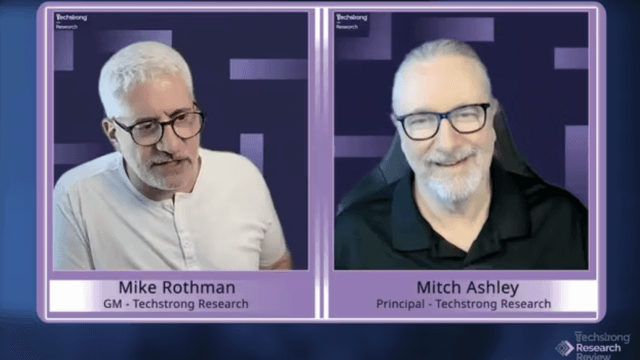
Focus on Sustainability – Techstrong Research Review EP 17
In this week’s Techstrong Research Review, Mike and Mitch talk a bit about sustainability, given it’s a new focus of Techstrong. They discuss the economic link between code and DevOps efficiency and sustainability and some of the far-reaching ramifications of this line of thinking.
Transcript
here Hi everybody, Mike Rothman here general manager of text strong research with another episode of the textile research review, which just as a little refresher is our internal research meeting every week between me and my partner in crime Mitch Mitch. How are you doing today? I'm doing well coming off of a good week.
Then. We had the tech strong con event and a lot of great sessions and behind that I had a little bit of vacay time with some you know Beach and sand and ocean and that's always good too. So I'm doing really well Mike it's good vacation too, but it was ostensibly more do work in a different place.
Okay, so my my wife and stepson went skiing and I'm not in a position to be able to ski at this point with you know Conway about me which is all you know recovering quickly. So that's good stuff here. Well, let's get at least I kept you out of trouble, you know up at the lodge.
He did it. It wasn't in the room working not you know kind of out pray skiing it like 10 in the morning. So so that was good, you know again and again good week I think text from Connor that's really what I want our Focus today, right which is there was a an aspect that we're really starting to introduce into of course texture on TV, but also number of our conferences and that's the concept of sustainability very fortunate.
We got a person down in Florida called Bonnie Schneider who has a lot of experience focusing on sustainability and Ego types of Concepts and how that impacts technology and she's been spearheading a lot of our efforts and and cool pal yesterday at Tech strong economy. Yes, I guess we're recording this Friday, right? You'll see it on on Tuesday or Wednesday of of next week.
So when we did Tech strong con, um, you know, she had a pretty cool down about sustainability. But when we were doing the wrap up, you know this really what I want to dig into I kind of been a little bit confused about, you know, kind of weird sustainability fits in and and kind of how it impacts right the decisions that we make whether you're looking at it from devops or Cloud native or even you know, security perspective and and I finally got the link right it was when my bizarred, you know started talking about having to optimize your code because it would consume less resources, which then makes it more efficient which then starts to contribute to sustainability with the growth of cloud and the growth of compute and you know, All of the challenges that you haven't scaling up, you know kind of data center capacity. I finally started to make the connection that oh, we you know kind of optimizing our code isn't necessarily a performance thing entirely it is right.
It really does help with a variety of other things including a lot of these sustainability. So that was kind of a little bit of a light bulb that went off in in my head for the most part in order to you know, start reminders being why sustainability is really relevant to a lot of you know, the research that we're gonna do with technical research, but also a lot of the events in the activities that we have going on within the broader text wrong organization and the lightheaded because I altitude sickness coming down. Anyway, I'll blame it on that.
Yeah, I had complimented so didn't realize Bonnie was on the call, but I You by complementer about how quickly she's matched sustainability into our topics into our Focus areas, it's interesting because my career there's been a couple of touch points where I've worked with people who are pursuing that that Avenue one of them was Terry swac who we used to Brown I used to work with that still secure and after still she left still secure to start a company called sustainable minds and she partnered with a PhD student who built a database of Materials in the carbon footprint of materials used in manufacturing and creating products and companies were starting to look at the design process and both the manufacturing process and the materials used to make decisions in the design stage that had an impact on carbon footprint and sustainability. And that that was quite fasting then there was another company called rally software, which is an agile agile software company online tool to do that. They got bought but one of their Founders was very much about moving out of the data center and into the cloud.
One of the big benefits was on the environment and saving, you know, whether it's cold or natural gas that we used to fire, you know, run our own data centers and by putting that together and of course this massive data centers in the middle of Iowa still think a lot of power but you know consolidating together was part of in for him. They made that part of their corporate Mission. So it's it's been this thing along the way and it seems like it's gotten to be much more of a I don't say serious, but much more of on the plate issue companies are trying to figure out or are doing something about in their strategy which makes sense.
Right? I mean, you know, and we talk about how consumption and all that stuff but you know, In this economic backdrop where folks have to start figuring out how to work more visually right in part of that is an embracing devops. I think part of that is embracing Cloud native infrastructure so that you know, again you're able to start to leverage a lot of the efforts of a whole bunch of other people right to advance, you know, the technology platforms what I also think it's really about kind of the operational and if we can reduce the compute reduces the you know, AWS or Azure or gcp Bill, you know kind of at the end of the day if we can leverage as Services where it makes sense, you know, so again all of this, it sounds like really optimization, but what it is is really cost control and at the end of the day sustainability, right and I think growing that term to Encompass some best practices in terms of you know, kind of application architecture and and really efficiency of How our you know environments run that's all good.
Right? I mean, I think that, you know start to embrace stuff like Automation and starting to you know be a little bit more aggressive about, you know, scaling up and scaling down a lot of our environments and and getting Cloud allows you to do that. If you're in kind of old instance world right with auto scale groups kubernetes allows you to do that.
If you have embraced, you know, kind of a containerized type of environment so really again a focus on the efficiency of operations, and I guess you know SRE is is focused on you know, availability and making sure that it's up and running but you know, it also may end up really kind of being focused on efficiency as well. The performance is one of the aspects of it to announce a natural, you know and a handshake with efficiency, right? It's interesting that.
Moving to the cloud is sort of the the pendulum swings right I go from I can't get anything done because I can't get a instant spun up in my private data center to I've got the cloud and it's unlimited and I just kind of free for all if I need 25 more of whatever's right, you know terabytes of something or instances of whatever you can get it if you can pay for you can get it. So you kind of saw this like boom I'm gonna just use whatever I need because it's all there and it's available and some of it's free but a lot of it is easy to consume and easy to buy and then you need to kind of pull that back and say well wait a minute, you know, it's not a free for all we can't spend whatever you want. It's been well thanks to weigh in it some point it says what the hell is going on here.
You told me this was gonna see right those credit cards people are using to put that stuff on. Yeah, they start to claw back, you know, and there's you but you know, the point is the same words, you know, kind of cloud was initially That's this way to be a lot more efficient and not have all this some cost and it infrastructure that we've got to depreciated and a whole bunch of space and stuff and then, you know folks kind of went, you know, crazy and and you know, spent everything and then to see if I like what the hell's going on here like our our cost went up significantly to be clear most organizations just do to natural growth spend more with their cloud provider, you know this month and they did last month and we'll probably spend more next month than they did before but that pace of growth has clearly slowed down as you look at the results from the cloud providers. I am part of that is the efficiency of the cloud provider.
And again AWS has been pretty aggressive about rolling out new chips that are far more efficient, right? Use less consuming used less compute, you know, kind of consume less resources, you know, make less money which is kind of counterintuitive from their state only. But again, I think it's very customer focused and that's always approach that they've taken to you know, scaling up their environment, but all of these things can be painted within not just a performance not just an efficiency standpoint, but also a sustainability standpoint.
Yeah, there's a you know, we've we've done some research you both of you and I have worked on Research reports around the alternative Cloud the devops and the public cloud and some interesting stats and those two that indicate a lot of what you're talking about in parallel will also seen of course digital transformation moved to more Automation and digitization of processes and interactions and experiences. So while we're seeing some kind of cloud back and let's get more efficient of our cost spend and utilization. We're also doing a lot more.
So I think that's, you know, obviously the cloud providers like hey ws and their chip, for example. Yeah, you need to do that because eventually people find other ways to save money if you're not going to help them save money and so folks and it was interesting. So what one of the panels that might desire did at text from a con, you know, one of the discussion points was especially in an environment of either econom.
Controls which organizations are going to hit the gas with some transformation efforts, right and who kind of retrenches and and pulls back on some of those things because of the obvious cost of the investment and in a lot of cases the uncertain return whereas yet again two years ago who cares right things are growing to the Moon, you know money is pretty much free. We're just gonna go and and invest in in all the things now, we have to scrutinize that a lot differently and it will be interesting to see the companies that continue to make those strategic Investments how they will look three years from now when we've kind of recovered and gone into another road cycle versus the folks that really retrenched and and put some of those things on hold now being a technologist having run through, you know, five or six of these Cycles throughout my working career right always seems that you know, the folks that were bold and hit Gas when things were you know, look darkest end up emerging and and growing much faster when things do recover but you know, we've been in a bunch of artists scenarios, you know over the last year or two right that we just haven't seen before so we'll those patterns hold will that result ultimately hold or is it, you know kind of the the retrenchment or or you know that the conservative Strikes Back right or the fearful strike back, you know, we're gonna have this three act play like Star Wars or Star Trek or any other ones where you know, the first one the winners and then the second one, you know that you let power comes back and then you know then and not the same conservative organizations that you know kind of pull back on stuff or evil empire say, um, but that's not that you hear from from most, you know technologist. I mean most technologists are very much about you know the time they Gas right now is the time to you know, innovate and and really, you know stretch out or deep in the competitive mode that you have with some of these, you know stodgy older companies.
You can see a time and time again and those patterns tend to hold true and I would guess even if we see an exception which I don't think we will to the cycle. I think that Trend will hold through because it isn't just about spend hit the gas and spend you know money like crazy. It's invest in research best in product invest in capabilities and best it's in things that are God that pay off not only now but pay off when things get better and so it's kind of like if you've got a Blooming Garden of great vegetables when things turn around you can do a heck of a lot more than you're just starting to plant stuff and you're playing catch up to get to market right once things get better and you can see it with apple what they did in the early 2000s.
And the result from that investment came through with iPod and iPhone and a lot of that you see it with Cisco when 2008 they redesigned their entire supply chain, they did their philosophy about manufacturing products and being able to use multiple vendors rather than kind of concentrating on a few that are very efficient at one or a couple of product lines. So they could diversify and globalize even more so their supply chain. I don't know what they're doing now, but those are the things that companies who can and think strategically and have the cash on hand right to invest in research and invest in that so they can kind of skate a little faster and farther towards the where the Puck's going to be instead of still having a good hike to get there.
Yep. Yep. So, you know interesting times I guess is is yeah, you know, and and I think what you'll see out of, you know, our team is you know, kind of an increased focus on you know, some of these I said let you know get but they're they're a little squishier than we tend to normally deal with which is you know, basically technology and adoption and and you know kind of architectural solution architectures and and things like that, but I do think that you know kind of as trying to help folks really understand where things are going and how they have to you know start to behave I think we do have to start including sustainability and efficiency and and performance as you know, kind of key requirements for a lot of the technology decisions that they recently our you know, kind of relation leaders are gonna have to be anything.
There's a there's an argument to be made that as new generations move into the workforce and are moving Into the workforce that are more cause-oriented a place a premium or a more strength on the planet and the environment and sustainability which I've seen true not in my my kids but my step kids which about about eight or nine years younger than the first two kids, you know, you can see the difference in sort of what's important to folks and I think is that generation has more influence in in the workplace starts to move into leadership positions start to move up into senior that will carry with it what's being laid and the groundwork being laid now, so it could it could gain a lot of women and just because of that one factor. yeah, and again whether it's It that's a great Point Mitch. He you know in terms of really trying to get our arms around how the new generation of employee-based really kind of changes the way we have to view things.
Right. I mean are they gonna be as profit Centric right, you know kind of entrepreneurial and you know real big companies and sell them and you know do it again, you know, possibly at the cost of or you know, kind of with a negative impact on you know, kind of climate and and you know kind of sustainability in those things and to see how those priorities change over time right? I'm an old doll, right?
I'm always gonna look at things, you know from a certain standpoint and it's hard to see me changing but you know, I'm not gonna be doing this forever, right? You know, so as this, you know new group of whether you're gonna call you disease or you know, kind of 20 year olds or what have you that are, you know becoming more prominent again, or they going Are looking at it and is there a way to make both of them right, you know where he you know, they continue to grow great companies and do tremendous Innovation, but they do it in a way that's you know, much more effective, you know from a sustainability state or not to be determined. You know, that's that's why we play the game right?
We got to figure it out. Yeah, there's only way you find out is got to play the game on the field, right? We could that's excited all we want which is fun, which was what we do, right?
Like, you know at the end of the day, we've got to be accountable to come back and revisit some of the things you know, that ultimately we talk about so so that's good. So you again, you know, just interesting kind of just dangling, you know some thoughts out there and that's what we try to do with the texturing research review is is really just, you know, kind of think a little bit forward brainstorm a little bit and and you folks out there or you know kind of privy to you know, how Mitch and I kind of start to the tool over things and you know get where open to doing, you know, kind of more active research, you know in these different areas. So obviously they you have ideas about things that would be cool to learn, you know, get reach out.
We're happy to you know, figure out how we can fit that into our research it. Absolutely. Hey, I got to put a plug in for our podcast.
We're now Distributing on your favorite podcast platform. You can look it up there. com find it there connect to your your whatever your platform is just part of our you know, we're we're some people love podcasts.
I remember I have my podcast phase where I listen to a lot now, I do occasionally not as much as I used to other folks live on it, you know, that's that's in the bath. That's their background Today Show. Yeah, it's listened podcast.
So yet another delivery vehicle platform form of media. And that's our goal is to deliver content in the way you like to consume it. So check that out as well as this show and others on Tech strong dot TV.
Good good. Well with that let's wrap up another one of our episodes Mitch great to see appreciate you always being here brainstorming with me and and peeling back the onion on a number of different things. And yeah until next week.
So next week. We'll be back with yet another interesting discussion about I have no idea and we usually don't have any idea until about five minutes before we record. So, yeah, we'll see what happens next week.
Think about what we're gonna talk why we record on Fridays. All right, Mike. We'll see.
Thanks everybody.