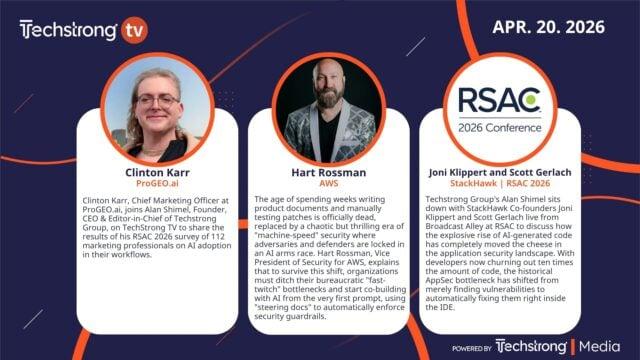
Techstrong TV – December 23, 2024
Watch our live stream on Monday through Friday, featuring exclusive news, announcements and conversations with IT leaders and experts on topics ranging from digital transformation to DevOps, cybersecurity, cloud native, containers and deep-dives into specific technologies and best practices.
Transcript
Hey everyone. What did you do this year? We're gonna tell you what we did.
You're watching Textron Gang. Hello everyone. Happy Monday.
It is the day before Christmas Eve, not the day before Christmas, but the day before Christmas Eve for those of you keeping score. It's also two days before the start of Hanukkah. We're very excited here.
I got my lots lot kits ready to cook. Um, and this is gonna be what I hope our last Textron gang of 2024. Now, there's something to be said about that, right?
We, we started Textron Gang. I guess it was about nine months ago. Mike Vard, wasn't it?
Yeah, it feels that Way. Yeah. No, it, it's been going on a while.
And it was an idea where I just felt like we needed, we needed a kickstart for every day's Textron tv, uh, show, Right? Well, I think you had this idea two years ago. It just took us To, yeah, it just took, you know, sometimes it takes longer to these things to come to fruition, which is the name of my boat.
But, um, but it's here. And you know what, I, I'll be honest with you, succeeded beyond my wildest dreams, because what I didn't realize is, in addition to giving you all a peek inside the depravity of our minds here at, at Doug Strong and what we think about, you know, in the world in general, not just tech, it's also been cathartic for me, especially this crazy year. And I'm not gonna get into the politics and the elections if we don't have to, but it, it's been cathartic.
It gives me an outlet to, to vent, to say what I feel. And I don't have to write it on Facebook. I don't have to defriend people or any of that stuff.
So, personally, I, for that reason, I personally love it. But beyond that, we've had the chance to have people like Guy Coer and Tracy Reagan and John Schwartz, and John Willis and Tracy Martin. And, you know, the list goes on.
Tracy Bannon, hope Winslow, so many, so many gang members who regularly come on here. And you know what? Universally Steve Foskett iss another one, Steve o Foskett.
You know what I hear? I love doing the gang. I love doing text on gang.
We laugh, we talk about interesting things, and I'm glad it's become a place that people like to come to. I, I hope that you guys out there enjoy watching it as much as we enjoy doing it, doing it. So with that being said, what we thought we would do this year, or this, this show being it's the last one of the year, is rather than talking about any timely topic, it's the day before Christmas, we're gonna talk about what we thought were our favorite things this year.
Whether it was something we discussed on the gang or something in the tech world that, of an event we went to or what have you. So I've assembled, you know, some of the core gang folks here. Let me introduce them to you.
First of all, I, I mentioned his name earlier. He is the, uh, one of the co-founders of VI and a Future Analyst, sorry, he's from the Bronx. So we got two people from the Bronx here on the panel.
You don't see that too often, guy Courier. Hey Guy, how are you? Really good.
Trying to work my way up from depravity to derangement at the moment. Well, There's very good. I really happy to be here.
Hey, now there's you go for 2025. Better than Deplorable guy, you know. Oh, well that was me last year, so I know she left.
So you guy, look, the arrow's pointing up, right? You, you got from deplorable, the depravity on your way to hopefully the arrangement. Mm-hmm.
I can't imagine what deal you'll have for 2026, but good for you. Uh, welcome, man. It's been a pleasure.
Also joining us from, uh, from the hills of New Mexico. She, she, you know what, this, this person, she's a gem. I mean, she's always here for tech strong whenever we need a speaker or, or a voice or to bounce stuff off of.
And she co-hosts tech strong women. She's also the CEO of Deploy hub who, and she, we never really talk about Deploy hub a lot, but Tracy Reagan. Hey, Tracy, thanks for being here, and thanks for being you.
Oh, thank you Alan. And thank you for having had me for the last year on Textron Gang. It is fun.
We have had some hilariously fun conversations. Yes. As soon as I'm done, I always go and talk to Steve about, you wouldn't believe what we talked about today.
Yeah. That, that, and that's what makes it Fun. I really enjoy it.
Good. Yeah. Thank you.
And we appreciate you. And then what, what happened to the guitars, Mitchell? What'd you go corporate on?
Me? You know, like I did a little painting and I painted the whole room green, and now this background pops up, you know, it's like, wow. Oh goodness.
What happened? I kinda like the guitars. But anyway, he's, uh, also a future analyst, vp DevOps and, uh, analyst, our own Mitch Ashley.
Hey, Mitchell. How are you? Hey, good to be here.
You know, it's a good Textron gang when as soon as we're done, I leave the room and email or with Slack, or go talk to my wife, Jody, say, you gotta watch tomorrow show. You won't believe what happened. Yeah.
You don't, we won't believe what we did this today. And that's what makes it fun. Anyway, thank you Mitchell.
And then joining, you know, he, he's kind of the, he's the editorial guiding lighthouse of, of tech. Strong gang goes round and round with that spotlight. But he, he sets the agenda day in and day out, even when he's not on.
He's our chief content officer, Mike Ard. Hey, Mike. How are you?
I'm well. I I didn't realize that. I'm also your therapist now, so There you go.
You know what, this, I think we're all Alan's therapist. We should, we should submit it, you know, submit it to the insurance company. I've got coverage for this.
Um, I think we've got coverage for this. But anyway, guys, 2024, what a year it's been. Uh, when we look, as you look over the landscape of 2024, I don't think there's any doubt that the Textron gang idea of the year, 'cause it's not just a person is ai or maybe it is a person, is ai.
This, I think 2024 will be the year of Gen ai. Um, it's so much about what we talk about here on Techstrong. It's so much about what we talk about when we get together at conferences with people.
It, it just seems to suck so much of the oxygen out of every conversation as well as a good portion of every dollar that's being invested in tech today. Right. So, you know, obviously that that's the story for 2024, I think the big story.
But let's hear, what are, what were some of your favorite highlights, whether they be, as I said, from gang conversations or, uh, um, events you've been to or what have you? Who wants to go first? Mitch, I'll jump in with one.
Um, it, it, it's somewhat of an obvious one, but I think it was momentous for a couple of reasons. And that's the crowd, CrowdStrike outage and the, uh, you know, widespread outage. So yes, it was very big.
It affected a lot of companies. Um, people were down for several hours, if not days. But why it's, why it stands out to me is for a couple of reasons.
One is it wasn't a security incident. It was a, it was a DevOps deploy software deployment issue and quality testing quality. Um, you know, and how do you control software that gets out, you know, beyond the gates that you need to stop deploying when there is an issue.
Um, I think the other is about it is it demonstrated that there's some responsibility on the receiver end too, right? You can't blame everything on the, the producer of software putting out an air air piece of software. You know, you know what happens, stuff happens.
And you have to take some responsibility also to be able to respond when you get some bad, bad release, bad code, bad something. And I can't say, I'm not saying you can prevent everything, but it brought to me, really elevated the CD part of CICD and the importance of not just pushing out code, but being able to respond as you push out code and do it intelligently. Yeah.
Yeah. I wish we had spent more time thinking through how the economy impacts it in the last year. And I think if you look post-election, I look at the election as a symptom of that economic conversation.
And in addition to a lot of people being outta work, there's just not as many projects going on last year as we would've liked because of interest rates and things that are impacting us on a macro level. And I think that theme is gonna continue in 2025. I think the economy's gonna be a bigger, bigger conversation.
And, uh, a lot of the things, even ai, we are heavily enthusiastic about AI because it's more cost effective and theoretically makes us more productive. But we are, we seem to be under a lot more economic pressure lately than I remember in years past. It's about the economy.
Stupid, right. Has been always will be, I guess. Yeah.
But it's like that Geico commercial. The the kid says, she says, oh, you're gonna save money on Geico. And, uh, she said, the mother says, yeah, it's just, you know what?
The economy at all the sun says Western economy, and nobody can eat. Well, that's, you know, they hear all The time, time, I didn't realize we were gonna talk about the current state of American education. They must be gone.
Maybe charter school, charter school kids. Oh man. Well, the kid had already Was gonna gonna, you know, there's something true about that, that commercial that, uh, the, and, and the Interesting thing to me about the economy this year has been, and I don't think I really realized this until you just brought it, Mike, is that, um, when you look at the broad macroeconomic indicators, the famous macroeconomic indicators, although unemployment has been going up this year, it's only been going up slightly.
It's still pretty low. Um, and, uh, growth has been good. The famous soft landing, you know, I, I'm not gonna belabor this point, um, but, um, I know people in general have been unhappy with the economy, but the economy overall, wages Have kept up.
Yeah. The, the metrics of the economy is we have the strongest economy in the, in the world right now. And, and the metrics Bear it out.
Yeah. It's, It's, but here's the contrast. Yeah.
Here's the contrast. That's been e exactly, Alan. But here's the contrast that's been interesting to me, which is that I think tech as a whole, or at least the largest tech companies, seem to have been laying people off left, right, and left right and center for a couple of years now.
And that has been a weird shift to me. There are more people I know, um, who've worked in tech, who have been laid off, um, who are looking for work, who gone through extended periods of work, then really, I remember since, you know, the Great recession, at the same time as those macro economic indicators show growth. And that's a little weird to me.
I felt like when, when AI became an excuse to do this, all of a sudden IBM Dell and like, uh, on and on were, were laying folks off with that excuse. But we all know that that's really, I think they were waiting to do it. It's, it's, I it's an unexplained thing to me, but a really interesting contrast.
Well, what I think it is, guy is, is quite frankly, the tech job market. com bubble, right? Because I think even during 2008 and oh nine, the great recession, tech tech came out of it relatively unscathed, relatively unscathed, right?
You had a lot of great tech companies that blew up in oh 8, 0 9, right? Think about that. Amazon Web Services, Palo Alto, I can name a bunch.
Because traditionally when the economy goes down, that's when you get that new growth tech companies that lead that lead out. So we didn't have as high unemployment in oh eight and oh nine in tech as, as the general pop did, right? We, we've, we've always, it's almost been like a weird thing where we're, we're detached from those macro economic conditions.
Because in bad, right? I was in security in oh eight and oh nine, no one ever said, oh, damn it, the economy's in the crap cancel security. You know?
No, they couldn't do that. So, well, let's face it, we haven't dealt with inflation since the seventies, right? And we haven't had inflation.
That's new. That's, that's a whole new factor. And it, we're still filling that, you know, water, food or whatever.
That being said, and again, I don't mean to be coarse or cress or unfeeling, but you know what, COVID was a big fat f*****g, excuse me, my language. Covid was a big fat party for the tech industry, right? Money was being thrown around like water.
com era, we didn't have valuations and money being thrown around like we did during Covid in Tech. I, it was, but We've seen, we've seen no, we've seen no mediation since Covid passed in it spending, if anything, Thanksgiving. No.
The IT spending, It spending's been stable or growing, and yet the vendors, It's like consumer confidence to it's consumer confidence to the reality of economic metrics is the shift to value. But The, but that, I feel like that that money being spent during covid, a lot of it was just to keep ahead. We were shifting from a, No, it wasn't, we accelerated digital transformation projects that might've been five years out we're done in that year.
Mm-hmm. We hired people like, you know, we were, we, like we had pickup trucks in front of Home Depots, right? No, I, and we had field work to do.
I mean, the amount of money that was, the amount of people that were hired, the amount of money that was spent, Mitch, you know, Mike, you know, you hear a tech drunk. Yeah. We were taking people down to the keys.
I gave out two bonuses a year. We were rolling in dope. We were fat drunk and stupid.
I would just point out that the metrics though, are off, right? And the unemployment statistics that the Department of Labor puts out, or, you know, any kind of, well, you Know, who you sell, And you kinda look into that, and they're shaky as can be. And even the inflation rate that we track, you know, the basket of goods is kind of like, really, it doesn't really reflect what people actually do every day.
So I think that's the reason a lot of people are unhappy or uncomfortable because The, the price of eggs go up because of inflation. Or is there, is there profits being taken there again? Well, a bit of both.
No, there's a bird flu problem. Mm-hmm. Yeah.
But again, it's separate and apart from, I, I think the tech job market guy and, and the blow up in VC money, 'cause look, when the VC mons come out, it's like taking the air out of the balloon of the tech market, right? And so there's two reasons there. Number one, interest rates killed vc, the whole VC model vc the VC model's based on free money almost.
And two, once that happened, someone had to pay, someone had to answer for Santino, Carlos, we, we, we spent money like crazy. And, and, and, you know, it had to come back. What goes up?
It must come down. It had to come back down to earth. Um, now, quite frankly, I think what's happened, guy, to your point, is the real economic metrics, not, not consumer confidence, right?
Tech came down, the metrics came up and, you know, at some point we passed that, you know, that thing. And, and hopefully it'll align going forward. But, you know, I think the reason we had the election results that we had in this country is the perception was the economy wasn't good.
And let's blame the immigrants and let's blame, you know, whoever. So, but the tech economy, I think it's still fundamentally, I mean, we still, you know, we dictate the future tech is still healthy. If we don't do legislations or do stupid things to kill it here in this country, it'll remain, I'll remain.
So, but, you know, I think that's where that is. Well, I think tech's gonna gonna change. And in the, and where we find tech will change.
I think one of the interesting, interesting things for 2024 for me was gadgets becoming medical devices. Um, as a person with hearing issues who I've had hearing, uh, issues all my life, the idea of having a, a, a $200 pair of earbuds that I can use here on my computer to talk to you guys and use as hearing aids elsewhere is a big shift. It is huge for people with hearing issues.
I mean, when I first started having to get hearing aids, I was spending $5,000 and I had to go only to a doctor to, to help to get them. Now with new changes and new, new, um, approvals through the FDA, apple could give me hear hearing aids in my earbuds. I, you know, I just played with this on my phone the other day, but it's telling me my air budds, my air pods are not fitting right.
I think I gotta put smaller thingies on, but yes, you're right. You're a hundred percent right. It's, it's crazy.
There is some kind of gadget or gadget, gadget, rebel gadget ian or something going on. I remember Tracy like 10 years ago, maybe a little longer, Mike, remember we covered this, the, like, what was it called? The internet of your body or something like, or the No body, uh, something area Network.
Meaning Personal area network. That's what it was. And where now you've got all these things that can communicate with each other, that's just Starting.
Oh, no. I mean, look, I wear my, my ring, my, I, yeah, Yeah. The, the, the thing is, is it's democratizing healthcare in a way.
Yeah. Right? Not just rich people can have hearing aids now, right?
Um, you can, you, you can test your sleeping now with devices. I track it. You can at home, you can, you can check, check your, your, your blood pressure and your, your and Your glucose, Your cardiac results.
So let I tell my wife, this changes our lives. It really does. It does.
The 2024 offered a lot of that. I, I tell my wife regularly that all males have hearing problems, so therefore you can't yell at me. Selective's elective, They also have listening problems.
They don't have hearing problems. There's a lot of jokes. Ask my wife, I'm gonna stay away from that.
So, So Go ahead, trace. So for me, that was, you know, that, that affected impacted my life. And as you all know, who watched the Gang, and I've been on, and we talk about ai, I always say AI sucks until it makes my life easier.
And technology kind of is the same way for me. I want something that makes my life easier. I wanna create software that makes somebody else's life easier.
And that was a huge change. I mean, so many, uh, you know, I would love to, if I had some extra money this year, I would buy a bunch of, uh, bunch of air pods and take 'em to a, a, a retirement home where people didn't think they could afford them. That's great.
The other thing it does is it makes it okay to wear them, because it's part of our st it's Part of our culture. Culture now, people, you bump into the music, right? Put them on, just go like this and you're good.
Yes. Right? And people won't either.
They're on the phone. That's emblematic though. I think of what's happening in AI is today's AI products are tomorrow's features, right?
We, we just have such a pace of new things coming out. I'm just writing some analysis on AI and development and coming out with this new feature. All of the, all of the, uh, whether it's GitHub and Microsoft and AWS and Google, they're sort of all racing down the same path.
And one introduces this. The other ones do and charge for it today. Maybe it's an extra 10 bucks tomorrow, it'll be free as we up, up and up the AI bar, uh, we're in this kind of, uh, arms race for ai, who's gonna dominate what.
But right now we're kind of creating AI commodities that I think will be just a free part of where we work. More things will get bundled into your Google Co-pilot subscription or into your Microsoft 365 co-pilot or whatever. Maybe someday you don't even pay for that.
Mm-hmm. Yeah, we can. C Cs is coming up next week, so we should be seeing around.
It should be interesting to see what's there. So, so this goes back, if you go back to predict 2024, we've got Predict 2025 coming up January 9th. Don't miss it.
We've got some great stuff going on that day. But you go back to predict 2024, we are, we were talking about ai then it was, it was the story Predict 2024 was about ai. It was an AI future.
And the, I remember my session from Predict 2024, it was about we're techies, all five of us aren't here, are techies. So Mitchell's talking about AI and development, you know, and, and how it's gonna affect the tech world. And I said in 20, at Predict 2024, that in my lifetime, I've seen a lot of tech revolutions, you know, really big technology events, the cloud, DevOps, um, windows back in the day, right?
Windows, we moved from like command line interfaces to graphical interfaces. Um, you know, think about some of the great tech things that have so blown up our little tech world. But then there are things that go beyond.
Then there's tech that goes beyond tech. There's tech that is civilization changing the internet. Think of life before the internet.
A lot of people alive today can't, can't think of, of life before the internet, right? One of the reasons I love doing this show is everyone on here seems to be of an age. We don't, I think you gotta have an a a RP card to get in.
But, um, but think about life before the internet, right? Think about life before your cell phone. Could you imagine people couldn't get ahold of you for most of the time.
You gotta wait till he comes home. I'll leave him a message. I frankly don't remember how we arranged to do anything.
I mean, I know we did. Yeah. We used to go to movies with my friends, and I dunno, you got stuff going How I did.
I'll confess to being a little nostalgic for those days sometimes. Okay, yeah, me too, me too. But, so, you know, these are things that change the fabric of human life.
And I thought in 2024 that AI is one of those things. It transcends just the technology bubble we live in and is going to change human life. Now, we did a little segment on Friday show.
It was about an article I think John Schwartz wrote, jc uh, guy You Weren't On was an article. John Schwartz wrote about, uh, an AI Santa, right? They've got Santa now that's in ai that'll talk to kids like real.
And we took it to another level about an article I had come across, and I sent to Mike Ard about ai, loved ones who've passed away. There's a company that will take a thousand questions over three sessions and spend a couple of hours letting you answer these questions. They record it all, they record your video, they, they record your voice.
And when you are gone, that AI lives on, it's, it's, it's you, it's you talking. It's the, your voice. And it's, the answers it gives is based upon the LLM that it created from you answering those thousand questions.
I went home yesterday and spoke to Bonnie, my wife about it. And I don't often do that, Mitchell, you say, Jodi, you can't wait to, I don't tell Bonnie, go watch this, because, you know, she just thinks all my friends are nerdy, geeky people and, and she doesn't know what we're talking about. Uh, and we are.
But, but that being said, we spent two hours talking about this last night. You know, I told him Mike Ard had a visceral reaction that no, that, that's just interferes with the grieving process. It's wrong, it's wrong, it's wrong, it's wrong.
That's all he wanted to, that's, that was my Lisa Martin said, I haven't heard my dad's voice in so long. I'd do anything to do that, John. Or maybe it was, Mitch said, wouldn't it be great if you had your ancestors like this?
So you go back to your grandpa or your great grandpa and say, why'd, why did you move to Houston from the Bronx? Why, why'd you come to America? Mm-hmm.
What was, you know, and get these kinds of things. You're talking about living beyond the, your life. Now, it's not you, it's an AI representation of you.
But those, these are the kinds of things that freak me the heck out, right? These are the kinds of things where I'm like, you know, because I I, I had very mixed emotions because I, I have trouble dealing with loss and stuff like that. Um, but if this thing were to become norm, if these kinds of things were to become norm, what does that, what's that mean for us?
Who's right? We, I think that is the coolest thing I've heard. I wanna do it.
You do. There you go. Here's The, here's here's another.
We look photo, hold on. Let, we love to look through photographs when somebody has passed away, you know, it's our, it's our way of re remembering them. And I, I go through that every year when my nieces and nephews come over, I like to sit down with them, with the, with the books and go through the pictures.
If we have, uh, home videos, home movies, I show those. Yeah, me too. So this is just a modern way, this is just a modern way of having Our memories.
But this takes it to a whole nother level. It takes it to an amazing level. I I think it's an amazing, um, application and yay, that's my favorite AI to, uh, tool or AI solution so far this year.
I love that. That's Good for you, Mike. So here's the issue, right?
My father, the person he was in 1975, is not nearly the same person he was in 1990. And if I only have a 1990 representation of him, and I start asking him questions about things in the year 2020 or 25 or 27, that representation doesn't grow and evolve in the time, right? It's just him stuck in a, in a, in a time window.
So, you know, it's not really Well engaged. Well, I don't know that. So let me, let me play devil's advocate.
Mm-hmm. Let's say you start doing it the day your first child's born, and every year you do an update, or every three years you do an update. And remember the, the stuff that you put in.
It's like any other, uh, re or, or, or SLM, it could still pull Then it's no longer him. It's some extension of him. Well, that and that, and maybe, and maybe that's, maybe that's what people want.
I don't know. I don't know. But I'm telling you that this concept ignited me.
We had such a, a debate and discussion about Ivan and Bonnie and I last night, that it really, and I'm like, look, this is one small example of what we can do with ai, but man, there this things we're gonna do here that I know, I don't, I don't think this whole, I don't think this whole 2024 retrospective should be about ai, but it should probably be mostly about ai. And, and you're reminding me of one of the, one of the, the, the, um, critical experiences for me this year related to ai, which was Google Cloud next. Mm-hmm.
Google. And the reason being that, um, I mean, I've been working on and talking about and, and writing about AI for, for a very long time. And, um, you know, I, uh, I knew what a large language model was.
5, like everybody else. What I did not realize, what I did not fully realize to Google Cloud next was the extent to which simulated continuation of input data, which is what generative AI would be, was so pervasive and helpful in so many ways. It's far beyond the lar large language model.
And I'm not talking about code because going into Google has done a phenomenal job in, uh, code generation, a co-generation type of generative ai. I'm talking about managing Google Cloud storage, which might, you might think of as a recommendation engine, but really as a large language, not a large sort, uh, generative AI model applied to a set of data inputs that have nothing to do with language whatsoever, or creative or imagery or any of that sort of thing. And that it was like the scale spell for my eyes.
And I was like, wow, any sufficiently large data set can be used to train the simulation of a, of, of new data from a stream of old data. And once you abstract your way out of it being language or art or music or any of that sort of thing, then you're like, I, the, the, you know, the world's your oyster in terms of applications of it. Yeah.
And that's Mike, this point guy. I, I mean, that's what you're dealing with. Yeah.
I'm calling my lawyer right after this and adding a little clause to the will that says, do not AI resuscitate, Don't laugh. You might, that was A joke. That was joke be reality in a couple of years.
Absolutely. That's gonna be something that the state lawyers are gonna be talking to the clients about. Are you, You not using my like that Litigated.
Yeah. This is like, okay. Before, before We run out time, I have to say what impacted me the most this year.
Go ahead. You know, I don't, don't think I ever have, I have not yet gotten over the lampshades At, at Black Hat from Palo Alto. I have not gotten over personally.
That was probably the biggest, I have not gotten over it. That was shocking. That was like, Who are You thinking?
I am still feeling angry about? It's biggest to this day. I'm still p****d off at them.
Yes. I cannot get over it. I cannot forgive them that, that, and it's bothering me that I can't let it go.
That was, I would give them the biggest loser of the year for that one. Let me tell, tell you what else I think was a big loser this year. And Tracy, you're gonna be upset with me.
Open source. Oh, yeah. I think this has been a crappy year for open source for a lot of reasons.
Number one, I think the percept, again, perception versus reality. The perception is, is that open source is inherently insecure that all these open source tools, if we're not riding hurt over them, there's all kinds of problems. You know, security issues with open source, it's full of malware, it's full of bugs, no one's checking it.
We just can't edit in. And, and so the whole software, supply chain security thing, and open source, open source software supply chain has taken a huge hit. Number two, as a result of economic conditions and cutbacks and everything else, chase, you know, this organizations like the Linux Foundation and the CD Foundation, everyone except even the CNCF is, is taking the hit.
Companies are cutting back their budgets to support these open source foundations. And it's not cheap running open source foundations and not-for-profits like that, right? And, and so they're making do with less, they're making do with less, they're making some hard decisions on what they can do and can't do with open source.
Um, so you, you know, there has been some good things. The, the concept of like paying maintainers has sort of gone mainstream, if you will. But companies are pulling back from their licenses and saying, wait a second, I don't want everyone using my stuff and I'm not getting paid for it.
Competitors are using it against me, so I'm changing my licenses. We've seen it numerous times this year more than in years past. Um, just when it seemed that open source had reached the pinnacle, and maybe it did, it reached the pinnacle and there's nowhere to go but down.
But open source not as bad as the lampshade incident, it Black Hat. Um, but open source has had a tough year. I, I would mark it.
It has Alan. I would agree a hundred percent. It has had a very hard year.
You know what else has had a hard year? Is Dere. Yeah.
Oh yeah. That's Dere. Lot of companies have laid off a lot of dere, and I feel like it goes hand in hand with open source, because a lot of those Devereux folks would do outreach to the open source communities.
And the, one of the problems with the open source that they have seen over the years is that fewer just global committers. Like our Orillia community. We are, we're a truly an open source community.
Deploy Up doesn't pay anybody to be part of, of Orillia. We just built that community. But if you look at, uh, some of the other projects, they always have a big company behind them.
It's an IBM or an Apple or a CloudBees, and it's, it's not really truly open source. And so you lose the heart of it. So that's another reason why it suffered.
But I do believe that if open source got us into this problem, open source in the security realm can get us out of this problem. And the more that we focus on solving the security issues around open source, the more we'll get back to being at our pinnacle again. But on that note, according to Gartner, we're gonna have a triple the number of vulnerabilities from 2021.
And I think 2021 had around 400, 500,000 vulnerabilities. So we could have over a million vulnerabilities that we're trying, and that could even erode, uh, faith and trust in Open Source more. Yeah.
So I think in 2025, open source is gonna have to solve this problem. What does Garman help? I think, I think maybe AI helps solve this problem.
'cause we can go back in and find those issues and patch them, and maybe it becomes more reasonable. We'll see. We could resurrect old, old dead security researchers to help us with ai.
Yeah. Nevermind that. How about the programmer?
We wrote the thing in the first list. Yeah. That maybe that, maybe that.
Anyway, Hey guys, we're about outta time here. This is gonna be a, a quick half hour turned into 45 minutes. But we could, we could reflect on this year, I think, oh, until 2026.
And we'd still be reflecting on 2024. I think it is going to go down as a, uh, a watershed year for many, many reasons. Um, you know what, all to all of you, not just Guy and, and, and Trace, and Mitch and Michael are here with us today, but to John Schwartz and Lisa and all of our gang members, thank you all for everything you did.
Thank you all out here for watching us every day. Wherever you watch us on, whether it's LinkedIn or our sites, or YouTube or Facebook or whatever Twitter's called today, um, or anywhere else in 2025, you will be able to watch us on Roku tv, apple TV, and Amazon Fire Stick, as well as new mobile apps for Android and iOS. Thanks to the Techstrong K Act, tech, strong IT team.
Um, but for now, hey, man, have a merry, merry, merry Christmas and a great happy, happy New Year. We'll, we'll be back on, I wanna say Monday, January 6th. And we are ready, eager be beavers to jump into 2025.
On behalf of everyone, this is Alan Shimel. We're out. This is Textron tv.
Hey, everyone, welcome back here to another techron TV interview. You know, my next guest is, is someone in, he doesn't get enough credit, quite frankly, in the security world for what he's done. I first met Benny Zaney Sarney probably 2019 years ago.
He was starting a company called Ops Swat. Then, uh, he's still there. He's still the CEO.
He's, he's the treasure, he's great to have on here. Let me introduce you, Benny Sarney. Benny, how are you?
It's good to have you here on Techron. It is so great to be here, and Ellen, and so great to see you again, and I am, uh, very excited to be here. Thanks for the opportunity.
Absolutely. Benny, I don't mean to embarrass you or anything, but give people a sense of your journey, right? How did you come to, in essence, put SWOT together, found it, and what have you been doing with it over the last 20 years?
So, I found SWOT 20 years ago. So my, the, the, my first big idea was to create a cybersecurity language like we speak right now. So, so imagine that you have cybersecurity products that can communicate with each other.
So A VPN can communicate with an antivirus, with encryption software and so on. And that was the first product called Oasis. Really successful.
Initially, we were an OEM company and we, OEM, that language to many companies such as Cisco, Palo Alto Networks, hp, you name it, uh, with, and it, it, it got really great momentum with more than a hundred million, uh, installation. However, as we build the language, we found out something really interesting about the cybersecurity field, which was that as we tested integration with Antiviruses, we learned that antiviruses were actually built in two different modes. One is protect the device.
So this is what the original intent and number two is, can file. So there are two operational mode for an antivirus, and lots of folks in the industry confuse the efficacy of anti mauer and ai, anti mauer about the ability to protect the device and ability to predict whether a file is malicious or not. And so the second big aha moment for us is that, again, we try to research threats and threats flying into organizations, retrial into organization.
And we found out that a lot of them are originated based on the data. So whether it's a data channel flowing into the organization and file, upload, file, download, email flow, MFT flow, um, A USB. And so the second big idea for the company was to create the firewall of data to create a way to capture all of the data flow to and from an organization.
And so we did, and the original idea to do that was to create a multi scanner to harness all of the anti Mars out there. So CrowdStrike and Sophos and, and everybody all together. So more than 30 on the data flow.
And we released that, and it was really successful. And really quickly, we moved from an OEM company into an enterprise company. However, although we put more than 30 different antivirus engines on the data flow, still very small words sneak through.
So we tried to put a sandbox, we tried to put all kinds of technologies still, we failed to provide the absolute prevention that we expected. And then came the third big idea, which was to regenerate the data to and from an organization. So we invented the technology called CDR or deep CDR, like we call, I like to call it.
So we regenerate the data flow. So for example, Ellen, the email you sent me is actually, we end up dumping it, creating a new email, look exactly like the regional email, just without the bad stuff. And then that's, that took really well.
And then five years ago, we, we, we looked at our customer landscape and so on, and we decided to position the company for critical infrastructure protection. And the reason for that is that critical infrastructure are the organization that can, can, can really, can, cannot really afford to have a single threat. You can't really afford to have a power outage.
You can't have, you need your, your ATM operating, you need the manufacturing to flow to fly. So, and we pivoted to that. And then since then, we even further enhance our platform, not only to have a firewall of data, we extend the platform to more than 20 products.
Uh, all, all a variable on our website, the full platform for that. That is not only, uh, capturing the data, we expand to endpoint, to network access control, to, uh, we expand it, uh, into, uh, access to network visibility to provide a holistic solution for critical infrastructure, not to protect only data flow, to have various, uh, various aspects of cyber to critical. Um, so for that, we have the platform.
Uh, we have, uh, more than, uh, 10 different pur purposely built technologies such as the CDR, the multi scanning DLP sandboxing. That is, especially for that. And also, uh, uh, four years ago we founded the OP Oxford Academy.
Op Oxford Academy is an online training. We have more than 400,000 certified students there that are, that the whole origin of the academy was to, is to train cybersecurity and IT professionals to, uh, to protect critical infrastructure out there. Um, so we grew to have nearly 2000 customers.
We have close to 1000 employees. We operate in more than 80 countries, actually. We, we, uh, we have office in less than that.
However, we, we, we support more than 80 countries critical infrastructure. And this number is growing. Um, and yeah, we take a lot of pride with what we do.
So it's a very kind of interesting journey. So since we met my, my, i, I, I feel like my position changed a lot. So it's a different to manage a 20 peer organization to 200 to near to, uh, close to a thousand now.
So, Absolutely. And you know what, Benny, it's a testament to you and your vision for what's needed out there in security, congratulations to you. And that, that's a great story.
Just real quickly, the ops SWAT website, what's the website? com. Dot com.
You Got it. Absolutely. Okay.
com. What a great story. And I said it in the beginning, right?
There's an amazing story of world of security cyber. Now we call it cyber. 20 years ago we called it security, um, InfoSec.
But let, let's talk now about our topic of discussion today, Benny. And that is around credit critical infrastructure threats. And, you know, it's the end of the year.
We're all kind of naval gazing, looking at what the year ahead holds. And so what do we see in 2025 cybersecurity trends? And even, you know, specifically around, uh, critical infrastructure.
Talk to us a little bit. Yeah. So we see actually, uh, various threats happening, others.
So the, the so hackers now, it's much easier to write Muller now, why? Because, uh, the usage of generative ai, it's so much easier. So, for example, if you're trying to automate, uh, phishing script or you are trying to, uh, create a payload, it's much easier.
It's very easy. I can do a different live session with you to demonstrate how we can use multiple generative ai, including, uh, bypassing their protection to speed up malware creation. Uh, and that's actually emphasizing, uh, common threats we had, or we had in 2024 just accelerating their creation.
So whenever we see, uh, any, any attack on regular data channels that, uh, we, we see that more such as file upload organization, we still see, uh, uh, uh, pretty much increasing attacks if we see email flow, if we see, uh, a supply chain flow. So, uh, at least the leveraging of AI among the hacker and agri community is just speeding up. And, and also, uh, we, we see more flows in defense and we expect to see more flows in defense.
Um, the, a part of the, uh, uh, critical infrastructure we see, and we saw that, uh, in previous years, is the significance on, uh, leveraging cybersecurity companies as a attack vector. Again, we've seen that in the past with FireEye. We've seen it in the past with, uh, solar wind.
It can happen to anybody. Nobody's immune here. Uh, however, the leveraging and leveraging cybersecurity products to penetrate organization, um, we see at least, uh, and we see that, but just because we see an increase in terms of vulnerabilities, even on cybersecurity companies dis disclosed, and also we, we, we talk to others.
We have various cybersecurity companies that actually became our customers because they find their manufacturing is critical. Um, so these are gonna, a couple of things that I think we can, uh, touch on. The third one is in terms of a trend that I see is, uh, a regulation compliant, re regulated compliance.
And, and, and the, the, the compliance that the way I see, um, a compliance is that I think there's a lot of hackers are taking advantage of fraud compliance and will continue to take advantage of fraud compliance. So if you, for example, read the 0 0 7, or the lack of definition within the compliance mandates is actually opening a can of form of cybersecurity attack, and we start seeing some of them, for example, uh, the regulator may not, I identify, uh, the specific configuration of cybersecurity products on a spec or specific certification. Uh, so, and, and heck yourself well aware that sometimes organizations just checking the box on the compliance versus doing it right.
And by doing that same convening, um, uh, critical infrastructure specifically. Absolutely. Um, you know, I, I agree with you.
The, the AI thing is a game changer right now. The, the good news is there's a double sort to the ai as much as the bad guys are going to use it, we, we get to use it too, and a little fighting fire with fire. And at, at some point you hope that this sort of cancels it out, right?
That, but certainly we're seeing, we're seeing better phishing attacks, we're seeing better done malware, right? It's a, a terrific tool for them. You know, Benny, but we're seeing some other trends, I think pop up for 20 25, 1 of which is, uh, the, the whole thing around data security.
I, I don't know if this has come up on your radar, but, you know, for a long time it seems like we were very focused on AppSec now with data security, the whole zero trust kind of paradigm of way of looking at things. Um, we're, we're moving stuff to the cloud, but at the same time, we're moving to the cloud, we're moving to the edge, and we're doing anything from anywhere, right? All like, do you think the mission's gotten is getting harder?
Are we getting better at it? Are we, 'cause that's something a lot of executives and enterprises are asking. I've been spending a lot money on cyber for 10 plus years.
Are we any safer for now? Are we any more secure? Are we going to get better?
What do you think? I think the biggest challenge that we have for CISOs, they're very much kind influenced by brands. So it's like, you're going to a fashion show, right?
Oh, I'm gonna get a Gucci or I'm, or what I'm gonna go and get, right? Oh, I'm gonna go and buy the, the, the product from the company with the biggest booth. Why?
Because looks like they spend a lot of money. So if they spend a lot of money on that, they must have a good product, right? So yeah.
Then there is also a lot of kind of thing around the ai, oh, they've looks like they were really, okay, so let's say this company, company A has a better AI in company B. Why? Because they have a nicer booth.
I mean, what, what are the measurements that we're really kind of what, what really drives our decision on budget span, right? Is that the brand or is that the pitch, or is that, unfortunately, I think it is Now. I think we're moving to that where they, they want one big company controlling the whole thing, right?
And, and, and that's, that's, that, that's, from my perspective, it's gonna be a disaster. Why? Because kind of if you control the me and control the brands, and what did you do?
So I haven't seen enough CISOs and I meet with a lot of CISOs really looking at cybersecurity reports, like from cybersecurity testing companies such as av, comparatives, AV test, uh, se, uh, uh, SE labs, it's the all companies, the whole purpose would is to test the efficacy of cybersecurity products. This is how decision needs to be made. Now, specifically, I do believe that there is a lack of adoption of CDR content design and reconstruction among the industry, because this is, I would say one of the best ROI and can support formulas for that.
The best ROI in cybersecurity is to use and implement CDR content in some, this is by preventing data not based on detection, is pretty much by prevention, by regeneration is very much the future. And again, think about it, you block all executable to touch your organization and all of the data flow to your organization is gonna be regenerated. What does it mean?
It mean that, again, all of the five flow, whether it's, whether it's video files, images, documents, PDFs, AutoCAD files, all of the life is gonna be regenerated. By doing that, you immediately, you eliminate a, a huge variety of AI based attacks. So why?
Because you're regenerating the data. So you, you're not investing in AI detection. You are, you're investing in regeneration.
That is very, very hard for any AI or anything else to, to consider penetrating, because again, it's like everything is eliminated and structured. So, uh, to its structure, to kind of to, to the beats, to the beats and bytes, to a point that, uh, uh, and the, the, so, so my call to action for, you know, for 2025 and, and for four years to come, is to accelerate the adoption of that. At least we've seen customers adopting that.
We've seen not only, uh, effectiveness in terms of less breaches. We've seen also that attackers actually, there was also a decrease in the global attack on that specific organization. The change with CDR is that it's a mindset, it's psychology mindset.
So, uh, because think about that, I'm, I'm gonna tell you ciso, oh, I'm gonna change up the chat 2 56 of all of the fly loyalty organization. I mean, I'm gonna go and change the document. So that's, that's a big kind of undertaking because some folks will be kind of more respectable to why, why should I do that?
I don't want to change the files. I'm gonna lose usability. I'm gonna lose.
No, you are not gonna lose usability. Just you're eliminating threats. Uh, it's gonna be very hard for you to go to your CEO and say, Hey, this is the amount of threats we detected because everything is eliminated, though, the good news, you will not have breaches.
So, uh, so anyways, back to the trends. I see that adoption of CDR, we see that kinda growing. We have actually, uh, uh, over 70% of our customers adopting it.
Uh, although it's a model within the really product. And, uh, we see this percentage keep increasing and increasing. Um, and, and I think the trend about kinda data and CDR is all about the data.
We touch data. So I don't want to touch that. So the trend about regenerating data, I think is very, very key.
Agreed. Excellent. We're just about outta time, but I got 1, 1, 1 other question I wanted to ask you if we could keep it in just a couple minutes.
As we look at 2025, much like 2024, the world's in a crazy place. We've got war in Europe, we've got war in the Middle East. Got a new administration here in the US that's threatening all kinds of tariffs and trade wars, war with China, and, and you know, there's the axis of evil with Iran and North Korea and, and all of these things.
And critical infrastructure is right in the crosshairs. Right in the bullseye. What is 2025?
What can we do to, to really, you know, because it's one thing to attack critical infrastructure for financial gain, right? You want a ransomware or something, you want to get paid, whatever, but I, to me, the bigger threat is nation state warfare by, you know, not by guns and rockets, but by cyber. What do you think, Benny?
I I, I, I do agree by, by the way, I think both are kinda, um, so, uh, everything is relevant and, uh, so we are in cybersecurity and discussion about cybersecurity. So let's kind of stay focused on, on that, on that point. Uh, though I am, uh, I, I, I've gone, I've, so first, I second that because we see attacks on critical infrastructure now, we see with the war in Ukraine and also in the Middle East, a lot of cyber attacks, uh, on, on, uh, multiple cyber attacks.
And some of them actually got, uh, uh, very successful. Um, so my kind of point in terms of, uh, for any critical, any CSO managing and critical infrastructure, and my tips to this person would be, number one, segregate your network. Don't rely on firewall to do that.
Use their diode, use their, their diode or Russian gateway. The difference between their diode, the new Russian gateway, their diodes can, can physically prove data is working from one area to another, using fiber optics to do that. So you don't use a regular firewall, use it optical firewall.
Uh, use a data diodes. So this is my, my, and definitely segregate your network and add this discipline within your organization to segregate this network. So all of the critical assets, just put it in an error gap.
Don't trust anything. Trust no file, trust, no firewall. Okay?
So that's kind of there. Mm-hmm. Number two is create a process to regenerate the data that you're planning to use in your critical network.
If you do these two things, you are immediately eliminating a lot of many, many attack vectors. And, uh, and number three, try to do it really well. Don't try to check the box.
Take a certified data, take a a, a high quality, uh, data security platform that will be able to give you the, the assurance that, that the data is, is, is flowing from point A to point B in an extremely secure way. So that will be my kind of my my, my three tips to anybody. I Think it's great.
It's great advice. I think it's perfect. Benny, we're out of time.
Hey, thank you for coming on. Have a happy, happy New Year, great holiday season. Let's make sure we don't wait too long to have you back here on text Drunk tv.
Okay. Right. Thank you, Ellen.
We, we Good to see you. Happy holidays and Happy New Year. Absolutely.
com. O-P-S-W-A-T, check it out. Benny Sarney here on Text Drunk tv.
We're gonna take a break. We'll be back with more text drunk TV in a moment. Modernize your business to fuel innovation and elevate customer experiences with the builder community.
Hub AWS and Its partner Network provide essential tools for transforming applications and infrastructure to fully leverage the cloud. Discover free trials in-depth demos and essential resources to empower DevOps engineers and developers to deliver value faster and more reliably. Visit the builder community hub to learn more.
This is Textron tv. Hey, everyone, welcome back here to techron tv. I'm really happy to introduce you to my next guest is Nitin Bajaj.
And Nitin is the VP of Digital Offerings at NTT Data. Now, I know you guys know NTT, and you probably heard the name NTT data, but I don't know if you understand who and what and where NTD data data is. We're gonna talk about it, but first, let's start extend a warm welcome knit and welcome to Text on tv.
How are you? Thank you, Alan, and thanks for having me today. I am wonderful.
It's, uh, almost holiday time, so just getting ready for some Yes, uh, festivities. But, uh, glad to speak with you today. I'm glad to have you on with us.
Nate and I mentioned you were from NT Team Data, and we're gonna jump into that in a second. But your title there is VP of Digital Offerings, which quite frankly can cover up a lot of sins. Right?
That's a great title to cover, you know, what goes on underneath the covers. Um, let's talk a little bit about you though. How, how did you come to be the VP of digital offerings here and kinda what's your background?
Yeah, absolutely, Adam. So, I've been with NTT for almost 11 years. It's gonna be 11 years in January.
And, um, I started my career, uh, as a consultant, uh, in the data and analytics space. Uh, so I have a lot of deep experience, uh, working with data warehousing, data strategy, uh, governance, et cetera, et cetera. And when I started NTT data, I was kind of in that role, right?
Um, it's been a fantastic experience. Uh, I'm on my sixth role in the organization. Um, and, um, you know, progressively taking on more responsibility, um, in, in the role of digital offerings, we are looking at essentially the entire portfolio of offerings.
What do we do as, uh, uh, NTT data as a company? Uh, what are the capabilities and services that we bring to market and, um, how we shape them over the long term so that they can be of maximum benefit, uh, to our clients? Right?
Uh, this year, my focus specifically is on generative ai. And, um, essentially, um, I'm driving the go-to market for generative ai, uh, across our international business. So that's the entire business outside of Japan.
Um, NTT data itself is a $30 billion company. We are the fifth largest technology company serving about 75% of the Fortune, uh, a hundred clients in the world. Um, out of this, um, NTT data, um, has an international business, which is roughly about $18 billion, and then a Japanese business, which, uh, which is the rest of the business, about 11 to $12 billion.
Um, we have a fairly wide, uh, portfolio of services that we take to market with our clients. Um, key topic areas that we cover are data and ai, obviously, and that's gonna be a, a topic of discussion today. Uh, we have a very broad application services business that includes both, you know, more traditional application management services, et cetera, but a lot of digital engineering, software engineering type of business.
Um, we deliver digital workplace services. So essentially, uh, the one 800 number call, uh, that, you know, most employees call for from their employer to get it help. Um, we power a lot of that from many, many companies.
Um, and then we've got a pretty marque, uh, cloud and security business and A BPO business, uh, that specialized on specific verticals and industries, uh, across the globe. So it's a, it's a, it's a sprawling business. Uh, it's a fast growing business, and, uh, we are very excited to, uh, you know, kind of work with our clients on the journey that just started about a couple of years ago with the launch of chat GPT.
But really generative AI is kind of taking front and center stage across the entire portfolio, right? It's transforming how we work with our clients, what we do for our clients, and more importantly for our clients. This is a, not only a technology step change, but it's also a business step change, right?
So it's gonna drive a lot of transformation. We're starting to see a lot of that, uh, manifesting itself, uh, in our engagements. I what a great year to be in charge of, of gen AI stuff, huh?
It is, it's been an, it's been quite a journey and, you know, really where we started the whole year, uh, if you look at the beginning of F five or of, uh, calendar 24, right? Um, there there was a lot of excitement for the technology. There was a lot of, um, you know, hype about the technology, but most clients where they were at the beginning of the year, they were experimenting, right?
So we worked a, with a lot of clients, um, just essentially ideating, what can gen AI do for you, right? What's the technology? How does it work?
How does it work in their particular business? And so the year started off very strong with a strong portfolio of POCs that we are working. So not only POCs, but looking at, uh, business prioritization.
What are key use cases in the organization that might be ripe for experimentation, et cetera, et cetera, et cetera, right? And different organizations have been in different, uh, stages of maturity and, and that wave, uh, kind of pressed around June, July timeframe, right? What's emerging now is a very, very strong, uh, focus on delivering value from Genai as you're seeing kind of the early adopters moving from POCs to scale production deployments in some, uh, in some clients that we're working with, you know, they've got 20, 30, 40 use cases that they're trying to push to, uh, production and scaling out genai as, as a key, uh, technology topic.
But the vast majority of organizations are planning their first, second, third use case in production, and we anticipate that to ramp up over the next year very significantly, right? So, so we, we, we, we, we are partnering very closely with our clients along this journey where we wanted to have, um, you know, kind of a much broader view of the market bear our clients, what are they working on? What are they thinking?
Uh, so we launched this, uh, generative AI study, um, that's spoken to roughly about, you know, uh, 2000 plus, uh, uh, C-level executives, uh, across the globe. And, um, the, the results have been very, very interesting, right? So we are looking at strategy and transformation, talking to them about innovation and technology, talking about people and culture, ethics and sustainability, and across the entire spectrum of topics that we surveyed, um, there's some very, very, you know, interesting findings, and some of those I'd like to share with you today.
Please go right ahead. Yeah, absolutely. So, the first and foremost, right, um, there's a lot of hype and expectations are kind of right setting, but if you look at it from the CEO perspective, 97% of CEOs in the study anticipate a material impact from genai in their business, right?
70% of those expect very significant transformation by 2025. So this wave is not only, uh, a hype, but it's actually gonna manifest into a lot of different transformation activities within our client organizations. 83% have defined a gen AI strategy, but when you talk deeper with them, you also find that 51% have yet to align how the business plans, uh, align with the gen AI strategy.
So I think this is a kind of a very key, uh, point for us, is that there is a lot of potential in the market to kind of align business planning with the technology strategy so that there, there's actually results that can be driven, uh, from the technology adoption itself, right? From a technology, uh, strategy and transformation perspective. I think the, the key, uh, takeaway was, um, this, there's a cycle of consolidation and integration of techno, uh, gen AI technologies.
And, you know, there's, we are looking at experimental, um, uh, topics. We are looking at phased and specific approaches. Uh, we are also looking at, you know, broader, uh, teams that organizations are deploying.
But focus spending will, um, uh, replace kind of scattered experimentation in a relatively short time. Uh, 70% of CEOs expect that significant transformation. And then 83% of respondents said that there's a well-defined gen AI strategy in place.
Um, and as they, they progress the year, they want to cover that and align that with their business strategy, right? Um, the, the, the key, I think, uh, is going to be how much we are able to, uh, focus on ROI and focus on, uh, the value that we can generate for the business. So that's kind of a key, uh, takeaway for us from a technology and innovation perspective.
Um, the, the, the important thing I think we heard was that 90% said that legacy infrastructure hinders the effective use of gen ai. Um, but still, um, you know, 96% of CIO CTOs also feel that cloud-based solutions are like the most practical way of supporting gene AI applications in their production environments right now. Right?
So the, the gap really is how do we work and partner with our clients to help them fix and, uh, figure out how to improve their legacy infrastructure issues. So there may be issues with how, how they host their IT services, whether they're in a private cloud, whether in a public cloud, it may be data challenges. Um, are there datas in sitting in specific silos, unaccessible by generative AI models?
They may be application challenges, so they might have a sprawling set of application portfolio, and that might require rationalization and modernization to really effectively utilize gen AI in, in their business, right? But I think key here is going to be, it's not just experimenting with, uh, the large language models. It's not just deploying kind of the cool applications, but it's also the work of transforming legacy infrastructure.
So there's well positioned to utilize the technology itself, right? And I think that's gonna be a key driver for momentum in the market, uh, from a people and culture perspective. I'd stop, oh, go ahead.
Yep, go ahead. No, no, go ahead. I, I want No, no.
I'd like you to finish, because this way we could get it all in perspective people and culture. Yeah. So people and culture, um, almost everyone, right?
96% of respondents, uh, want to streamline how gen ai, um, streamlines the future employee workflows and support processes. However, you know, almost two thirds, like 67% of respondents said that their employees lack the necessary skills, right? So there's a lot of obstacles here that would be required to be solved over the next, uh, few months and maybe the next year, year and a half, right?
Uh, the, the users who perceive limited value for gen ai, limited awareness, uh, of the solutions, user resistance concerns about safety and security. So there's a lot of these topics that have to be very programmatically worked on, um, in, in our client organizations. Um, in's almost like change management, but this is change management in a very different sense, right?
This not change management structure to solve for a project deployment. This is change management on essentially how employees work and experience and, uh, live their day-to-day lives within the organization, and how we can kind of, um, um, you know, uh, decrease the barriers for them to adopt the technology that that's deployed by, by their employers. Uh, then finally, I think, uh, I'll cover just a little bit on ethics, safety, and sustainability, right?
Um, 81% of respondents said that it's very important for leaders to help employees balance innovation responsibility. So there's almost like a top down requirement here on how, um, gen AI is kind of adopted, how innovation is tested, and how, uh, we balance that innovation responsibility. Uh, the other, I think, very, very insightful, um, uh, uh, uh, the feedback that we got was 45% of CSOs expressed concern about this technology.
They feel they're pressurized, they're threatened. There's, um, you know, um, sense of being overwhelmed, um, a lot of pressure from the top of the house to actually deliver results, but there's also a lot of security considerations. There's also risk, trust, security considerations that have to be, uh, solved for, to effectively deploy the technology in a safe manner, uh, in a secure manner, and in a way that it actually benefits the organization, doesn't tighten them to, uh, external, uh, uh, external threats, if you will.
Right. So I'll stop there and, and, um, sure. So I, I think you covered a lot of ground here.
I, I think, you know, to the first part you talked about in talking about C level expectations, CEO expectations, look, we, we came off a year where we saw unprecedented layoffs in tech, unprecedented, not, maybe not unprecedented, but first time we've seen layoffs of this nature maybe since the dotcom bubble burst. Yeah. Right?
25 years ago. Um, and for a lot of executives, when you'd spoke to them, they said, we're gonna do more with less. We're gonna do more because of AI with less people.
And that mindset work worked its way down, right? To, to employees who are now afraid of their jobs, afraid for their jobs, because are they gonna be replaced by ai? So instead of embracing AI to help them be more effective in their job, they're backing off from ai, they're apprehensive about ai.
Some of them may not wanna say, I'm afraid of AI because it may cost my job, but I think you see that in the 67% there, right? Uh, yeah. It, it, it, it's there.
Secondly, you know, I just came back from Vegas two weeks ago for AWS reinvent. I don't know if you were out at reinvent, but clearly Amazon AWS is betting the house. And the overwhelming majority of organizations are gonna modernize their app, their applications to be AI empowered.
And in doing so, they probably gotta move to maybe a cloud native architecture that, but they're gonna need, you know, a lot of horsepower with GPU style, you know, hardware, silicon, they're going to need models, training of models, you know, and all of the things that go into this, let's call the new gen AI stack of compute and Amazon A WSI mean, they're making, and it's not just AWS Google and Microsoft and all the cloud providers, you know, are making this push. So I think, I do think that modernizing applications to be AI empowered is big business big. I mean, I'm sure nt Yeah.
You guys are gonna see this out, out in it A hundred percent. I mean, I think we are seeing that, right? And, and I think of, um, I'm, I'm an optimist in this sense, but I think of like generative AI kind of change and wave that's kind of, uh, starting up, uh, in earnest now almost equal into kind of like the outsourcing when The internet came out, Right?
Right, exactly. The internet came out bigger outsourcing than the Out outsourcing wave, right? The outsourcing wave was big for technology.
The cloud was big for technology. Yeah. The internet was big for humanity.
It Was ai. Yes, AI is gonna be big for humanity. It's gonna change the way, not just tech guys like you and me.
Yeah. You know, we, our world changes every five years. That's why we love being in tech.
Think about your wife's family. This is what I always tell people. Think about your wife's family and what effect AI is gonna have on them, or, you know what I mean?
People who aren't in the tech world, we gotta run. But I got one other, I got one other thing I wanted to ask you. If you don't, Mike, I think the only black cloud, the only thing that could put the brakes on this are security and regulation.
It's, I think people are afraid that, Hey, this thing can't run amok. We've gotta put some brakes on here. We've gotta put some controls in place.
And until I know what those controls are, I can't go hard. Wild. Yeah.
Right? Yeah, a hundred percent. Right.
And, and that's kind of reflected a little bit in our study as well, right? So when we spoke to these, uh, C level executives and senior executives, I think there's a very good understanding that, um, number one, you know, 82% of people it's coming feel that, you know, government regulations are unclear, right? Yeah.
They're, they're unclear by geography, they're unclear by region. Sometimes the same states have different guidance. Um, and, and that's gotta be solved for, I think that is going to be a key driver, uh, of whether this picks up momentum or this kind of stock stays stuck in the cog mire with organizations having to deal with, uh, multiple kind of regulatory regimes.
Right? Um, also agreed, um, you know, everyone's excited about it, but 72% of organizations don't have very clear usage policies for employees. No.
They don't have clear guidelines of how to protect in intellectual properties. So there's some like, kind of, um, like you said, not, I don't think of these as black clouds, but I think of these as, no, Those are growing pain of A heavy lift, right? This is the heavy lift has To happen.
Those are growing pains. Yeah. We'll, we'll figure that stuff out.
Exactly, exactly. Security. Exactly.
Nitin, we're, we're out of time. But real quickly, for people who want to get more info on this survey, where can they go? So, uh, it is, uh, very well highlighted on our website.
Uh, and, uh, which is the survey is, is, uh, almost a hundred page report that's available. Um, and I'd encourage kind of, uh, your, uh, viewers To what niton what's the website? What's the url?
Uh, the URLI don't have the handy, uh, but it is, it, it's on the t data Com. com, or you could probably Google the, uh, the, uh, n NTT data ai AI study. Yes.
Good. com, you should be able to see this, uh, study. It's, it's on our front page.
Yes. Fantastic. Midden, I have to jump to our next guest, but thank you so much for coming on and talk.
I, as you could tell, I could talk about this all day with you, but we only have a few minutes. Likewise, keep the great work, come back, you visit us. Okay.
Thank you. Thank you so much, Alan. Thanks for your time today.
Thank you. Nitin Bajaj, VP Digital Officer offerings and PT data here on Text Drug tv. We'll be right back.
Hey everyone, welcome to the Platform Engineering Show. com. org.
So we got all the platform engineering's here for you. What's up, Luca? How are you?
I'm good, man. How are you doing? I'm good.
Good. I see you're still in Morocco enjoying that Mediterranean lifestyle. Good for you, man.
Yes, yes. Um, goal is, goal is to show up at the Christmas dinner tant, you know, and make everyone else challenge. All right.
Well, you should be. You should. Well, I would tell you, you could come here and get tanned, but our weather has been so miserable.
I forgot what the sun looks like. We've just really in floriday and cloud. Yeah, it's been very rainy, very cloudy.
It's supposed to go down into the fifties this weekend, which is pretty cold for here. Yeah. People are freaking out, busting out their coats.
They're like, oh, it's nuts. I Don't have the, oh my God, it's so cold. They're running to the stores, stocking up on water.
It's crazy. Um, anyway, man. Welcome.
This is episode two of the Platform Engineering Show. If you, if you miss the first one, it's available, it's available on Textron TV or YouTube or, uh, any of your favorite platform platforms of, of podcast platforms. I got platform on the branch.
But your, any of your favorite podcast platforms, like, uh, apple Podcast, Spotify, et cetera, um, in today's episode, Luca, what are we discussing? So we're talking about the salary gap between platform engineers and devs engineers, um, where mm-hmm. You know, how real that is, where that might come from, um, and what that might mean, um, for, for where we're going as a space.
Absolutely. So, I, I, I told you when we were talking off camera, I have some interesting views here. Yeah.
Um, I'm not surprised that platform engineers are making more money than DevOps engineers. You know, I think you saw I first, this Happened already once, right? Yeah.
Well, but here's the deal. com in 2014, there was a huge fight in the community. Like people like Patrick dubois and John Willis, and, you know, some of the early, uh, uh, Adam Clay Shafer, some of the early people in DevOps who said, there is no such thing as a DevOps engineer.
That's a fallacy. But in spite of that, the, the, the markets kind of decided there was such a thing as a DevOps engineer, right? And, and, and it's funny, Luca, when I first started a DevOps engine, to be a DevOps engineer, you had to know chef Puppet or Ansible, right?
Maybe a little J and maybe a little Jenkins. That's what a DevOps engineer. That's that was it.
And so did that define a DevOps engineer, or did that define what DevOps teams do? No, but yet, right. It became one of the most popular jobs out there.
And where, where were most people coming from? Um, into the DevOps engineers, rings, ops for like ops, Ops, just ops people. Just the ops people, right?
Just Rebranding To DevOps. Yeah. They, you know, back then, and the DevOps was a different world back then.
Back then, the devs used to say, you know, why I don't like DevOps too much ops, it's too ops centric. And you talk to the ops people and they'd say, you know, why I don't like DevOps too, dev centric too. Dev centric, too much Dev.
And, and so sometimes that's the, the test of a good compromise when each side thinks the other side got a better deal. Complaining. Yeah.
Uhhuh. Um, but I, you know, and I, I'll be honest, I went to both sides of this argument, and I came to the conclusion that no, there is no such thing as a DevOps engineer. That's a unicorn, a mythical creature.
Mm. That really, there are DevOps teams that are cross-functional, right? That have security engineers and testing engineers and developers and, you know, SREs and, and all of that stuff.
Um, so I, I think the jigs up, I I think the market has come to the realization that what exactly is a DevOps engineer and why should we pay them now? Mm-hmm. I know a lot about DevOps engineers.
I don't know a lot about platform engineers though, so tell me why they're real and why you think that's got legs. Yeah, I mean, you know, we spoke about in the first episode last week, right? About this, the, the difference between platform engineers, DevOps, engineers, this like product mindset.
Um, and, and you know, how platform engineering evolved from DevOps, right? Um, and I think that's really the, the, the, the key lens here, um, uh, to look at this as well, right? Because the way I think about it is this, what we were discussing is platform engineering is like this, you know, industrialization, right?
Of how you, you know, basically build and deliver software. Um, and, and this like DevOp DevOps approach works in smaller, uh, teams in smaller settings, simpler, uh, tool chains, but it doesn't scale really well to like large enterprise, lots of people. Um, and so once you get to that scale, then that's the, that's the key thing, right?
It's really about recognizing, well, we do need the operations of concerns. Like that's a good thing. Um, you know, we had Kelsey Hightower at Popcorn Con 24 this year, um, and he did this Sari side chat with us, um, and he was saying, you know, if you tell people silos are good, it's a really quick way to get a lot of people in our industry really mad, right?
Um, and, and it, and it shouldn't, and it shouldn't be, right? They shouldn't be the case because silos are good. Um, you know, as long as you have the right, um, you know, the right ways of communicating between things, right?
Um, and, and, and I think that was a very interesting insight for me last week from the conversation, right? Of, of, of, you know, how you framed it, um, from like this historical perspective, das was kind of like this, like revolutionary swing, um, towards like, Hey, everybody needs to do everything and so on. And I think that's really like the frame, the frame of this conversation for me is like, platform engineering is kinda like bringing back a little bit of, you know, silos.
Not to the extent where like, Hey, we just throw over the fence the code, and like, we don't care about it. Um, but you need some level of separation of concern to be a productive engineer organization at a certain scale, right? If you're 10 people, great, everybody knows everything you can do.
DevOps, fantastic. If you are, you know, 2000 people, you just can't take the same approach, right? Yeah.
10,000 and so, and so that's really the, the, the thing. And then I think, you know, to your point, what we're seeing is, um, and, and so I do think that the platform engineer role is more legitimate, if you will. Um, and I hope people are not gonna clip this, uh, than das than the das engineer role, right?
Because, because ultimately, um, to your point, like DevOps is, is a, is a methodology, is a practice, is something that we do as a team, is not, it shouldn't have been a role, right? That that's just because the market evolved that way. Whereas platform engineer is a very specific role, and I think it's actually very important to, um, define it precisely because, um, one risk is that the same, like a very similar thing happens again, which is like, okay, now the devs engineers rebrand to platform engineers and did, don't change anything, right?
And they approach building a platform the same way they're used to, you know, uh, uh, building and managing infrastructure, which is a one and done six months infrastructure project. That's not how you are supposed to build a platform. The platform is a, um, you know, something that is a product, it's a, has a life cycle of five plus years in, in most enterprises.
And so that's really how you should approach this as, as a product. Um, and, and so that's one of the, the key differences between DevOps and platform engineers is this like product approach, product mindset. And, and so that means that you have a very differentiated role from, for example, example INO teams, right?
Like infrastructure and operations teams. Like they're, you still need them, right? You, you need both.
And then of course, you know, in some companies, platform engineering becomes this, like I was just talking to like a large financial institution half an hour ago, you know, where like platform engineering is like this huge umbrella term that has IO teams that has like cloud ops that has SRE that has everything underneath it. But whether, you know, regardless of what your end, the, the end sort of like org structure looks like on your, on, on your end, it's important that that platform that the platform team has its own sort of like mission and role, which is building a product, is not maintaining the infrastructure that that product runs on, right? And so that's where, you know, INO teams are still necessary.
That's where SREs are still necessary, right? It's not that like platform engineers, uh, replace any of these. It's more augment them, um, and really bring that, uh, product perspective into the, into the equation.
Yep. Few thoughts on that. So first of all, I don't know if you're familiar, there's a show on Apple tv.
It's in its second season now, it's called Silo. Did you ever see this show or hear of it? No, I haven't.
No. You should check it out. It's called Silo.
So it's a sci-fi series, right? Uhhuh. And the idea is something happened on Earth, the earth is poisoned, you know, typical sci-fi stuff, the earth is yeah.
Poison, toxic, and people live in a silo, right? There's a silo that goes way underground. And this like, whole society lives within this silo, and the silo somehow filters the air and it doesn't, and it's a hundred years or hundreds of years already, and people are just living in this silo.
And then some woman did something wrong and they exile her outta the silo to the wastelands. And she goes out there, you know what? She finds other silos.
And so it turns out that there's all of these silos out there where humanity has survived, but they don't communicate other, and they're not Aware of each other. That is funny. Right?
Okay. And so they don't, and they don't, you know, one silo is all dead 'cause the catastrophe happened or something, you know, a virus outbreak, another silo is doing really well. Another silo, not people are starving.
Where Right. Had they had to communication, you have all the Different branches, right, basically. Right?
Yeah. They're all like little Petri dishes. But had they had communication, the hole would've been better, right?
Maybe they could have reclaimed the earth or something by then. It's the same thing here, right? When you have silos, it's okay if, if you're a platform engineer and you're doing your job, you're not a developer, you're a platform engineer, and a developer is a developer, it's the communication that's the key.
And that, that was really the part about dev. Like if you speak to Patrick DUIs and, and some of those folks mm-hmm. It was about the communication.
Mm-hmm. It wasn't about the title, it wasn't about being a DevOps engineer. It wasn't about knowing everything.
It was about the communication working together, right. In, in sort of harmony, if you will, to accomplish the common goal. You said something last week too that I thought was, was really dead on, which was, we can't expect developers to be responsible for building their own platforms, right?
Think about that's like saying, Hey, you wanna live in this house, go build the house. Then you could live in the house that might have worked, like, you know, in, in the, in the American west, in the 18 hundreds or something. You, if it's A very simple house Yeah.
Like, Yeah. Right? And if it's a locked cabin, but that's not the way Martin software works, right?
You can't tell someone go build their own house and then you could live in the house. Yeah, exactly. People wanna buy houses.
And this communication and this communication thing, I think is super interesting, right? Because I, you know, we, we spoke about this like product mindset as kind of like one of the key sort of differences between the, you know, this like s approach and like the platform approach. But, and, and one thing that also always comes up is this also like communication thing, right?
Um, and I think it's very interesting. I think it speaks to the fact that like, despite the original, uh, intentions, this, this communication focus was really lost in the, in the, in the, in the, in the, in the DevOps world, right? Because, you know, now people are looking at platform engineering.
And when I, every time I say, yeah, like, you know, one of the key skill sets of a platform engineer is, is communication, right? Why? Because you need to mediate between all the different, you know, vested interests, basically all, all different stakeholder groups.
Like, you need to make the developers happy. You need to do, you need to make executives happy, you need to make, uh, the INO teams, the security, the architects, everyone happy. You need to get everybody on board.
And you need to be a really strong communicator to do that, because the way you speak to the value of the platform, uh, you know, to the developers is completely different than when you do it to, um, you know, executives. Like, you know, developers are gonna be about waiting times and security teams are, is gonna be like enforcing compliance automatically. Executives are gonna be about time to market.
If you talk to developers of downtown to market, they're not gonna care, right? So, um, and, and so that, and so that's why you need to be a really strong communicator. But I think what's very interesting, you know, on, based on what you just said is, is this right?
That, that, like, people are very, like, every time I say this, people are like, yes. You know, everybody just like nods and is like, wow. Yeah.
Like, you know, as if it's like a revolutionary concept, right? Like, except like it was the same thing in DevOps, to your point. It's just that it got lost.
Yeah. It, it, it got pushed to the side, you know, with this whole, with people wanting, you know, hire DevOps engineers, frankly, right? Where the real DevOps people knew that a DevOps engineer was kind of a squishy thing at best.
Um, but let, let's talk about platform engineers Europe versus North America for a second, right? Yeah. I mean, yes.
The US or North America, you know, meaning Mexico, Canada as well. Um, I mean, generally it's a bigger market than let's say the EU market. Um, and I I, but there's usually a little parody I I know in like developers, software developers, yeah.
If you get big discrepancies, let's say between Eastern Europe and Western Europe, Northern Europe, southern Europe, we have it in the US too. A platform engineer or a developer in the, in the Bay area in San Francisco makes a lot more than one, you know, in Atlanta, let's say. Right?
Atlanta has relatively lower level, but is there a big discrepancy in salaries, but still between EU and, and North America for that? Yeah. Yeah.
So we, we ran this survey, um, across hundreds of, of, of platform teams, um, and even more individual contributors. 'cause we both asked DevOps and platform engineers, um, you know, how much we make and the numbers are, um, considerably lower. I wish I could show the slide, maybe like, you know, we can show it later, but, um, Yeah.
Or Link it somewhere. Yeah. Maybe we Could put a link to the, what we should do is put a link to the whole report where people can download it.
We'll, we'll have that. Yeah. org.
But the, um, you know, what we've seen is, um, there is a, a probably like a 30 40% gap between, uh, sort of like North American and Europe, both in platform engineer and DevOps. Yeah. And then for example, so consistent.
Yeah, consistent. So for example, the baseline for, uh, Europe on platform engineer is 120 grand. Um, and, and it's about like a hundred for DevOps.
Um, on platform engineer is almost 200 grand on, uh, platform engineers, uh, for, for, for North America and for DevOps is 150, um, for, uh, in Europe, right? So, um, apart from engineers is higher on both. So about like 20, 30% higher than doubts engineers.
And then North America is higher on both of those, um, on both of those numbers. Um, and, and, and this is, by the way, I don't know if you've seen, like lately there's a lot of, um, like on x there's a lot of people like posting this, um, this delta that developed between like Europe and the United States, because to your point, well actually Europe is a technically a bigger internal marketing internal market, right? Because they have Right.
Like, it's like 500 million consumers instead of like 300 something. Uh, but The 30 Yep. Yeah.
But, but the, but if you look at like post, um, uh, GFC, right? The, the Great Financial Crisis Institute in, in oa, like, it just, they complete dive average like up until there, you know, in the nineties and so on. We're kind of like Europe and, and US were like growing at a similar pace.
US was always a little bit higher, but not that much since then, basically Europe flatlined and then, you know, US has gone vertical in the last 10, 15 years. Um, so it's super interesting to see, um, and, and that, and so, and, and then people kind of like always, you know, and just thread, like break it down in terms of like, even if you look at like, really, like, I think it workers, software engineers, it's so much, it, like they're, they're the, the, the delta is huge, right? Like we're talking, you know, I was just talking to like a, a really good product team actually in the platform engineering space in, in Portugal.
Um, they are pre-seed, probably like few million something that they raised. Um, and they have like 15 engineers since like a year. Right?
Like, this would be impossible to do in like New York, Or you couldn't do it. Yeah. In A way.
Yeah. No way. And so, and, and so I think like, and so in some sense it's, it's not a bad thing, right?
Because from a startup cost perspective, it's, it's, uh, it's easier. But, you know, broadly definitely you can see there's like a big gap. And, and I mean, Europe is, is being smoked right now.
We're really just being left behind. Well, you know, so I I, I read this whole series of books by a guy named Thomas Friedman who writes for the New York Times. The whole book, I dunno if you ever heard the World is Flat, is a book he wrote.
Mm-hmm. And then he wrote, yeah, it's a flat hot world and it's flat, this and that. My my thought is, especially when we're talking western Europe, right?
It's not the stone age. There, there is technologically advanced, I think, as most of the us and that's why I'd love to see the, the numbers like is it maybe that platform engineering is a relatively new discipline. And so most of the platform engineers are based like in the Bay Area or New York and Boston, where yeah, you gotta make 200 K just to live.
Mm-hmm. Right? 200 K is not living high on the hard New York, the geo Right?
The geo distribution bias, right? Yeah. That's interesting, right?
Mm-hmm. But what's a, what's a platform engineer in Dallas making, or Atlanta or Charlotte or Miami, or you know, where mm-hmm. Cost of living is a little less than New York or Boston or San Francisco.
And, and maybe there's just more platform engineers concentrated there because they're more, um, tech savvy. They're more advanced technologically. You don't have, I mean, heck, I'm trying to get a social media person down here in South Florida who has B2B and tech industry experience.
And I can't find one. I can't find one because they're not. Well, I can find plenty.
There's there plenty of social media people. There's no tech. Mm-hmm.
Yeah. I've got plenty of social media people applying who have done makeup companies, real estate companies, financial advisors, um, you know, all kinds of crazy stuff like this. But not, not in the tech space.
'cause they're not here. Yeah. Right.
And, and supposedly Florida's getting very tech like Miami, they want to do Silicon Beach and they're doing all these things. Mm. But we don't have that community that you have in New York or Boston or San Francisco Or Austin.
Right. Uh, and I wonder if that's not part of it. But the other thing from the flat earth stuff is, look, if it's that much cheaper to go to Portugal and get a platform engineering team team, and I'm a startup guy, and I say, okay, I need a platform engineering team.
I could do it in Portugal for half the price. Yeah. I'm gonna do it in Portugal for half the price.
I gotta be stupid not to. Right? It's the whole reason why India has an IT industry.
'cause it was half the price or less Yeah, right. To get engineers and, and That's happening, right? Like if you look at like Eastern Europe, like there's a huge, and there's a, and it's interesting because while, to your point earlier, it was, I think it was mostly just like, okay, you know, western Europe more expensive, which is higher in Eastern Europe.
I see now a lot of actually US based companies just hiring in Europe and Eastern Europe because, you know, it, it become like, as everybody becomes, you know, more used to the whole remote thing, um, it's, it's like, of course, like why wouldn't I do that? Or, or even Canada, I mean, even Canada, you know, you're like up in Canada from like the West coast is already looked a lot cheaper than, than for if you're in sf. Right?
Um, for sure. Um, but I think like on the, on the Europe side of things, what's, you know, the problem is, is, is, is is also just like, you know, you know, we, we said like, okay, well this is this this large internal market, but actually it's, it's not true because you need to like re re localize every time your product, your services, whatever you do. Not just from a language perspective, but from a regulation perspective.
And it's really like regulation that's killing it. Right? Um, so, So that's a whole nother episode we should do, which is, especially with the new administration coming in here in the US and, you know, the, the, the, the government of Germany just had a no confidence vote and got right wingers in Italy and, you know, is the world entering, you know, I grew up in the, we should have no trade barriers.
It's a small world after all. Mm-hmm. And, you know, and we should, and then that, that's the best thing for everyone, right?
Bring, bring American style, luxury American lifestyle to the whole world. Let everyone be consumers. And that would be good for everyone.
I don't know if it turned out to be so good for everyone, but, but the bottom line is like free trade, right? Let the best country win. Let the best engineers win.
If it's cheaper in Portugal, do it in Portugal. But now we're entering I think another era where people are putting up tariffs and barriers and it has to be made here and supplied, you know, it's under change security. We're gonna make sure we have the ability to make our own chips here and make our own silicon here and make our own.
I don't know. And it's not the us especially with this new administration, you're gonna see a lot of that. I, but I think you're also gonna start seeing it in Europe too, right?
Yeah. Walls probably more Silos probably. We, we tend to follow, right?
So it's interesting. Yeah. Going Back to the silos.
Yeah, no, I, I, you know what I, I think it's actually been in the year in this move to the right has been in Europe. I think US is a little later to it, right? If you look, I mean, well, UK went the other way.
UK has a labor government now. But I mean, you go to Greece, you go to Italy, you look at what's going on in Germany now, even in Israel, which you know, is kind of EMEA and I mean, these are right wing governments that yeah, we trade isn't isn't their calling card, it's protect our industry a hundred percent. And so I, I think the whole world's doing that.
The whole world's going this way. And, and what does that mean for us? I, you know, like I said, that's a whole nother episode we can talk about.
It's A hard topic about, it's very interesting, you know, a game theory perspective as well. Like where there, because Yeah, yeah. Like if one starts, then the other one goes like, it's, it's interesting thing.
Um, ed for tat Yeah, exactly. Ed for tat you know, I just, what did I say? China just launched this week.
The, the first, so basically, you know, Elon Musk satellite, the internet, right? The, I forget the name of it now. His internet provided me, I have one starlink China.
So China is launching their own starlink. They wanna put 14,000. Oh, I didn't know.
Yeah. They just sent the first batch up this week. Now they didn't do a lot of publicity around it, probably because they copied some copyrighted stuff or whatever.
Who knows with them. But, you know, but they're, they're, you know, so now you're gonna have competing satellites and they, it's gonna be interesting times over the next 10, 20 years I think as kind of the world kinda readjust. Readjust.
Oh yeah. Um, so platform engineering salary. What about compared to developers?
Yeah, we got, we, we we got astray a little bit. Um, so, you know, like in general, um, I think, uh, I have an interesting data point here. Um, 'cause we asked people also just like how senior they are, uh, in the survey, uh, which I think was very interesting.
Um, and, and this will kind of explain, right? Like the, the, the gap between the, you know, between platform engineers and developers is pretty high. Um, and the reason is that, you know, platform engineering ultimately is not an entry job.
Right? Whereas developers, it could, you know, normally it is, right? It's, this is where you start and then you're a junior developer and then you go up.
Yeah. Um, and you know, so we, we were breaking it down. Uh, so out of the hundreds of people that we asked, only like less than 5% has less than two years experience.
15% has three to five years experience. 34% has six to 10 years experience. 18% has 11 to 15, and 28% has over 16 years experience.
Right? So like, you know, if you look at this, basically it's something like 80% is at least above six, six Years or six or more years. Yeah.
Yeah. And then basically half of them is more than 10 years. Right?
So, so that tell tells you, So, so do you, so how do you grow new platform? So this raises an interesting question. There's a gap there.
Yeah. Right? There's a gap.
How do you a gap? How do you, how do you grow new platform engineers, right? Because the, getting them to that six year mark is, is hard, right?
This is the old, you know, I want to get my first job. Well, you gotta have experience before we could give your first job. Yeah, yeah.
It's a catch 22. You know, how do you, how do you overcome that? Or is is that like a cliff we gotta worry about?
No, I think that's a great, this is super interesting, right? Because also, and the other, the point that's in the report is like right after that is, is then you look at the, the average age of the re teams and obviously it's way younger, right? So, you know, it's like, it's like, uh, 10% is zero to six months.
You know, over, over half is like under two years, right? Um, and only like 10% is over five years. So what that tells you is like these people of course are, um, you know, they have a lot of experience.
They don't necessarily have a lot of experience. They're from engineers. Yeah.
They're recycled, right? So from DevOps, from other CloudOps accessory, other things. And so, um, and so I think to your point, to your question, right?
Like how, like there's definitely a shortage right now I think in the market. I wouldn't say the shortage is, is necessarily in, um, people that are able technically to build a platform. I think the shortage is in this, in people that think with this product mindset, right?
Um, and an actual like, you know, product managers for platforms, there's a huge shortage. Like I see it, whether it's on our products pipelines, whether it's on, um, you know, general companies that I consult with. Um, you know, even the very large, you know, people that I partner with like ThoughtWorks and like, you know, very large providers, they even have a shortage internally, right?
So they have like all this like pipeline. Um, there's a lot of demand in general, I think in the, in the, in the market for platform engineering. There's just not enough and there's enough technical people that can build a platform.
There's not enough product people that can actually drive the, like, you know, good platforms basically, and not platforms that nobody adopts or that they're actually missing the point, right? Um, and, and so, and so I think the solution there is twofold. One is just more education for everybody, right?
This is where why we rolled out the courses and the trainings. And it's really about like raising all boats at the same time. Because, you know, you made a point earlier of this like dos engineers this like, um, you know, unicorn.
Um, I also think this like technical platform product manager is a, is is maybe not a unicorn, but very close, right? It's, yeah, it's very, very hard to do this, right? Like, how can you be like technical enough to, you know, spar with, you know, people that have 16 years experience building these things.
Um, but at the same time have the soft skills to, you know, communicate with like very, um, you know, high level with the, you know, very senior executives because these are very large companies, but also like low level developers and figure out what they like. I mean, this is just like, and then that's a very unique skillset. Yeah.
And you have very few of these people. And then what you see is, uh, enterprises, when they recognize the stallion, they're like, no, no, no, no, you're not gonna work on an internal facing product. You're gonna work on a external facing product.
So I'm not gonna put you on the internal developer platform team, right? Um, and so, and so that's where the shortage comes from. And I think it, and so I think for me is yes, we need to train more these people and build them up, but I think it's the, the short term solution, short to midterm solution, um, is actually take you, you know, all this like existing people that have a lot of experience and make sure that they adopt some basic understanding of this, of this with this product mindset, right?
Um, you don't need to become like a super proficient, you know, technical product manager. You just need to, you know, understand, Hey, what is platform engineering? Why are we doing this?
You know? Uh, and, and, and like, who are our customers? Our customers are developers, right?
You just need to have a bit more, you know, switch a little bit that, that's really like customer centric focus and product centric focus when you, when you build your platform. And I think that's gonna get us 80% of the, of the way there. Agreed.
Hey, as long as we're getting stuff off our chest, I got another type of engineer. I wanna ask your opinion on uhhuh. And that is the, the so-called full stack engineer.
So is there really such a thing as a full stack engineer, have full stack engineers, become platform engineers? Was there ever such thing as a full stack engineer? God knows they were hiring enough of 'em, right?
And they were paying them good money, but what, what's your view on full stack engineers? Well, I think it's, I think it's, from my perspective, it's just interesting, um, to see this industry, um, just how, or how much, you know, developers say they hate marketing, how quickly they fall into marketing things, you know? Um, and I think like full stack is just like another example of this, right?
It's like, you know, the same thing of like, people that create DA said, Hey, there shouldn't be devs engineer, and then everybody falls into the south engineer thing, right? And it's just like, um, I think it's, um, you know, all these titles, you know, I was, I was listening to this podcast like a few months ago where this guy was basically running growth at Facebook back in the days, and he was saying, you know, we needed, um, data scientists except 'cause we had a lot of data to analyze all this things except the, like, data scientists wasn't a thing. They created it right before it was called some sort of business analyst.
Like, something that, that sound boring basically, right? And they're like, no, I need this PhDs, right? That, you know, and I'm gonna pay them a lot of money.
But the problem is, if you package this as like, you know, a like a business analyst, nobody's gonna come, right? And so they were like, oh, you know, they all come from like physics and thing, like, they like the science thing. So I just call it data science.
They literally, that's why, and you know, now you have like, you know, all this curriculum in, in curricula in, in, in, in, in universities of like data science. But like the, the actual data science thing was invented by Facebook as a way, as a hiring tactic, basically to Make it sound sexy smarting To make it sound sexy. And so, like, you know, if physics PhD would go and like, do become a data scientist because it's cool, um, and they paid you a lot of money.
Mm-hmm. Um, and, and so I think it's like, this is a bit of the same thing, right? Where like somebody just figured out, you know, I mean, I had the same thing at some point I had to hire, um, somebody for growth as well, and I was, I had this like, demand generation lead and I was getting really bad applications.
And then at some point I just put like out of growth and then like all of a sudden, you know, it's like all this like small tweaks that you make, um, um, um, you know, so maybe there's one for your, uh, for your, uh, for your social media man full stack. Um, yeah, Well Starts for my, so I think I, I've thought about how do I make that social media thing sex? That's a whole nother story.
Yeah. Anyway, look, I think it's, it's about way over people making it sexy. Hmm.
Yeah. It's, it's marketing my friend. Yeah, it's marketing.
We're outta time. Hey, we, we will be, we'll be, this is our last show for 2024. Our next one will be 2025.
Um, we also have some webinars or round tables around the platform engineering show coming up in January. We will be publishing all of that, I guess in our social, if I could get a social media person publishing all that in our social media, uh, stuff. But this has been a great conversation, man.
Enjoy Morocco. Have a, a happy merry Christmas Luca and, uh, happy New Year and to everyone watching or listening to this Merry Christmas, happy new year to you as well. And we will be back in 2025.
We're just getting started with the platform engineering show care. Yes. Take care.
You happy holidays. Merry Christmas everybody. Thank you, Alan.
Bye-bye. All righty, bye-bye. Hey everyone, it's Sunny And Cher.
Ladies and gentlemen, tech enthusiasts and future Gazers gather round the biggest, boldest, most mind blowing predictions for 2025 are coming your way at the Predict 2025 virtual event on January nights. Oh, sunny, you're predicting something again. Last time you tried this, you said laser dip for the future.
How'd that work out for you? Hey, hey, Cher. Not every prediction to hit, you know, but that's why we've got the real experts this time, top analysts, visionaries and tech leaders sharing what's going to rock our world in 2025.
So no sunny predictions this time, no flying toasters making a comeback. Very funny share. But seriously, we're talking AI breakthroughs, cybersecurity game changers, the future of DevOps, cloud Innovations, and so much more.
And what about my favorite prediction? A smart mirror that tells you how fabulous you look every morning, that's real innovation. You're already ahead of the tech share.
But if you want to hear the really big stories in tech for 2025, you've gotta tune in on January 9th. The event kicks off at 8:45 AM Eastern and runs until 2:30 PM And the best part, it's all virtual. No stuffy conference rooms, no long commutes.
Just grab your coffee, your laptop, and join us from anywhere in the world. You know what else? It's not just predictions, it's insights, strategies, and a whole lot of fun.
0, predicting your jokes before you tell them. That's a good one, Cher. But the real joke is if you're missing out on this, so don't miss Predict 2025.
That's right. Mark, your calendars January 9th, 8:45 AM You start, be there. Or you'll miss the biggest scoop on the future of tech.
See you. I predict 2025. Be there.
This is Techstrong tv. Hey guys, thanks to the throw, we're here with Scott McCarty, who's a principal product manager for L Server at Red Hat. And we're talking about what to expect from Linux containers going into the new year because, well, there's a lot of conversation about this as of late.
Scott, welcome Michelle. Hey, thanks for having me. Mike.
Where are we in terms of adoption of containers? I feel like it's now kind of the defacto way we build applications and deploy them, but, uh, maybe not everybody's quite there yet, but as we go into the new year, where are we with the usage of containers and what should we expect in the new year? Yeah, I think, uh, I am a long time container guy.
I started literally 2013. I think. Uh, it is kind of hard to believe it's been almost 11 years.
Uh, time flies by. So, you know, it's interesting. I think containers went through the standard hype cycle and, you know, but I don't think they've hit the trough of despair, right?
Like, I still think we're finding new use cases for them. So when you look, you know, you look at tools like a, you know, all the AI stuff that's exploded, obviously, and you look at Ramal LAMA and uh, and tools like that. And we're starting to see people deploy models and things in containers.
You look at things like, uh, wasm, there's still a lot of, there's still a lot of ground to cover with containers, but I, I'd say we're, we're seeing mass adoption now, but we're also still seeing breakthroughs happen. So I think that's, that's it at a high level. There are multiple types of containers now, and there seem to be big ones and small ones.
So are we getting used to kinda, uh, orchestrating these containers in ways that, uh, where the sum of the parts may be greater or where the hole might actually be more than the sum of the parts? Yeah, I think, I think there's always been a discomfort with large, you know, monolithic containers. And I think that's still the preference is to have smaller, smaller individual containers that are orchestrated by something like Kubernetes, um, such that each one could be killed individually, easily and restarted, et cetera, et cetera.
But, uh, but I do think, yeah, I think we're getting more comfortable with the primitives that containers offer. So the storage aspect, you know, the fact that container images and those OCI images can be used for all kinds of different things for cloud providers, for, for AI models, for regular applications, for all kinds of things. And then on the runtime side, yeah, I, I think, I think we're getting comfortable with, with putting more and more applications in containers, which is something we kind of expected, right?
Like we expected it would, once people saw the benefits, they'd wanna put everything in a container, right? And some of those things are large, some are small, some are big monolithic applications, some are microservices applications broken down into a bunch of tiny containers. You know, I think we're seeing everything under the sun, basically.
So what are you looking forward to in 2025 then? When should people be on the lookout for as it pertains to containers? Yeah, I think for me there's probably three sort of groundbreaking areas still, if you will, where you've seen containers break new ground.
Uh, I didn't mean that as a buzzword, but more just actually break a new ground. But, um, you know, I, I talk about, first I'd say, uh, if you look at bootable containers, so things like Bootsy, uh, this is the idea that you take a container image, you use it as the primitive for deploying an operating system, and then you lay it down onto the, you know, onto disc of a virtual machine or a bare metal machine, and then you boot it up as an irregular operating system, and then you deliver the updates to that os also as a container image, as a layer in the container image. Um, I think that's pretty exciting because that brings the value that we'd found with collaboration with CICD, with testing, with, you know, building everything at the factory and then deploying it, you know, at runtime at 2:00 AM it takes two seconds to deploy an update.
Uh, it brings a lot of value that we had in containers to the actual infrastructure, the actual, you know, historically we deployed applications as containers, but we still had to deploy the infrastructure the way we've always done it, albeit with more automation and things. But, uh, now we're, we're seeing with Bootsy and, uh, image mode for rel we're seeing, uh, you know, the deployment of the OS infrastructure itself. So say you have a thousand servers, you can now deploy those all from a single container image, for example.
I do all the updates to those with a container image. I think that's one super exciting thing that I see for 2025. Um, you're seeing it also in projects like bluefin and things like that.
They're adopting these methodologies, so it's really cool to see. Another one is probably the second most exci, or the next exciting one I'd say is ramal lama. So what you're, we're seeing a tool that will build, uh, essentially bring a lot of the magic of containers.
So if you wanna deploy an AI model today, it's pretty tough. You go to hugging face, you read a page, there's very technical documentation. Um, when you look at what Ram Lama and tools like O Lama are doing, they're making, they're sort of bringing the same thing that Docker did back in 2013 where it's much easier single command, you know, you type ramal lama run, you pull down a model.
So Ramal lama run granite three B pulls down a model and runs it, and you're like, okay, that's pretty nice. Um, and now I can test locally. I can literally fire it up in a terminal, say, Hey, uh, tell me a story about dwarves.
And next thing you know, it tells you a magical story about dwarves. So you can start to test out a bunch of models. But what Ramala is interesting and does is it actually runs all of those in containers, and in fact, it'll look at the local hardware and pull the right version of the model optimized for the hardware that you have.
So it's doing some trickier things with that container infrastructure, but, um, it's basically taking a model, running it on top of a container and smashing all the software together that you need to run the GPUs that you have, for example. So that's pretty cool. Um, and I still think there's a lot of excitement as the third one, I'd say around the cross platform, you know, potential for Wasm, if you can compile a single binary that's wasm based, have the runtime either in the container or the way pod man does it, it'll be installed on the operating system along with pod man side by side.
You pull down a wasm binary and it'll run it on the local runtime. That, that has some interesting potential use cases long term with edge devices and automotive and all kinds of other weird hardware that people are trying to run. Um, so, so we, I, I think those three to me still have a lot of life left in, in them, you know, of where they're going in 20, 25 and beyond.
There are still folks after all this time who are still critical of the approach of containers. So what's your sense of what's going on in the Linux community, especially as it relates to containers? Is there kinda, you know, there's some tension, but it's friendly tension, or how does that play out?
Yeah, I have, I have been in this, in this container space for a long time. I've heard everything from over my dead body to, you know, you know, we're, I literally had a guy come up to me at a conference one time. He goes, we will never adopt Kubernetes ever.
You know, like, I literally just started yelling at me and I was like, okay, all right, that's fine. You don't have to. I, you know, uh, so yes, you, you have some of that, but I would say generally it's friendly.
I would say that that containers are not a, i, I mean, it's, it takes some work and brain power to put applications in containers. I don't want to, you know, betray that. Um, and I'll admit I was even lazy with like my blog and my wiki and my WordPress instances.
It took me years to get them in containers, although I did now get them in containers several years ago. But I've been doing this for 10, 11 years now, and it took me probably five or six to get 'em in containers. So I guess I'd say we're still in that state where yes, there's some stragglers, yes, it can be difficult to put certain applications that were designed 20 years ago into a container.
Um, but we're seeing progress, and I think people are starting to understand where it's good, where it's difficult, where maybe I'll never be able to get this in a container. It'd be very difficult. Or maybe it's too much, too much work to try and we'll just kind of let this thing live off into the sunset, not in a container.
I mean, we're, I think people are starting to figure all that out. Not everybody who builds application in containers is also using Kubernetes. And some folks say, you know, Kubernetes is still too hard.
And there's criticism that says something to the effect that, well, maybe we have 10 million developers who can build something on Kubernetes, but there's 50 million developers out there. So what's it gonna take to make the platform, uh, more accessible to the broader developer community? Yeah, that's a good question.
It's interesting. The, the, the spark I see is there's always, there's always startups and, you know, newcomers trying to find ways to enter a market and essentially disrupt it. I still thi personally, I still think Kubernetes has a ton of life left in it.
I mean, it's still wildly popular and it's so well tested. And I'd argue it's actually probably the best example of an open source project ever. You know, when you look at how many different disparate organizations and individuals have contributed.
So like, I would find it very difficult to find a project with more velocity and more diversity, more, more, uh, you know, differing opinions on how to get things done. And I have, and I have seen it get a lot easier over time. I think, uh, I think some of it is, is digestion of like, how hard is it now for, versus five years ago when I tried, you know, there's some of that life cycle that has to happen where people have to absorb how much more stable and easy it's gotten to, to deploy things on Kubernetes.
Is there some irony in the fact that I feel like we've come full circle. Initially there were a bunch of full stack developers telling it ops people, we gotta have Kubernetes. And they said, no.
And then we had a bunch of, now we've come full circle and the it ops people are telling the development community, we need Kubernetes, and you must write to it. And by the way, hello, I'm your new platform engineering team. Yep.
I, I agree on that whole ley that is what's happened. I mean, that's the, uh, that is the technology adoption curve, right? Like, once it becomes the standard, then it becomes a little bit painful sometimes, right?
You know, you're like, oh, now I have to do this, you know, and everybody has to do it. Yeah. I, I do agree on that.
That's part of the growing pains. I think, though I think Linux was the same way, right? I think we went through that with Linux.
I think maybe the next big challenge is we're trying to figure out how to manage fleets of clusters. And in fact, some people are arguing about, do I need fleets of clusters or do I need just one big cluster that I parse out to a bunch of different projects? And I guess that was the original vision, but yeah.
How are people deciding whether, which way to go? I have seen this as an age old debate. I've seen this debate for probably seven years, maybe I, a long time even probably a couple years into the Kubernetes.
So probably 2016 I've probably heard this debate. I've seen everything. I've seen giant mega monolithic Kubernetes clusters that do everything I've seen.
Let's spin up a thousand Kubernetes Kubernetes clusters for each application. And I've even seen people manage thousands of Kubernetes clusters with a central Kubernetes cluster. So like a Kubernetes cluster that manages the other ones and does all the orchestrating of the updates, et cetera.
There. The short answer is, I don't, I don't think there's a clear path there. I I think people end up with like a production cluster for sure.
For, for a central, you know, cloud or IT operations. You'll see some of that where there's like, you know, something in the DMZ type, you know, you know, uh, set up that's kind of tradit reminds us of the traditional DMZ world where this is where we run everything that's web facing. Um, you know, but then we'll see smaller ones could nearer to the edge.
So I think, I think use case is partially what drives it, and I think everyone has to get comfortable with what makes sense for them. But there's this, I forget what that principle is in math, but like, you know, there's a knife's edge, right? Like where too many, and that's not good and too little, and that's not good, you know, and there's sort of a happy medium, um, for most users and most organizations.
And while we're putting other longstanding debates to bed, um, staple applications, when initially started, everybody was like, thou shalt not put stateful applications on Kubernetes. It's, uh, meant to be stateless. And now I look around and there are databases everywhere.
So what happened? Yeah, well, I was a contrarian early on in the Kubernetes world, and I knew immediately that we would've stateful applications because, because the world needs stateful applications, you know? And so I, I was a preacher of, of the fact that I, I've seen enough technology adoption lifecycle curves that I was like, every big platform starts with whatever it's good at, and then it expands on and gobbles up everything.
Essentially. Linux did the same thing. We started with DNS and Web and a few things, and now Linux is everywhere, right?
So yeah, I I think finally the world, yeah, the, the world caught up to the reality that, that yes, we're gonna run stateful applications 'cause data is stateful and, and even, you know, these AI models, if you're gonna run 'em, they're gonna be, you know, they may be stateful. We don't, you know, uh, I mean, technically those are not stateful, but like, they need to be in place for long periods of time, probably. Um, and applications are made up of stateful and stateless components essentially, you know, and so you're gonna of course run all that in Kubernetes, right?
The recurring theme has always been, you know, Kubernetes is heart. And I look around and I see all these AI tools now that are making things simpler, and I can get explanations, and it's a natural language interface. So are we gonna finally maybe put some abstractions in front of Kubernetes where it just becomes simple enough that, uh, the whole backend is headless, maybe, and I'm just using natural language to manage it, and I don't have to be this kinda yamo or rocket scientist.
Yeah. In our experience, people are still, you know, AI is in the early phases of the adoption cycle, and there's still a lot of fear around maybe going headless. Uh, you know, that's probably speaking into the future a bit.
I guess I've been waiting for driverless cars since 2016 or whatever, but, uh, but, uh, I will say yes. So if you look at OpenShift, for example, it released a capability or feature called, uh, OpenShift Lightspeed, where you could essentially pull a chatbot to help you with what's going on inside. So if you're in the OpenShift interface, the graphical interface, you can click on something and say, Hey, help me with this.
You know, you could imagine like tool tips, for example, that are dynamic and, Hey, help me, what, what's, what's wrong with this log? I don't understand it. You know, those kinds of interactions that are definitely useful.
In fact, coincidentally we're, it's funny, the OpenShift and, and Kubernetes maybe is getting that before rl, but, but there's also RL light speed we announced at Summit last year, and we're actually working on that, uh, uh, a bunch of use cases around that for RL 10. So like, uh, also exciting stuff, I guess I'd say. So, yeah, I'd say operations in general, I'd back up and say I think is being enabled by AI in a lot of ways.
And, and I'll argue that the reason why operations is such a good place for that is because operations people live in a constant state of not being sure anyway. Like, I joke, when you wake up at 2:00 AM you're like, is this page real? That's the first thing.
Are you sure about? Then you get, oh yeah, this is real, but wait, is this really broken in this way? All right.
And so like, then you finally get it back running again and you're like, I think it's fixed. And then you go back to sleep, but the entire cycle of your 2:00 AM to 4:00 AM was, you know, you were living in a constant state of not being sure anyway. So I think AI tools actually help there.
If they can increase your confidence a little bit, say 15% or 10%, that's a win, right? But you're not gonna trust it as I, I don't think we're there where we trust it as headless, right? We're not gonna have headless cis admins just managing the cluster anytime soon, Nor are you gonna trust if it tells you that everything is fine and you go back to sleep.
Only you wake up in the morning and discover that all hell broke loose. Right? Exactly.
Yeah, exactly. So one other debate that's been going around for decades now is this whole conversation about portability. And one of the reasons to, you know, have containers was I can move them from platform to platform, but I don't think many people paid much attention to that or actually did that.
Do you think going into the coming year though, it seems like with some of the arguments that are going on around licensing terms and repatriation, is, is there a newfound appreciation for portability enabled by containers? Yeah, that's, that's been an age old debate since containers came of what does portability actually mean? I've written extensively on this more than I can even probably 20 blog entries on this kind of thing.
But, uh, essentially, does portability mean that you can just move, build an application once and run it anywhere in the world that you want? Like does it mean that, or does it mean if I set up similar infrastructure, can I do very easy Dr, essentially, right? Like, like where I, where we know from dr like the environment is the same on both sides.
I just move the app over and it works. I would argue containers clearly make Dr extremely easy, right? Like, whether it's local resiliency in a Kubernetes cluster, or whether it's failing over to another environment that you've prepared, I, I think there's very little debate that that will work in almost all scenarios.
It's pretty much bulletproof. Um, I think that that still exists today. I think the debate, and, and, and if you think about it, that's the hybrid cloud story in a, in effect, is it, can I go build a, a similar environment in Azure or AWS or IBM cloud or whatever, and can I have a local data center and can I move things back and forth at will if the environments are pretty similar, I would argue yes, absolutely you can do that.
The question is, can I move from Azure, you know, to Google, you know, to Google or to AWS without regard for any changes or differences between those infrastructure with the same container image, eh, with some applications, yes. Uh, with other ones less. So I, I think that's where the gradient and you need to hire smart people to figure all that out, you know?
Uh, that, that gets a little hairier, you know, in a nutshell, that's always been my philosophy on this. And what is the one thing that we're not paying enough attention to? What's the conversation of the moment that, you know, we're all distracted by these shiny objects over here, but what's this one thing that maybe we should take a minute and go, you know, this is gonna be a bigger problem than we think?
Oh, that's a good question. Uh, I, I've been thinking actually mostly in the AI space, if you really, if I'm being honest about where I've been looking for problems, but, uh, in the container space, you know, I would say the one stickler problem that I've still been seeing nibbled is people try to reinvent the wheel. You know, I, I'd go back to my, my argument about Kubernetes, Kubernetes is, is, is, you know, Lytics was the quintessential open source project, right?
That kind of took off and lit on fire, and I would argue Kubernetes has even surpassed Linux. And in it's in, it's just how many people participate and how many use cases it's covering, and how mu you know, it's the, it's the, it's an, uh, I would argue it's a, it's an example of humanity working on a problem together, like at a level that just has not been explored before yet I still see people coming in and going, oh, isn't there this other tool we could use for this one edge case? And I'm like, this is just like stateful applications, except for on the other side, we're arguing, you know, think about the Kubernetes and Linux operate system as sort of pieces of infrastructure in the middle, and then there's all the hardware and clouds below, and there's all the applications above, right?
We were arguing before, can we bring stateful applications? And my argument was, of course, we're gonna bring stateful applications, we're gonna bring all the applications on the bottom side. I go, I go, does this work for this one little use case where I need to schedule this thing in this weird way?
Absolutely. You know, you're gonna see Kubernetes ooz into basically every possible use case that is possible to manage, in my humble opinion. Yet, I still see people trying to introduce new, you know, this is like BSD.
People say, someday BSD is gonna take over Linux. You know, and you're like, is it really at this point? Like, Linux is obviously one, Kubernetes is obviously one, yet we constantly, every couple years or year we reintroduce, is there this new OS that could win, uh, against Linux?
Is there this new unikernels are a perfect example of this, not that I wanna rant, but like, we thought Unikernels were gonna take over the world. I knew they weren't. And then if you look at the Linnux colonel, there's actually a way now based on some research that happened at bought bu Boston University with some red hatters where you can boot Linux into a unikernel mode, and it funding almost immediately dried up to kernels.
I stopped hearing about Unikernels and everyone realized, oh, man, that's probably a dead end. I think we're seeing the same thing at Kubernetes where we see these other schedulers and other things that are like, oh, we could do this other stuff that Kubernetes can't do. I'm like, good luck maintaining that differentiation over any, any, you know, sufficiently long period of time, like the next three to five years, you know, it'll be very tough to unseat Kubernetes, yet I still see us trying, I guess.
So that's, that's one of the, the pitfalls, I guess I see coming in the container space. Okay, folks, well, you heard it here. The good news is containers are everywhere.
The challenge is containers are everywhere. Hey, Scott, thanks for feeling on the shadow. Hey, thanks for having me.
All right, and back to you guys and seeing you. All right. You are watching, listening to and enjoying the smooth sounds of episode 65 of Infrastructure Matters.
It's just me and Kimberly. This week. Diane is busy interviewing CEOs.
He's released this huge CIO study on spending and trends. com to find out more. Kimberly, how's it going?
I, I've had to straighten my antlers. They're kinda like bent all over the place here. They're kind of so sorry.
You, you, you can't disrespect the antlers. You, you, you can't have bad, you can't have bad antler head. No.
And on the way in this morning, so I, I, it's usually, usually when we're recording, this is eight o'clock, and I come in about 7:00 AM but coming, coming down the, the main Broadway road in, um, in Boulder, um, the, uh, one of the deer families was tripping across the four lane road there. And, uh, so gotta make sure that they don't get, it's like screeching the brakes on as a little fa they're not, the fawns aren't little anymore. They're pretty, they're pretty stout by this time of year.
So, um, anyway, so I feel like I'm kind of channeling my dear friends that live in our backyard. Yeah, yeah. You know, we, uh, we didn't have it on the agenda, but you mentioning being in the office in Boulder, we got a big air conditioning upgrade, uh, what was it yesterday?
Uh, it's been all weeks, so yeah, they had to rerun a bunch of electricity as well. Um, and, uh, they've got, you know, quite a bit of money that got dropped into some new air conditioning because there's certain companies that, we have certain pieces of equipment that are blowing up the data center and just the, um, air conditioning has not been able to keep up with it. And so, um, maybe someday we'll be a water cooled engine here, um, because it's, uh, the good news is that the guys here are super busy at the lab.
The bad news is that they're super busy and they're working all over throughout Christmas. So, um, they're not happy about that right now. Yeah, cooling is one of those.
Data center cooling is one of those thankless jobs. Like no one notices it. The, the equipment stays cool and stays up, and no one really notices the, the, those benefits other than it's more reliable and more performant.
Well, when we had, we had a, unfortunately we're not a high, high availability center and that kind of stuff, but we had some spikes that cost things to Beth Spikes. I mean, we're like pushing up to a hundred here. And so we, I mean, that, that's, that I think gives an idea about the panic that's probably in some of the other data centers that are going on.
And we didn't even have the GPUs here yet. That's going into another data center that's in another location. So that's a super exciting, I can't talk about it yet.
I don't think we can talk about it yet, but no, we get super excited about that. No, yeah. But lots of, lots of big, big stuff.
Big, big lab. Everything else, they, the boys are gonna have many, many, many, many toys. I'm sorry, There's probably so many toys.
The boys and their toys. Let's start off the conversation, uh, data infrastructure industry in 2024 m and a. Let's talk about the year and kind of review what, what was the big news of the year?
Well, you know, when people come and talked about data and data storage, they are often thinking that it's kind of one of the boring things of the world. Um, especially when you, I've hired millennials over the years and have to tell them there's quite a bit of exciting things going on here. Some people love this world, you know, they, and so, so I was just reflecting on, especially as, um, Oxia, just IPO this last week, um, 18 billion I think is what, you know, they are.
8 billion is kind of valuation or something along those lines that they took out. That's a hard drive in. Well, they're, there's, there's, um, solid state drives, et cetera, out of Korea.
Um, I mean, big, big IPO for a company this last year, we've had a whole bunch of m and a in efforts. Um, we've had, and also investments. Veeam took a chunk of change this year, and they, from a, um, multiple, multiple investors coming into them, and they're still privately held.
Um, and so their valuation, I think was came up to 15 billion. They're a data protection company, guys. I mean, how boring can you get around data protection?
I mean, it's just not as sexy as ai, but here they are. And when you don't have your data, you know what's bad. Um, the other thing that happened with the big stuff was the Veritas Cohesity relationship that caused Veritas is split into two.
So some of the stuff went over to Cohesity, and they're now this big huge data, another big huge data protection firm. And they spun off, um, another portion of it, which was, um, acter. Um, and they are, they're at 400 million A A RR run rate.
Um, so, and all their products are rule of 40 kind of environments. So they've created these three divisions that are offering governance, data protection and, and, um, high availability capability. So see what they do, they may sell off those pieces over the next year.
Um, we are seeing a wa we, Western digital WDC split up guard, we're gonna see Western Digital WDC become the hard dis guys thought hard disk were dead, but they're not. And then we have the other side, they're splitting off as the sand disc side, and that's gonna be this all solid state stuff. So we'll see some more competition with Samsung and, and those kind of folks.
5 billion, you know, uh, valuation for a global file system. I mean, that, we're, that's, I'm, I'm amazed that they're still around and that they haven't been sub, you know, subsumed by all of the other global file systems, but Kudo. Exactly.
And then you got wca, wca, WCA as well. They raised an another 140 billion, million dollars, and they're valued at one. 6 billion.
So, I mean, it's kind of like if you, you're not valued at a billion dollars. I mean, we used to say those were the unicorns, but these were all, I guess all of this is unicorns. How can they, unicorns are supposed to be something unique.
It's no longer unique to be a billion dollar valuation. So I guess the really unique one would be Databricks, right? And you were talking about what happened to Databricks.
Yeah. That, that, this, you talking about eye popping, it'd be amazing to value a company at $10 billion. They're not publicly traded.
They had a J round a, I didn't know J Rounds existed, $10 billion raise, which values them at $62 billion. And it, I think it shows you where, you know, AI is influencing companies like Vast and all of these companies that enable ai, that enable the, the concepts of data lakes and data warehouses and centralizing data and making data more accessible to ai. But that's how I watering raised.
They're, they're now, they now have the, the record for the mo the largest private raise ever. This is mind boggling. I mean, it's just, even when you talk about the open AI kind of stuff, you know, it Was, yeah.
Yeah. I think Open AI was, matters the largest before that at six point something billion. So they beat open AI by, you know, three and a half billion, something like that.
And three, uh, three and a half billion dollar raise would be an amazing raise. So uni, I think unicorns, I, I think we need a new name for unicorns, maybe super unicorns and nothing. I, I have to consult my, I have to consult my five and 6-year-old nieces to find out what, what the, what's, what's more unique than a unicorn.
That's true. And then thinking about 2025, we're gonna, if the market continues as strong as it is, even though we've had a little bit of a leak, um, kind of expecting a bunch of IPOs, which I already mentioned, WDC sand disc flipping out, um, thinking, and you mentioned vast data, it's a good PO probability that Vast will go out. Uh, IPO, um, solid dime sometime in the next 12 months or so.
There probably, there's another solid state drive player. Vast is a big file player for ai. And then maybe Veeam, um, maybe, maybe, maybe not.
I don't know if it'll be this year, maybe 18 months. But they're gonna want look at it. You know, my big concern is, as personally in my investments is thinking about, are we overheating again?
Um, and that's the AI's question, right? Are we overheating? Yeah, we, uh, we, we kind of thought the days of standalone storage companies was over with Dell, EMC, NetApp, HPE, pure, and those folks kind of consolidating those markets, buying up, uh, clever startups.
But the m and a from the big guys absorbing the Wicca and the vast datas of the world kind of dried up, right? And it's now, uh, these companies are showing that there's still innovation to be had. Veeam is a backup company, you know, and Cohesity making ways.
Rubrik already went public earlier, uh, was it this year or last year? They went public. They, it is been, I think about a year, two years ago, I think about two years ago.
So there's still, you know, I I, I famously wrote, uh, did a podcast maybe about five years ago that said enterprise storage was boring. It's far from boring. It's, uh, very active and maybe overheated se uh, part of the, uh, investment in it landscape space.
Well, this gets back to Dion's CIO insights survey. What's number one on a survey? It's on top of mind cybersecurity number two is ai, right?
And when you look at that, what's going on with the data protection is also, if we did a drill down into the other data that we have on the data protection side, and the cybersecurity side is they are, they being enterprises are looking very strongly at how they're protecting their data, um, because of the ransomware threats, et cetera, which is continues to ramp up. Last time last week, we talked about quantum computing and where that was going and how fast that's gonna come and come and hit us in the butt for security reasons. So why those guys are getting the valuation is, you know, they're link to those two trending areas that can have maintained strength.
Cybersecurity's been at the top of the list now for, since 2020, since we hit the fan with, uh, COVID. Um, and it's gone bonkers, and it's continued to be bonkers. Um, there's no panacea, you know, it's, Yeah.
And AI seems to be, uh, AI and cyber security are linked at the hip. There's, uh, I think we could do probably a whole episode on how AI and cybersecurity are, uh, interesting bad partners moving on to, you know, more investment news. Broadcom now only $1 trillion company.
They've joined the $1 trillion club. Maybe that's the ultra unicorn riding on, uh, uh, enterprise software, uh, assets. So Broadcom, there's a lot going on with Broadcom these days.
They're talking about their AI chips and AI strategy. Uh, there's plenty going around in their network bu around their network chip sets that drive everything that's not named Cisco. And in some, uh, uh, instances, some lower end Cisco, uh, solutions, they're everywhere.
But the probably most interesting news is VMware. It's more profitable than Broadcom thought it would be at this point. And they are, uh, approximately, the estimates are about 50% of broad of, uh, Broadcom's $21 billion in software revenue this past quarter.
Uh, somewhere around, I think VMware's less revenue numbers was, uh, $13 billion for the year. So, uh, and I think that's the annual number. So year over year, uh, VMware is up 10%, I think in profitability.
It is a really interesting story. Uh, it's, it is been, I think, a wonder story for investors. Customers, uh, you know, well, the, the jury's still out.
I think a lot of enterprise customers are still kind of not, uh, let's say all in, in this transaction. And what it means for them, And the conversations that I've had, um, continue to have, and I'm sure you're having, is that they're not migrating necessarily off of VMware. They're developing off of VMware, which means you have a very long tail just like you have with the other huge investments that he's made in mainframe, right?
So, you know, I think that his, the profitability and the valuation that they have, et cetera, is, is, you know, it's, it's probably super solid. Um, yeah. And, uh, ton commented, he's super excited about the growth of VCF being more cloud foundation, which he hopes and promises will be that landing zone for net new development.
And, you know, the devil's in the details. We don't know how much of that is because the VCF licensing is kind of the way to go. Mm-hmm.
For large enterprises, it gives you license portability. There's a lot of advantages. So how much of it is buying shelfware and not actually deploying the, the advanced features of VCF and enjoying some of the licensing benefits for traditional vSphere, and how much of it is people building new infrastructure for cloud enabled apps?
It's a fascinating time to be a watcher and, uh, probably uncomfortable time to be a VMware customer. AI continues to be top of mind. Uh, I don't know if it's a surprise offering, but Nvidia announced their Jetson announced just like the futuristic cartoon that promised us flying cars, but yet I have AI instead.
I, I guess, uh, I'll, I'll get the talking robot made at any point thanks to Elon, hopefully Elon, where you can go on my, uh, SEN powered, uh, maid. But the SEN is a series of devices. The, the one that got the most attention is a small, uh, I guess the best way to compare it to is a Intel nook size device that, uh, yeah.
It's, uh, Kimberly's raising her fingers, representing, you know, about a, a, uh, small edge device that has quite, that packs, packs quite the bit GPU capabilities in it. Mm-hmm. And we talked about, uh, the possibilities of, on a call yesterday, we talked about the possibilities of stuff in a 61 terabyte or 122 terabyte drive in one of these things.
And what would happen as a result of what CAP and what, what could you build at the edge? Yeah, I mean, it's pretty, it's, and what they're, what they announced was 250 bucks, right? For it's an SDK, um, software developer kit.
And, uh, so I'm not sure how much that's, I'm sure it's still deployable, even if it's software developer kit. Um, and I, I asked, uh, Ryan Shroud, who runs our Signal six five, if he was getting that for all the kids, uh, in the lab. So they could, yeah, Every, everyone should for Christmas, everyone should get a just an SDK kit.
Yep. Build something, build something fun, this, this holiday season, Or, or, and then the other thing I was thinking about is like, okay, so could you use this for, would this be something you could use for, um, Bitcoin? I mean, I'm thinking, okay, so yeah, I, if I'm a Bitcoin guy, I'm gonna look at this and say, is this, there's something here that I can, you know, that's cheap, um, that I could stack and rack and, and create whatever I'm gonna do for Bitcoin and, and, and speed that up.
You know, there's all kinds of possibilities when you think about that power at the edge. Um, one of the companies we did a briefing with this week was Quantum, um, not as in quantum computers, but Quantum as the guys that have got, they're the data side of the house. So they well known for their tape, long-term tape and data protection, but also for store next.
And, um, now a product called Myriad, which is a file system. Very, very much so. They've very much so been focused on the media entertainment.
What they announced was, um, something called client GPU Direct with Myriad, right? So think about it. If you're doing, you know, what I was trying to understand about how that would work is if you're looking at, you know, you've got client systems, et cetera, that have GPUs in there, um, can you speed that up of whichever you're doing?
So one of the, you know, since they're with, very much so with the YE and E industry, um, what you're looking at is how can I do, do and improve, um, the work that the m and e industry, the media and entertainment industry is doing in terms of their rendering capabilities? So that's what they're really focused on. You know, they've really turned their sites on to saying, often what they would have is StoreNext would be their beside somebody else's file system, like an ison or Adele's Power Scale, or a NetApp on tap box.
And what they're trying to do is move into that market and take that market over, um, for the prime, for the really high speed environments that they have to have. So kind of an interesting move for them. Yeah.
And I remember talking to a company that did kind of data or SQL acceleration. They presented at a tech field day, uh, storage Field day event, this is a couple of years ago. But the idea was to take GPU accelerators and put 'em in line with data storage devices like, uh, a Dell, uh, storage array or any one of the storage array vendors, and accelerate the processing of data for, and I think this is a little bit before the AI craze, it was for data analytics, but the math remains the same.
If you can accelerate the injection of data and, and creating vector databases and all that good stuff, if you can accelerate that, that better, uh, that better aligns to your AI objectives and performance needs. So I can absolutely see this Jetson being used for stuff other than raw ai. Interesting.
At the Edge, Nvidia talked about plenty of services. They really want to push their software services, why as A SDK, they want to push nims. But I think when you take a GPU shrink it down to the size and power envelope that these jets are, it makes for some really interesting, uh, accelerators that we haven't really explored these off, you know, these off server accelerators that can add value in the data pipeline.
The other thing that I think is really smart about this is in the pricing piece of it. Um, so what we've seen historically is technology companies will seed the market of students to learn their technology, and in hopes that when they move into working for full-time and primary companies, they're gonna say, we want this, we want this. So if I'm seeding the comp, one of the strengths that NVIDIA has is all their software.
So if I have my guys, the, the guys coming outta college or the tech, you know, the tech schools, whatever, are trained on the tools that NVIDIA has, um, and that runs on this thing, I'm gonna say, Hey, this, I'm gonna move more towards that space and use that more. So, um, very, very smart on his part. I could see, um, some requirements for colleges or the tech schools to, to acquire some of these for the classes.
Um, or just be in part of your computer that you have, if, especially if you're, you know, a comp psci compsci major in AI or a data AI major, something along those lines. Yeah, my youngest son just finished a program, uh, maybe about five years ago. He's five years into his career.
So this would be the Raspberry Pi requirement of, uh, computer side, uh, uh, students. The, I think it's important to highlight that this isn't a new idea. This isn't, uh, something that Nvidia just, uh, a space that NVIDIA has developed.
They're all alternatives. Intel a MD. Other companies have talked about putting this much compute or similar compute at the edge, you know, maybe different form factors.
Uh, the A IPC is kind of an attempt at some of this capability. It's, I think Daniel, uh, looked at a post from Daniel Newman, our CEO, uh, a couple of days ago, and he, I think he called the AI PC supercycle a flop. So it did not, that was kind of provocative.
I'm pretty, pretty surprised that was not picked up by some of the financial media. But yes, this is not a new thing. So whether or not it's successful or not is an interesting question.
I talked to some of our peers in the industry as part of the Great Beers and Storage podcast yesterday. We're talking about the opportunity for infra in the enterprise. And I don't think, I personally, we haven't done enough research on this to, to validate, but I don't think we're going to see a huge bump and acquisition of hardware for infra in the enterprise.
I think most enterprises are going to use their existing VMware BPI clusters, their Intel and a MD, uh, mm-hmm c fourth generation CPUs. In the case of Intel, epic CPUs and the built in AI acceleration, uh, our former peer would tell you that IBM's mainframes have really great built in acceleration, that you'll, we'll see a lot of AI on CPU and smaller accelerators, and we won't see a, a, a hardware bump. So it's going to be an interesting impact on the market.
May not be a bubble in the sense that AI is disappointing, but we won't see the demand that we're seeing on the training side. com, have talked about is the coming refresh cycle for desktop PCs. Right.
Um, your, those, those areas. So they're, they're, they have talked about, and I don't know that market, so I'm, I'm way out on my ski Here. We did have Olivier on a, on the line, And Olivia had talked about this in one of the meetings when I was sitting with him saying, really smart guy, um, and that there's, they're, they're, they've, they're aging.
Um, there will be a cycle of refresh, um, not driven by Windows 11. Thank god they asked me again this morning. Do you wanna Great, no, No, I'm fine.
Thank you. I'm, I'm okay. My, I, I finally have my system exactly like I wanted.
I don't muck with it anyways, but talking about, you know, you have PCs that are starting age. 'cause there was a big cycle of PCs, I guess 20, 20, 20, 20 21. So we are three years in, you know, into that cycle.
And so they're expecting this to cycle again this next year. Um, at least that's where some of the valuations were put or have been discussed in terms of where they're going, especially within Intel and those other companies are talking about. So maybe with those, you know, when you upgrade, you automatically upgrade to an A IPC because it's, you know, why not, because you need it for, I don't know, copilot or something along those lines.
So we'll see. Maybe we'll get a living on here to talk about that with everybody. So I It's not infrastructure.
Yeah, it's, it is not infrastructure, it's infrastructure A adjacent, but, uh, pulling the conversation back to infrastructure and kind of a tease of our predictions, you know, we all always have to do a predictions podcast for the new year. We're coming up on the end of a cycle for data center, though. So the, after the huge shift in work from anywhere, we completely rejiggered our data center designs to accommodate work from home.
We're coming on a mass refresh of that whole investment period. Any off the cuff insights that you think, you know, will, any markets, any vendors you think we should be watching, watching in 2025 as part of, I think this, what I'm predicting is a hyper refresh cycle for the data center. You mean for people coming back into the data center?
Or It could be for people coming back. There's a bunch of, there's a bunch of different drivers at play. We're coming out of kind of the rush to buy all the hardware to support the pandemic, the support work from home.
Now we're challenged with, with both, uh, the return to office and the return to data center. I think I, I, I think I just coined a new acronym, RTDC, the return to data center rtd c uh, yeah, from cloud providers. And there's, you know, this whole now again, rethinking of infrastructure to support these two movements of return to our own four walls.
I suspect we're gonna, if that is true and that that's curious, um, and I know the reevaluation is going on in terms of where do I place an application, um, do I leave it in the cloud, et cetera. Um, if that is true, then I would expect an uptick with klos. Um, I would, Equinix, um, should be a, a play because I may not wanna build a data center or have that kind of environment, but I may, uh, be okay with cages that would be one, one or one kind of grouping that would say I would see that would benefit from it.
Um, I know that Citrix is doing extremely well, but I don't know if Citrix is doing extremely well because of the horizon un uncertainty, or if it's just because, you know, that's the VD those are the VDI guys, but those are still operating well. But, but the other piece that you have to overlay with that, you know, hides that kind of, that issue is what's going on with like, what we just experienced here. You know, the, the p weak power and cooling is not keeping up because we're bringing more highly powered, highly dense environments into these environments, and they're blowing our data centers up.
Um, you know, and you, you have to move. Uh, and that more than anything else is probably what's changing the data center. Um, less so moving back, um, with those applications is what I would think.
Well, this will, this is, I'm guess, you know, I am, I am talking in a very uninformed way. So In terms, yeah, I, I'm, I'm not, I don't think I'm, uh, I don't think I have my arms around this yet as well, but there's, I think this is a good teaser for, we're going to do a in wrap and a predictions PO podcast, and I think that's enough to wet the audience's whistle on, uh, on what's happening. So Cameron, we can't end the podcast without asking what's your, you know, big tech takeaway from, and, and I can't say for the year because the year's been too big.
What's your le takeaway for the, the past quarter of like, I think this past quarter has equaled a year. What's, what's been your big takeaway? I'd say the last six months, or less than six months, is the learning that we're having on what it's gonna take to deploy generative ai.
And it is this super successful, oh, we, God, we failed, super successful. Oh, we, God, we failed. And, and so, you know, the numbers I've seen is 20 or 30% of the projects that people have initiated have gone out.
And those reasons are to do with everything from, of course, data classification of three NetApp processes, not maybe, you know, there, and also the security issues that there. So that's the big issue. And you know, that classic, you know what, the organizations are learning massively how to do this differently.
They're not gonna stop, they're just gonna take before we go release because we don't wanna screw up the brand. But that to me is, that's the big lesson right now with that, um, that I, you know, I've seen. And the other thing is that what I, we know now about AI is going to change next quarter, and it's gonna change the quarter after that.
It's moving so fast. It is moving incredibly fast. What makes it, uh, exceptionally difficult to plan for.
If you're sitting on the ITDM side and it, the, and I've talked to software and hardware vendors, they're in the same space. It's moving faster than what their teams can keep up with. I just as super compute 24, they were talking about one megawatt racks.
So, uh, get ready for that, that liquid cooling coming into Boulder. This has been, I think, a really great snapshot of what's happening in the industry over the past week. It has been a amazing 2024.
We're going to have Dion, and maybe we'll find one more person to join us to, to have a end of the year wrap and predictions podcast. If you, if you smoke 'em, have a great holiday. If you don't, you know, enjoy the, the downtime that the next week or so will bring for, uh, me.
I'm your host Keith Townsend and my co-host Kaly Bates. Have a wonderful season. Have a mer Merry Christmas, happy holidays, happy Hanukkah, happy New Year.
Whatever. Whatever you saw Joy as my, as my friends at Blues Clues would say, I mean, not blues clues at my, as my friends at o on Disney would say, happy everything. Hello and welcome to the digital CXO podcast.
I'm Amanda Ani and with me today I have Weldon Dodd. He is the Senior Vice President of Global Partnerships at Kanji. How are you doing today?
I'm doing really great. Thanks so much for having me on, Amanda. Happy to have you on the show.
So first, can you share a little bit about Kanji? What services do you provide? So Kanji is a SaaS solution for companies to manage and secure their Apple devices.
So we leverage Apple's mobile device management or MDM Protocol, uh, as well as endpoint security framework and other controls, right, that allow companies to quickly deploy devices out to users that are correctly configured, have the right software and applications installed, patched up to date, secured right controls to hit, um, security frameworks or baselines that they want to achieve. All of that's, uh, possible with kgi. Great.
And to that note, I believe you just released your third Apple Enterprise survey. So can you share a little bit about what does that survey cover and, uh, what type of people did you survey and the radius of the survey and that kind of thing? Sure, yeah.
So this, um, survey is done with, in partnership with a research company so that we can guarantee that it's, you know, statistically valid results and, uh, a broad section of IT professionals, mostly North America, but there is international representation in the data as well. Um, pulling them about their attitudes around Apple devices within the enterprise. Uh, what are they seeing?
What, uh, does adoption look like? Is it growing? Um, what concerns do they have?
What are their areas of focus? And so, um, the research firm that we work with, they go out and, and survey all these people and gather the results. And there's some really, you know, kind of interesting trends that come out of this that indicate that Apple within the enterprise is very strong and continues to grow.
Okay, wonderful. So what did you see as far as, is there a growing amount of Apple users and, and exactly why is that? Yeah, so there's a clear preference for companies that, uh, about 77% of the respondents say that the Apple footprint within their organization is going to grow in the coming year.
Um, that's really being led by two key trends. One is employee preference. So in organizations where, uh, companies have allowed employees to choose which platform they would like to use for day-to-day productivity, um, apple is continuing to grow.
Um, the other key factor is, and security and reliability. So companies recognize that, uh, apple has some advantages in that area, and so they continue to prefer Apple and they choose to grow the amount of Apple devices they have because they see those advantages around security. And the reliability, I think, implied in that is performance as well.
Uh, we've seen such massive increases with Apple silicon, uh, particularly the performance of the new M four series chips that have just come out in the new MacBook Pros. Um, those have real benefits to business, particularly those that are interested in anything related to ai. Um, because they're mobile chips, right?
That really high performance coupled with strong battery life on a laptop makes for a pretty compelling device a lot of people are interested in using. Yeah, I, for one, have always felt drawn to Apple products. I feel more comfortable using my Apple phone.
I feel it's more secure. I don't have to have any security software on there or anything like that. And knock on wood, I've never had an outage, which I know your, your survey said that they are confident that there's gonna be less outages with their Apple products.
Yeah, there's been some items in the news recently, you know, without, um, being too specific to, to throw shade on anyone specifically there, there are some challenges in the, the Windows environment. Like I used to work with Microsoft as well, right? So there's no, uh, ill will or bad blood here or anything.
Right? Um, the, the Windows PC ecosystem is rich and vibrant in lots of different ways. Lots of innovation because of its open architecture and kind of the open ecosystem that exists over there.
But that's also one of the challenges, right? That, um, on the PC side, you have to support a wider variety of device drivers for hardware. Um, there's other drivers related to security products, for example, that have low level access to the kernel and operate, you know, within a ring, uh, with of the operating system where it could crash the whole system or not allow it to boot.
And Apple has been able to make a lot of progress in promoting new technologies like system extensions, which are an alternative to, um, an older technology of kernel extensions that are much safer. So system extensions, uh, there's better APIs that Apple's provided around interacting with low level system components so that a failure in a third party component won't necessarily bring down the whole system or prevent it from booting. And so that I think is what this survey result is pointing towards, is that because of those improvements that Apple has made, people feel confident they're not gonna face that kind of outage.
And of course, the biggest topic of the year is ai. So I'm sure you had some survey questions related to ai. What were your findings there?
Yeah, uh, I mean, an overwhelming number of the IT professionals that responded say that AI is important to the future of their companies, you know, 90 something percent, right? Um, I think it's going to impact, uh, you know, privacy issues. Um, some data governance issues, uh, that seems to be on the mind of most folks is that they see the potential for productivity gains for information workers to leverage AI to quickly do tasks like sort through a huge amount of data and summarize it, you know, tabulate it, uh, provide answers.
There's some interesting possibilities with generative ai, you know, to help out with a few things, uh, creating summaries of reports and whatnot. But this ability to take a lot of data and generate interesting insights or summaries very quickly, uh, is, is a, a huge potential productivity gain. However, companies need to be concerned about where is their data going, particularly if it relates to customers.
So if they have customer data, right? It's very tempting. Uh, the opportunity is right there to feed all of this customer data to a large language model or to use like rag uh, procedures with the, uh, uh, retrieval augmented generation, right?
To get really nice results. But if the terms of use with that AI provider say that they get to include whatever you submit into training their model and improve, well now you've just leaked your, all of your customer data into a model that might be reused elsewhere. Um, so these, these are the kinds of things that are on the minds of professionals today around ai.
Yeah. And of course, uh, we must note that probably AI is gonna be in almost everything moving forward, it's going to be what doesn't have AI in it. Yeah.
So what are your, maybe some predictions you have about the future of these products in the coming year? For, for our space, you know, particularly around, um, security for devices, there's a huge opportunity to use AI for, uh, behavior-based analysis and anomaly detection. So because we have this ability to build a huge corpus of data around what normal looks like for a device, um, you can train a AI model or a large language model to recognize what is, what's different or what's anomalous.
And so for security that this is really exciting because we would love to, um, provide tools and systems and functionality for our customers so they can say, Hey, you know what, this pattern of behavior looks like an attack, um, and we should pay more attention to this device. We should investigate, uh, if we can automatically detect that, say in the middle of the night, um, when fewer people might be around to take a look at it and take some action to quarantine that device or restrict access to sensitive materials, we have the possibility of using automation to reduce the potential impact to the organization, right? Reduce the risk level for them.
Um, so yeah, it's, it's, it's really exciting. I, I AI is going to be in everything. Um, some of those applications are, uh, a bit frivolous.
I think at times we've seen a few that are, but there are real applications where AI is gonna make, uh, just an enormous difference in our ability to create tools that make teams more productive, that allow them to do more, to get more reach and leverage out of the great people that they already have. Absolutely. It will be very interesting to see all the use cases for AI over the next couple of years.
Yeah. Well, If you had one key takeaway you could give our audience today, what would that be? Um, I think that, you know, with this survey, right, it's really pointed at, uh, organizations continuing to adopt Apple, to use Apple, uh, you know, in important ways within the org.
I think it's a combination of this perception, uh, that Apple is very straightforward to use, that it creates a nice user experience that focus on the endpoint, right? And making sure that it's productive. That's a, a real trend for the future.
Like we've seen this pendulum swing between computing in the cloud and computing on servers and computing on the endpoint. Um, Apple's hit this really nice moment where the capabilities on device for doing AI processing combined with the cloud makes for a nice interaction. What I mean by that is when we're thinking about data governance, the more jobs that you can do on device without shipping them out to a third party cloud provider gives you more control over data governance and more, uh, just security in the sense of feeling more, um, confident that you know where your data is and that you have your hands on it.
And, and so I think Apple's advantage, particularly with the M four generation of chips and the AI capabilities that are in there for doing this kind of work means that, uh, a lot of companies will see a real tangible benefit to using Apple laptops and being able to do a lot of this AI work on device. Yeah. Alright, well, thank you so much for coming on our show and sharing your insights with us today about the survey and the future of AI and Apple products.
Thank you so much for having me on. All right. And thank you to our audience.
Stay tuned. There's more. Welcome back to Text Run Unplugged.
My name is Cassandra Chin and today we have Marina Moore. Hi. To be here for introduction.
Yeah. So, um, my name is Marina Moore. Um, I recently graduated with a PhD in computer science, um, currently working with a company called adera on, um, on some, um, container isolation work.
Um, before that I was doing a lot in the software supply chain security space. I'm also co-chair of, um, CCFs tag Security technical advisory group for security. So how did you get into technology?
Yeah, so I, um, I, I was always into math as a kid. I really loved, you know, the looking at the puzzles and solving, solving problems. Um, and so I had a, a math teacher, a calculus teacher in high school who first kind of, um, turned me onto this whole idea of computer science.
And I really liked, you know, that puzzle, puzzle, problem solving aspect of it. Um, ended up majoring in computer science in college and, you know, have stuck with it ever since, I guess. So you really enjoyed computer science since?
Yeah, I, I, yes. I still love it. So, and you're involved with, like you said, the security, like Yeah.
TAG security. Tag security, yeah. So how is that going?
That that's going great? Yeah, it's, um, so tag security, it's um, it's part of the, the CNCF, so it kind sits underneath the C-N-C-F-T-O-C. And what we do is we kind of work with, um, projects within the CNCF and just anywhere kind of in, in the community, um, who are interested in security doing things like security outreach to projects, um, security assessments where we work directly with projects to kind of, um, help improve the security posture as well as general guidance in the form of, um, white papers and other kind of materials that projects can use to, to learn more and improve their securities.
The C NCF F program? Yeah, it's run through the C ncf f um, kind of designed to mostly to help the c NCF projects and kind of, um, do through those communities, but also, you know, it applies elsewhere as well, so, so you wanna like, help projects get better security? Yeah, exactly.
So kind of, um, 'cause some of the CNC projects really focus on security and so they're thinking about it all the time, but it's important for everybody, right? And so like we we're trying to provide those resources to make it easy and accessible to all the projects. What are some common winters in helping get better?
Yeah, so, um, the, the, I think the two biggest things that for, for projects is, um, because security is so, it's so specific to what the project is. Like do they have storage things that need to be secured or is it, you know, you know, network security, like which piece of it needs to be done? And so, um, we have different white papers and kind of those different fields of security.
And so often I'll point people to one of those white papers that's relevant right to the area they're interested in. 'cause it just has a lot more detail. Um, and the other thing I guess is, um, those hands-on security assessments with projects, which really just like let kind of security experts in our group sit down with maintainers of the project and really talk about and learn more about the security of their project and well, as well as any potential improvements there.
That sounds like a really, like help people out with their security. Yeah, it's super rewarding. It's great to see, um, you know, it's great to see when stuff comes together and, um, yeah, it's really a great community of folks.
So what other store communities are you passionate about? Yeah, so there's, um, an open source project called, um, the Update Framework or Tough, um, which I am, am very passionate about. Um, it's a project for secure software updating delivery, and it's also been used for secure delivery of things like cryptographic keys and software supply chain, um, metadata, things like SBOs or attestations.
Um, and it's just a really interesting project that has a lot of, I think, potential growth and potential ways to kind of help improve the security of, of all these different systems. So I really, really enjoyed working on that. If you don't mind me asking, like how do you overcome the challenges of like being a woman in technology?
Yeah, it, it's always tricky I think when, when, um, especially in like open source communities where you show up to a Zoom call for the first time and you realize that you're the, um, like the only non-male person in, in the room. And so, um, one thing that, a couple things that I found super helpful are are finding those allies, right? So, um, there, there are always people, I not always, but C NCF has a great community that there often, um, those, those folks that, that will help stand up for you, that you can, that like I've been able to get to know and who have like, you know, made sure that I had the chance to say what I needed to say and been part of the communities.
So I think that's the first thing is finding those allies. And then the second thing is kind of knowing when to, knowing when to quit, right? If a community is not welcoming, um, knowing when to just kind of move on and, and, and find those faces which do exist, which are very welcoming.
So that's so like a really fair point. So like there is a point where you need to move on. Yeah, exactly.
And I think you are prioritizing like your own safety and mental health as well as, you know, doing those contributions. So it was important. Have you experienced anything with Miller or have friends or like, um, nothing.
Nothing like, um, let's see, like nothing like explicitly, um, I think there's a lot of kinda like smaller things, microaggressions or like, you know, moments where it just feels less welcoming. Um, I think those definitely have hap happened. Um, but yeah.
But you're talking with me today. We're off gears, Sophie. Doing well.
Yeah, exactly. We, we made it through. So, um, do you wanna talk more about like the security working groups and like how you're passionate about it?
Yeah, so, um, let's see. I, I guess the, um, there's a lot of different work groups within tag security that do kind of different, those different fields of security. I've been very involved in the, the software supply chain security working group, which actually just last week released a, um, a new version of our software supply chain Best Practices white paper, which we're, we're pretty excited about.
We're really trying to help provide that kind of on ramp for software supply chain security for folks who've heard the term, but I'm not really sure how it applies to their project. So, um, that was a big focus of that effort is getting that kind of, kind of on ramp there. Um, so that's, that was super exciting.
Um, yeah. Um, have you been in, like, do, did you have a lot of like community and things going on in university? Yeah, so especially in my undergrad I had a, a fantastic kind of cybersecurity club that I, um, that I was a part of.
Um, and it was one of the cool things about that was we got to, we did, we had weekly meetings and the way that the meetings were formatted was that, um, different people in the club would like just present about something in cybersecurity. So you have to like, learn about something and then present it to other people, um, which I think is a really cool opportunity to both learn from other people in the group who knew a lot of really cool stuff, but also kind of force yourself to dive deep into, into different topics to be able to present them. So that was really fun and just a great group of folks to, to learn with.
So do you find yourselves doing a lot of presenting? Um, a little bit, yeah. I guess, I guess guess it, I guess it's happened by accident.
It, it wasn't something that I like really, I, it's not really something that I seek out. I think I, I tend to, to be more, um, I dunno, I guess, I guess naturally my natural state would be sitting behind a computer, but, but it's great to work with other people and share information with them and so I think I've ended up doing a lot of kind of presentation type stuff, um, just, just because I like that part of it. So, so where at Q Con today, what do you find yourself doing here?
Mostly catching up with people. So, um, I've been super lucky to be able to come to, uh, K Con for the past, I don't know, at least the past five years I think. And so, and every year there's just more people that I've met, either through Coup Con or through all that other, um, CNCF work that, um, and this is the only time I see them in person, so it's just fantastic to get to catch up with folks in person and really have that kind of in-person community, which to kind of build up, up on, on top of that virtual, you know, community that's also great, but yeah, snowball effect where you know more and more people.
It is, yeah. Yeah, the first time I came I probably knew like three people at the whole conference, which is a little bit overwhelming. Um, but then you meet, you know, you meet one person and they introduce you to their friends and then all of a sudden you like, keep running into people, you know, so it, yeah, it does happen.
That's really great. I like the community coming, we just keep, it's see each other. Yeah.
Um, and there's all kinds of people working on great, great stuff. So it's cool to see how it all, like conferences like this are so cool for seeing how all the different things people are working on can fit together into, in really cool new ways. So what are some of the parts you like about coupon's community?
I think that really that's, it's really welcoming, um, to, to newcomers and also to, um, you know, folks who've been here for a while. It's, um, yeah, it's a big open community. I mean, you know, it's a large community, lots of different people in it, but I think for the most part everyone's super nice and welcoming.
Um, and there's really just a lot of interesting problems that people are solving too, right. So lots of cool things to talk about. Have you seen any problems at this Q coupon?
Which interests you? Yeah, I think, oh, this Q coupon. I think there's a lot of discussion about, um, kind of AI ML in the cloud and kind of use of GPUs, I think.
Um, another thing that I've been thinking about a lot recently is that kind of container isolation and kind of how we can improve, um, security of this kind of multi-tenant, um, container, container workloads, right? Basically when a lot of different people are using the same cloud environment, how can we make that more secure? Um, let's see.
Yeah, it's only getting started, so I'm sure there'll be more. So. And like when you go back home, what's your day to day life like for your work?
Yeah, so, um, right now I am, um, I'm working at this company called Adera as a security researcher, and so I'm doing kind of product validation and security work with them, learning a lot about that kind of container isolation problem and kind of, um, GPU isolation as well and just kind of learning about that problem space and kind of turning that into yeah, something that's useful so that something you enjoy. It is, yeah, I really like, I really like learning new things and exploring, exploring big problems and, and, and understanding systems. So that's kind of, that's what brings me joy.
So I'd like you have some really interesting perspectives. Thanks. So thank you for chatting with me today, marina.
Yeah. Thank you for having me. Discover Textron Group, the epicenter of tech innovation.
We are your go-to for reaching IT leaders and practitioners worldwide. Our secret impactful content that sparks awareness, engagement, and top quality leads with us. You'll access editorial websites, streaming videos, virtual events, custom content analyst research, and more.
Join our satisfied clients, let's revolutionize your tech journey. Contact us today and tell your story to the world in the most powerful way with Textron Group. Hey, uh, welcome to today's session, a fireside chat on DevOps driven ITIL transformation.
I'm Mark Hobe, CEO and principal consultant at Engineering DevOps Consulting and Victoria. He's a founder of Analytica, uh, Monterey, and an ITIL master. We're grateful for the opportunity to speak at this text on learning scale up event and hope you'll enjoy your talk and learn something along with the other talks today.
Victoria, uh, how about you introduce yourself for the topics and the topics of this talk? Absolutely. Hello, mark.
In our chat, mark and I will explore the powerful convergence of DevOps and IT practices and how organizations can leverage this to improve service delivery, agility, and operational efficiency. We'll cover several topics starting with aligning DevOps with IT core principles, followed by a Casey study of, uh, successful DevOps driven IT transformation. We'll also dive into actionable strategies for integration, discuss how automation and CI and CCB can streamline IT value streams and close with an interactive discussion on challenges, insights, and tools to simplify implementation.
So let's get started and learn how combining IT and DevOps and take your service management to the next level. Let's start by discussing how IT and Dev develops. Align it, as we know, is a set of practices for IT service management that focuses on delivering value through well FIN models and systems.
It emphasizes structured service management, governance, and continual improvement among others. One of it historical key strengths in its focus on stability and reliability, ensuring that services are delivered efficiently and predictably, however, traditional IT practices can sometimes feel rigid when compared to the fast-paced iterative nature of DevOps. There is a clear intention on the latest version of IQ to evolve to include new approaches like agile and win, but there are still more opportunities together with DevOps strengths.
Hey, that's a great point, Victoria. DevOps, on the other hand, it's all about speed collaboration automation where ITIL emphasizes control. DevOps promotes flexibility.
This brings development and operations together rapidly to deliver value. However, that doesn't mean that two are incompatible. In fact, DevOps compliments ITIL by driving faster delivery cycles while maintaining quality through practices like continuous integration, continuous delivery deployment.
CICD DevOps automates much of the manual repetitive work that can slow down traditional ITIL processes. Exactly mark it's value. Principles like focus on value and optimize and automate actually fits very well with DevOps.
For example, ideal emphasizes understanding customer needs, which is also central to DevOps. The continuous feedback loops that DevOps introduces can provide real time to service delivery performance, which is valuable for it's continual improvement efforts. Yes, and if you look at automation, one of DevOps strength is it directly supports it's goal of efficiency.
By automating processes like incident management change control, we reduce human error and speed up response times. So with DevOps, ITIL practices can become more agile without sacrificing the control and governance that ITIL brings, And that's why the two can work in harmony. By aligning DevOps practices with it's core principles, organizations can create a balanced approach that achieves both speak and, uh, stability and AI tools can enhance this alignment by forter automating and optimizing workflows.
Yeah, that's a good point. So I couldn't agree more. Victoria.
The convergence of DevOps and ITIL allows organizations to innovate faster with less risk and still maintain a strong governance and framework. Uh, we're st we're just scratching the surface on how it, how AI can take this to the next level. Now let's explore a real world case study where an organization successfully integrated develops into their IT practice using AI augmented tools.
This example highlights how combining the best of both approaches leads to tangible improvements. The example comes from, uh, financial service services company that faced challenges with slow change cycles and frequent incidents during peak operational periods. By implementing DevOps practices like continuous delivery and leveraging AI for automation, they were able to reduce their change cycle time by 40% while improving overall service stability.
Yeah, and, and what's remarkable in that case is how DevOps enabled faster incident resolution through improved observability and monitoring. By embedding observability directly into the systems using service components as code, the company was able to detect issues in real time, thus speeding up the meantime to resolution by as much as 30%. They also adopted a test-driven TDD approach, which allowed them to catch potential issues earlier in the service lifecycle, thereby reducing development failures, deployment failures, I should say Exactly Mark.
And what stands out here is how the combination of AI and DevOps enhanced their IT practices. AI augmented tools provided real time data insights that fit directly into their problem management workflows, allowing them to proactively address issues before they escalated. This proactive monitoring combined with, uh, DevOps cultural rapid feedback allowed the teams to not only resolve incidents faster, but also prevent them from happening in the first place.
Yeah, and that's why the transformation is so impactful. The company went from reactive to proactive service management. They could use AI to predict and pre, uh, excuse me, prevent incidents while DevOps gave them the ability to implement fixes and improvements almost immediately.
This also highlights the value of adopting a test driven approach. TDD integrated with AI enabled tools helped them validate every service change before it hit production, which reduced overall risk and improved system reliability. This example shows that combining develops with ai augmented IT practices leads to measurable improvements where whether it is it's faster incident resolution, reduce, uh, change cycle times or, or better monitoring and observability.
The key takeaway is that DevOps can enhance IT practices to deliver faster, more reliable services. And with the integration of ai, we can take those efficiencies even further. Absolutely.
Victoria and in this case study, uh, shows that the convergence of DevOps and ITIL isn't just theoretical. It's happening now with real world results. By fostering collaboration, automating routine tasks, leveraging AI organizations can drive both agility and stability in their IT operations.
Next, let's talk about actionable strategies for integrating DevOps into IT value streams. One of the key things to remember is that while DevOps is fast and agile, ideally is structured and heavily process driven, the challenge is finding the right balance so that the organizations can benefit from both. One best practice we have seen is embedding DevOps into the incident and control change control practices by automating parts of these value streams.
Using AIS teams can resolve incidents faster while still maintaining governance and control. Yeah, that's right. Victoria.
One practical strategy is to start by mapping DevOps processes like continuous integration and continuous delivery directly into ITIL value streams. For instance, in change management, you can automate the validation and approval processes using pipelines that test and verify changes before they're deployed. AI augmented tools can further enhance this by analyzing historical incident data to predict credential risks, allowing teams to prevent issues before they happen.
This enables rapid but safe delivery. Exactly. What we often see is organizations adopting a phase approach to integration, start small, perhaps with automating change approvals or incident classification, and then scales as the benefits become clear.
AI tools play a key role here by streamlining routine tasks like categorizing incidents or analyzing logs for root causes. This reduces the workload of on service, allowing IT teams to focus to more on more complex issues. Over time, these smaller changes add up, creating a more efficient IT workflow that still adheres to the core, core IT principles.
Yeah, I was thinking about that. A phased approach is ideal for scaling the transformation across an organization. Another critical framework to consider is the use of service level objectives, SLOs and service level indicators from site reliability engineering, these metrics can be embedded into it's problem and incident management policies to ensure that services meet performance targets.
By continuously monitoring and measuring SLOs, teams can ensure both speed and reliability are maintained as part of the service delivery pipeline. This data also feeds into continual improvement practices within itil. That's a great point.
Mark. Using frameworks like SLOs and SLIs provides a clear way to quantify service performance and a light deep with business goals. Another best practice is fostering cross-functional collaboration between DevOps teams and IT practitioners.
Having shared goals and responsibilities is critical. For example, when both teams collaborating incident management, they can respond more quickly with the teams using the automated tools to mitigate the incident while the ITIL team ensures proper adherence to practices and governance. Yeah, I agree.
Collaboration is key and when it comes to scaling frameworks like safe can help ensure that the integration of DevOps and ITIL isn't limited to one part of the organization. By using frameworks designed to large scale environments, companies can replicate the success of smaller pilot projects across multiple teams and departments. This ensures that both agility and governance are maintained throughout the organization.
Yes. And don't forget about the importance of training and education for DevOps to truly enhance IT practices, IT practitioners need to understand how automation and AI tools can support the work. Providing continuous training ensures that the entire organization is aligned with the transformation effort.
This not only accelerate adoption, but also helps in identifying new opportunities for for improving value streams. Agreed. Yeah.
The more the empowered the teams are with the right tools and knowledge, the faster they can drive improvements. Whether it's automated tasks using AI to predict and prevent issues or leveraging SLOs and SLIs to measure success, the goal is always the same rapid, reliable service delivery that's scalable and secure. Absolutely.
Automation is one of the most impactful ways to streamline IT. Value streams, particularly when it comes to incident and change control in it. These practices are traditionally very structured and requires several approval and checks to ensure that normal changes are made careful.
But as organizations move towards faster service delivery, manual processes can become a bottleneck. This is where automation and continuous iteration and continuous delivery pipelines come into play, allowing us to maintain the integrity of IT practices while speeding up the process. That's right.
Yeah. Uh, CICD is a cornerstone of DevOps and it could dramatically improve ITIL value streams and CI developers frequently merge code into shared repositories and automated tests are run to ensure the code is stable. This practice reduces the chance of large risky changes being introduced.
CD takes it a step further by ensuring that every code change is automatically tested and validated and ready for deployment. When applied to ITIL practices. CICD helps automate the testing and approval changes, reducing human intervention and speeding up feedback loops.
Exactly Mark. In incident management, for example, automation can help teams de to detect and resolve incidents faster. By integrating monitoring and observability tools, AI augmented tools can analyze system logs, identified patterns, and predicts potential issues before they escalate into incidents.
This not only improves incident response times, but also enhances problem management by feeding insights back into the system and change control automation can ensure that changes are automatically validated and roll it out without waiting for manual approvals at each stage leading to a higher volume of standard changes. Good point. I mean, automation is also key to faster feedback loops, which are essential for both incident and change control.
In DevOps, CICD pipelines allow us to continuously monitor and test our systems, providing immediate feedback when something goes wrong. This concept directly benefits itil. For example, instead of waiting for a weekly change review, uh, automated pipelines can test and validate changes in real time, providing fast actionable feedback to both developers and operations teams.
And AI augmented tools can further enhance this by suggesting the best course of action based on the past incident data. That's a very point. Mark AI's really revolution how the we approach these processes.
AI augmented tools can categorize and prioritize incidents based on severity, predict potential service orders, and even now automate the initial response like the starting services or rerouting traffic. For example. This level of automation enables IT teams to handle incidents and changes faster without compromising the governance that IT man mandates.
The result is reduce incident resolution times faster, change implementations, and improved overall service reliability. Yes, and you know, the beauty of CICD in this context is that it doesn't just automate the technical side of change control, it also facilitates continuous improvement. Every change is validated through automated testing and every failure is analyzed through automated feedback loops, ensuring that issues are addressed immediately.
This not only speeds up the deployment process, but also ensures that the quality of service remains high. AI tools can further support this by continuously monitoring existing performance and making adjustments in real time to prevent incidents before they occur. Yes.
And let's know, not forget also about the cultural shift that comes with automation. For example, ideal in IT changes considered as normal, often involves multiple handoffs, but with DevOps and automation teams can collaborate more effectively. These aligns with ideals focus on continual improvement as teams can learn from each automated cycle and use those lessons to improve the next one.
By leveraging both automation and ai, we can streamline IT value streams without sacrificing control on governance. Exactly. The combination of CICD pipelines and AI augmented tools creates a faster, more reliable system where ITIL principles are not only maintained but enhanced.
This allows teams to focus less on manual processes and more on innovation service delivery and achieving the best of both worlds speed and stability. Correct. Let's talk about some of the challenges that organizations face when trying to implement a DevOps driven IT study and the tools and resources that can simplify the transformation.
One of the biggest challenge that I have seen is the resistance to change, particularly from teams who are used to, to the more traditional IT framework, especially with those previous versions of IT before the current version, which has changed significantly. It can be hard to move from a process heavy governance focused approach to a more agile fast moving model like DevOps. Indeed, you know, resistance to change is a common challenge in any transformation, especially when it involves integrating something like DevOps into itil, which has been the backbone of many organizations for years.
The one key insight here is to start with small manageable changes. You don't need to transform everything overnight. Start with automating one part of your practices like incident management or change approvals and then scale from there.
The gradual approach helps CMC the value without feeling overwhelmed. Yeah, that's a great approach. Mark.
Another challenge I often see is the complexity of aligning DevOps tools and workflows with the IT framework. DevOps typically emphasizes speed and accessibility while it was traditionally associated with control and governance. Current version aims to include agile, lean, and dev develop Dev develops concepts, but it is not enough.
Bridging that gap can be difficult without the right tools. Fortunately, there are AI augmented tools that can help. For instance, AI can automate risk assessments and approvals, ensuring that speed doesn't come at the cost of quality or control.
The key is finding tools that can integrate well with both DevOps and ideal systems. Yeah, it's pretty clear. You know, there's a growing range of tools that can help with this integration.
For instance, CICD platforms like Jenkins or GitLab TI can be set up automatically to handle change approvals, test environments, deployments at the same time adhering to IT os control practices. While integrated with monitoring tools like Prometheus Elk Stack, these platforms can automatically trigger responses to INS, incidents or changes. Then you add in tools like Dynatrace and Splunk's AI driven insights, and you get a system that not only detects and reacts to issues faster, but also learns from past incidents to prevent future ones.
And that bring us, bring us to the next point. Simplification. A common challenge is that organizations over complicated process by using too many disjointed tools or failing to integrate them properly, one of the best strategies is to standardize on a few key platforms that integrate seamlessly into both DevOps and IT value streams.
Tools like ServiceNow, for example, are weak. Were suited for this. It can manage many of the IT practices like incident and problem management, change control, while also integrating with DevOps pipelines to automate those practices.
Yeah, for sure. Simplifying tool sets makes everything more efficient. The fewer tools you need to manage, the easier it is to align DevOps and itil.
For example, Atlassian's Jira can serve both development and operations teams allowing for better collaboration and visibility across the entire lifecycle. When you couple this with automated platforms like Ansible or chef, you can assure that your infrastructure changes are compliant with IT o guidelines while still being fast and scalable. Yes.
The the final challenge I want to highlight is the human factor. Making sure that everyone in the organization, from DevOps engineers to IT practitioners, is aligned on the goals of the transformation. This requires training, of course, clear communication and a strong focus on culture.
When people understand how DevOps and IT complement each other and how the tools can make the their jobs issue, issue resistance diminishes and adoption increases. Yeah, again, I fully agree with you. You know, culture is often the biggest hurdle, but it's also the most critical success factor.
When teams understand that DevOps and ITIL aren't at odds with each other, they can coexist and even enhance each other. Transformation becomes much smoother. My advice to organizations is to invest in cross training.
ITIL teams should learn the basics of DevOps practices like CICD and automation. While DevOps teams should familiarize themselves with ITIL s principles and practices, the shared understanding at to better collaboration and more successful outcomes. Agree in summary, challenges are real.
But, uh, with the right approach, starting small, selecting the right tools, simplifying processes, and focusing on value and culture, you can overcome these obstacles. The key is to leverage the strengths of both DevOps and ITIL to create a more agile and efficient organization. Yeah, I agree.
I mean, basically the convergence of DevOps and ITIL isn't just a possibility. It's already happening in many organizations. With the right tools and strategies in place, you can make the transformation both smooth and successful.
Absolutely. Well, here's a recap of a few takeaways from today's discussion. We've outlined, uh, some actionable frameworks and best practices for integrating DevOps into ITIL value streams emphasized how AI augmented tools can drive agility and continuous improvement across service management practices.
Uh, we also, through a real world case study, uh, showed firsthand the transformational impact on DevOps and itil together with tangible results like reduced incident re response times and faster chain cycles, which are key benefits for any organization aiming to stay competitive in today's fast based IT landscape. And finally, we discussed a range of tools and strategies including AI, augmented solutions and CICD pipelines that can streamline ITIL practices, particularly in areas like incident management and change control, enabling faster feedback loops and better overall performance. You know, we hope, uh, these insights that Victoria and I shared with you, uh, will help you on your journey, uh, to seamlessly integrate DevOps and itil.
And we look forward to hearing about your own transformation success stories in the future. Yeah, thank you. Uh, as we grabbed option, today's fireside chat on DevOps driven IT transformation.
We want to thank you for taking the time to listen to our fireside chat in which we have explored how DevOps and it can work hand in hand to create faster, more reliable service delivery and improve operational efficiency. Feel free to contact either of us. com.
We hope that you enjoy the rest of this scale event. Okay. Thanks for wrapping up, Victoria.
I would, uh, point out there were a couple of, uh, questions that, um, have come up over the, um, over these types of topics. I, I wondered what you think about the first one. Is there a book or document that explains how DevOps and ITIL integration can be accomplished?
Yes, of course. Uh, your recent book that talks about continuous testing, quality, security and feedback, mark the title itself represents some of the reasoning of why IT and DevOps should work together. Uh, another interesting publications about it and DevOps can be found in the people search portal, for example.
There are a few articles which talks about these two great approaches, uh, and its integration. Other Yeah, go ahead. Yeah, I guess, uh, you know, the ITIL documents themselves provide a lot, but you know, the combination of DevOps and ITIL is particularly interesting here.
Uh, you know what, another question that comes up, maybe I can answer this one 'cause it, I've had to do some work on this myself recently. What is the motivation for developers to learn itil? And, you know, I think we've covered that to some extent in the presentation, but the idea is, you know, ITIL provides a lot of insights and detailed guidance on things like change management and governance.
Uh, you know, DevOps documentation for the most part is not all that prescriptive. So, uh, it provides, you know, definite procedures, models, things that developers can learn to not only, you know, be compatible with ITIL l but also to benefit their own work as well. Absolutely.
So that pretty much wraps up and, uh, again, appreciate everybody's attention. Hope you have a great, uh, scale update for the rest of the day. Thank you very much.
Thanks, Victoria. See you there. Thank you, mark.
Thanks everyone. Bye. Bye-Bye.